
April 6, 2025
Classification Models in Machine Learning: Types and Examples

Classification Machine Learning models: What Every Leader Needs to Know
Have you ever wondered how your phone can recognise your face or how Netflix always knows what show you’ll love next?
The secret lies in Machine Learning!
Machine learning is all about teaching computers to learn from data.
Just like humans learn from their mistakes and successes, machine learning uses data and algorithms to create models that improve over time.
Think of it as teaching a machine to recognise patterns and make predictions.
What Are Classification Models?
A classification model is a machine learning model that sorts things into categories.
You give it an input, like an email, a photo or a customer record, and it answers one question: which group does this belong to?
- Is this email spam or not spam?
- Is this transaction fraud or legitimate?
- Will this customer stay or leave?
Classification models learn from labelled examples, so they are a type of supervised learning. Their sibling is regression: classification answers “which one?”, regression answers “how much?”.
Types of Classification Problems
Not every classification task looks the same. There are three main types:
- Binary classification: two possible answers. Spam or not spam. Approve or reject.
- Multi-class classification: more than two answers, but only one is correct. Is this support ticket about billing, delivery or a technical issue?
- Multi-label classification: several answers can be true at once. A news article can be about technology and politics and business.
7 Common Classification Models in Machine Learning
You don’t need to code these to understand them. Here is the simple version.
1. Logistic Regression
Despite the name, it is a classification model. It calculates the probability that something belongs to a group (for example, an 82% chance a customer will cancel) and draws a line between “yes” and “no”. Simple, fast and easy to explain.
2. Decision Trees
A flowchart of yes/no questions. “Has the customer complained in the last month? → Yes → Have they reduced their usage? → Yes → High risk.” Very easy for business people to read.
3. Random Forest
Hundreds of decision trees that vote together. One tree can make mistakes; a forest is much more reliable. A favourite for fraud detection and risk scoring.
4. Support Vector Machines (SVM)
Finds the clearest possible border between two groups. Works well when you have many features but not huge amounts of data, such as text or image classification.
5. K-Nearest Neighbours (KNN)
“Tell me who your neighbours are and I’ll tell you who you are.” It classifies a new item by looking at the most similar examples it has already seen.
6. Naive Bayes
A probability-based model that is surprisingly good with text. The classic spam filter.
7. Neural Networks
Layers of connected “neurons” that learn complex patterns. Behind face recognition, medical image analysis and most modern AI. Powerful, but needs a lot of data and is harder to explain.
Classification Models at a Glance
| Model | Best for | Easy to explain? | Typical example |
|---|---|---|---|
| Logistic Regression | Simple yes/no decisions | Yes | Customer churn |
| Decision Tree | Rules people can follow | Yes | Loan approval |
| Random Forest | High accuracy on business data | Medium | Fraud detection |
| SVM | Text and images, smaller datasets | Medium | Document classification |
| KNN | Recommendations, similarity | Yes | “Customers like you” |
| Naive Bayes | Text | Yes | Spam filtering |
| Neural Networks | Complex data: images, speech, language | No | Face recognition |
How Do You Know If a Classification Model Is Good?
Accuracy alone can fool you. If only 1% of transactions are fraud, a model that always says “not fraud” is 99% accurate, and completely useless.
That is why data teams also look at:
- Precision: of everything the model flagged, how much was actually right?
- Recall: of all the real cases, how many did the model catch?
- Confusion matrix: a simple table that shows where the model gets it right and where it gets confused.
As a leader, the key question is: which mistake is more expensive? Missing a fraud case, or blocking a good customer? The answer decides which model and which metric matter most.
Classification Models in Business: Real Examples
- Banking: fraud detection, credit risk scoring
- Healthcare: detecting diseases in X-rays and scans
- Marketing: predicting which customers will churn or buy
- Customer service: routing tickets to the right team automatically
- HR: screening and categorising applications (with care for bias)
- Manufacturing: spotting defective parts on a production line
What Is a Machine Learning Model?
A machine learning model is basically a smart program that learns from data and makes predictions.
These models are built using machine learning algorithms.
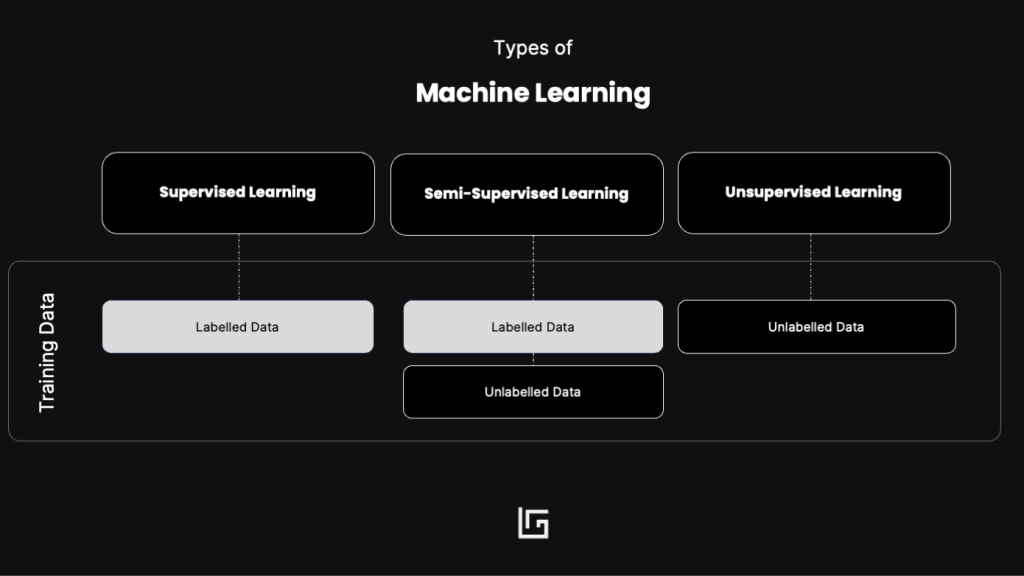
Depending on the data used, they can be:
- Supervised (labeled data)
- Unsupervised (unlabeled data)
- Semi-Supervised (a mix of both)
Algorithm vs. Model: What’s the Difference?
People often mix these up, but here’s a simple way to think about it:
- Algorithm: The recipe you follow to bake a cake.
- Model: The actual cake you get after following the recipe.
The algorithm gives you the steps, while the model is the end result once you’ve trained it with data.
Machine Learning Gets Smarter Over Time
Feed a model more data, and it gets better. That process is called training—and it’s how models become more accurate over time.
But here’s the kicker: It’s not just about dumping data.
As you keep adding more, the model goes through validation and testing.
This process makes sure it performs well in the real world—not just with the initial training data you gave it.
This continuous learning process is what makes machine learning so powerful!
The more it learns, the smarter it becomes.
Deploying Machine Learning Models: The Step-by-Step Process to Build a Machine Learning Model
1. Collect Your Data
First, gather the right data. Think of data as your ingredients! Whether it’s spreadsheets, APIs, or CSV files, gather all the information you’ll need to train your model.
2. Clean and Prepare the Data
Data can be messy! Make sure it’s consistent by removing errors, filling in missing values, and formatting everything the same way. A clean dataset sets you up for success.
3. Split the Data
Divide your data into training and testing sets:
· Training Set (70-80%): Where the model learns.
· Testing Set (20-30%): Where you check if it really learned.
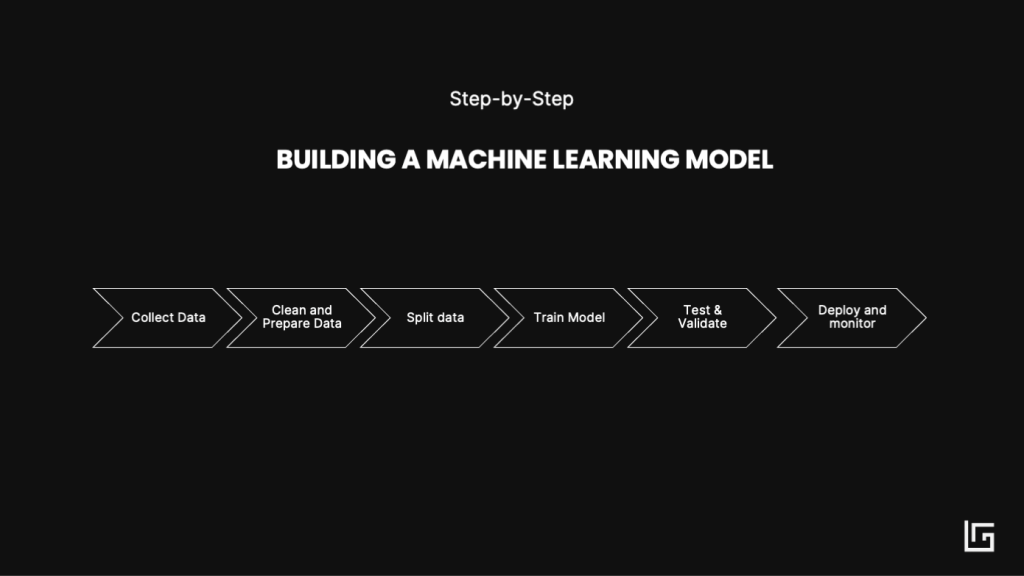
4. Choose and Train Your Model
Pick the algorithm that best fits your problem, and train the model using your training data. During training, the model adjusts its settings to learn patterns and make accurate predictions.
5. Test and Validate
Now it’s time to see how well your model works! Use the testing data to evaluate its performance. If it’s not great, tweak your approach or retrain with more data.
6. Deploy and Maintain
Once you’re happy with your model, it’s time to put it to work! Deploy it in your application and monitor how it performs. Be ready to update it as new data comes in.
Discovering the Different Types of Machine Learning: Supervised, Unsupervised, and Semi-Supervised
There are different ways in which machine learning works, but it really comes down to one thing: how a model learns from data. Let’s break down the three main types.
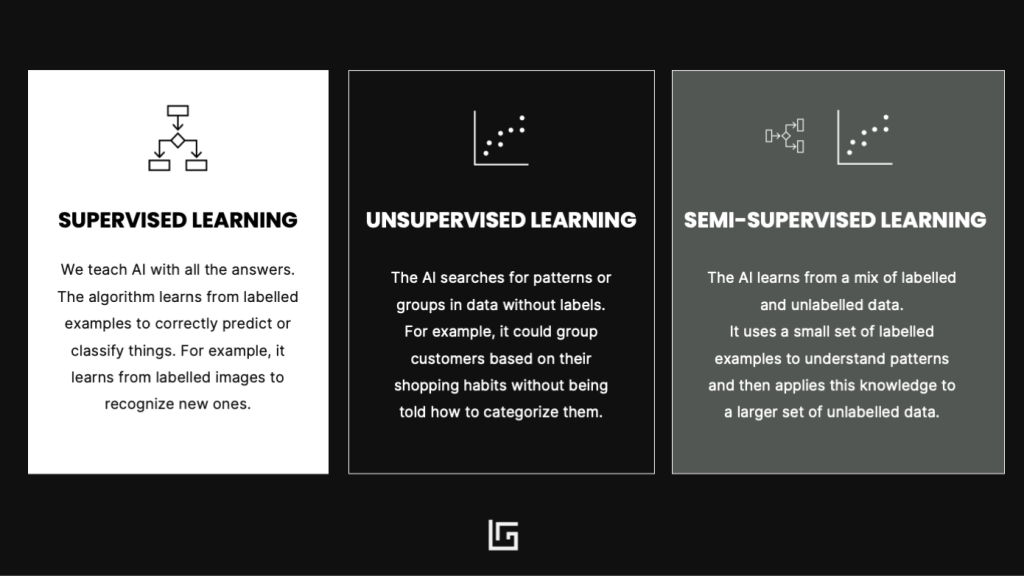
The model learns from labeled data. It’s guided by examples, kind of like getting direct instructions on how to do a task.
Think of supervised learning as having a teacher that shows them the correct answers.
Unsupervised learning models don’t have a teacher. They’re on its own to find patterns and make sense of data.
No labels here. The model explores the data on its own, finding patterns without any hints.
This is a mix of both. The model gets some labeled data to start, then uses that to make sense of a larger, unlabeled dataset. This one is like a mix of both. You have a little bit of labeled data and a ton of unlabeled data. The model uses the labeled part to make sense of the unlabeled data.
Examples of Supervised, Unsupervised, and Semi-Supervised Learning
Now that you’ve got a grasp of the three main types of machine learning, let’s make it real with some concrete examples! It’s one thing to know the theory, but seeing how it works in real life makes it all click.
Supervised Learning Examples
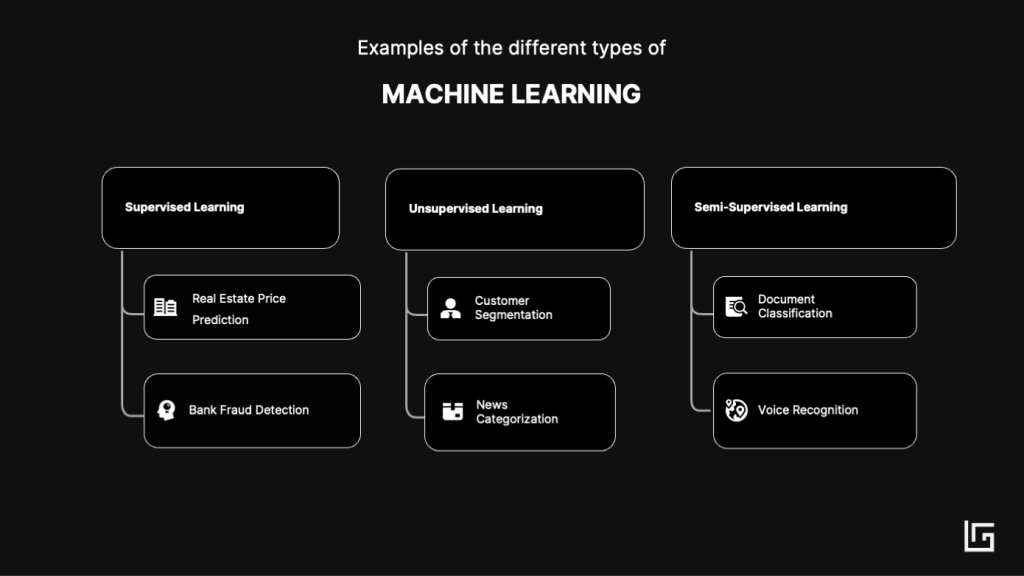
Predicting Real Estate Prices:
Imagine you’re buying a house and want to know if the price is fair. Models trained on historical data—like location, size, age, and selling price—can predict the value of similar properties. It’s super handy for investors and homebuyers to make smarter decisions!
Bank Fraud Detection:
Think about how banks keep your money safe. They use supervised learning to spot suspicious transactions. By training models with labeled data (fraudulent or not), they can catch red flags in new transactions and help protect users from financial loss.
Unsupervised Learning Examples
Customer Segmentation:
Ever wonder how businesses know what type of customer you are? They use unsupervised learning to group customers based on behaviours and preferences. It helps them create targeted marketing campaigns that feel more personal.
News Categorisation:
Imagine having thousands of news articles to organise. Unsupervised algorithms can automatically cluster them into categories—like politics, sports, or tech—without needing labels. It makes browsing easier for readers and helps editors keep content organised.
Semi-Supervised Learning Examples
Document Classification:
Sometimes you’ve got a bunch of documents, but only a few are labeled. Semi-supervised learning uses those few labeled examples to help categorise the rest. It’s great for organising massive digital libraries or legal archives!
Speech Recognition:
Voice assistants use semi-supervised learning to get better at understanding you. They start with labeled voice samples and then add in loads of unlabelled audio to learn different accents and pronunciations. It’s why your smart speaker gets better over time!
Mastering Machine Learning with the Right Approach
Each type of learning has its own strengths, and choosing the right one really depends on your data and what you’re trying to accomplish. Knowing the difference between supervised, unsupervised, and semi-supervised learning helps you pick the right tool for the job!
FAQ: Classification Models
What is a classification model in machine learning?
A model that learns from labelled examples to sort new data into categories, like spam or not spam.
What are the main types of classification models?
Logistic regression, decision trees, random forest, support vector machines, k-nearest neighbours, Naive Bayes and neural networks.
What is the difference between classification and regression?
Classification predicts a category (“which one?”). Regression predicts a number (“how much?”). Both are supervised learning.
Which classification model is the best?
There is no single best model. Start simple (logistic regression or a decision tree), then try random forest or neural networks if you need more accuracy and have enough data.
Want to see where classification fits in the bigger picture? Read AI vs Machine Learning vs Deep Learning.
Related reading: Regression in Machine Learning, Explained Simply · Supervised Learning: Teaching Machines to Think Like Us · Semi-Supervised Learning Explained · The Beginner’s Guide to Unsupervised Learning
Join the newsletter
Practical insights on AI, leadership and innovation — every week.