
January 16, 2025
The 7 Hard Truths I Learned About Making Projects Actually Work

Have you ever started a project that seemed brilliant in your head, but somehow it just never made it to the finish line?
I know I have.
And after leading (and failing at) multiple projects over the years, I’ve learned that success isn’t about just having a great idea.
It’s about execution.
Execution isn’t my greatest strength, but the truth is, it’s absolutely essential.
I’m deep into planning The Nest, a unique team retreat space in Jerez launching in May 2025.
Making a project actually work requires structure, discipline, and a few non-negotiable rules. If you don’t have these in place, your project will either drag on forever or completely fall apart. So today, I want to share the seven hard truths I’ve learned about turning ideas into real, successful projects.
If you’ve ever found yourself stuck in project limbo—where things feel messy, unclear, or just plain frustrating—these seven hard truths might change the way you approach every big goal from now on.
1. You Need a Harsh Deadline
“If you give yourself 30 days to clean your home, it will take you 30 days. But if you give yourself 3 hours, it will take 3 hours.”
If there’s one thing I’ve learned from projects, it’s that you need a deadline.
Deadlines aren’t the enemy.
They are the secret weapon that makes things actually happen.
If you don’t have one, you need to manufacture it.
Urgency is key to setting things into motion.
For The Nest, we’ve set two non-negotiable deadlines:
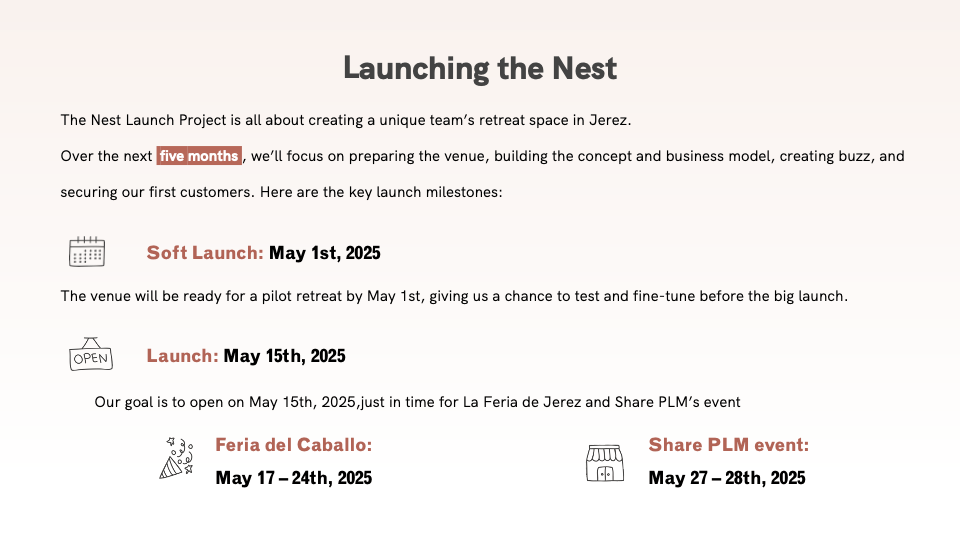
- Soft launch: May 1, 2025 – We are hosting a pilot retreat before The Nest‘s official launch.
- Official launch: May 15, 2025 – Just in time for La Feria de Jerez and the Share PLM event at the end of May.
By setting deadlines in stone, you create a sense of urgency that forces the team to make decisions and take action.
2. Chunk It Up, Build It Up
“When eating an elephant, take one bite at a time.”
Big projects can feel overwhelming. You start with excitement, but soon reality sets in. There are a million moving parts, and suddenly, you don’t even know where to begin.
Instead of tackling everything at once, break the project into three to five clear streams for clarity and responsibility. Each stream should be:
- Independent enough to be owned by a specific person or small team.
- Clear in scope so there’s no confusion about what needs to be done.
- Trackable, meaning you can measure progress easily.
For The Nest, we’ve structured our project into four key workstreams:
- Business Development – Defining the workshops & retreat concept, pricing, and partnerships.
- Marketing – Creating awareness, running early-bird promotions, and generating leads.
- Operations – Preparing the venue, handling logistics, and setting up customer service.
- Project Management – Keeping everything on track, coordinating the teams, and ensuring execution.
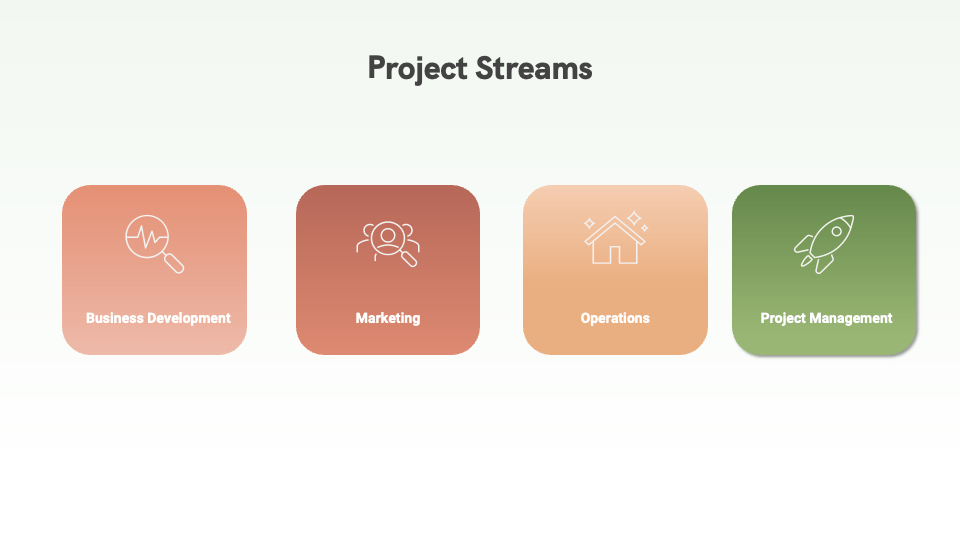
Each stream has its own milestones and is led by specific team members, ensuring that nothing gets lost in the chaos.
3. You Need a Governance Model
“The most important thing is that there is clear decision making structure and everyone knows what it is”
Every project needs a clear governance model—which is just a fancy way of saying: Who makes decisions, and how?
I learned this the hard way: Without clear roles and responsibilities, decisions stall, and progress grinds to a halt.
When roles and responsibilities aren’t clear, you’ll find yourself stuck in endless email chains, waiting for approvals, and feeling like nothing is moving forward. Having a governance model cuts through the chaos and keeps things running smoothly.
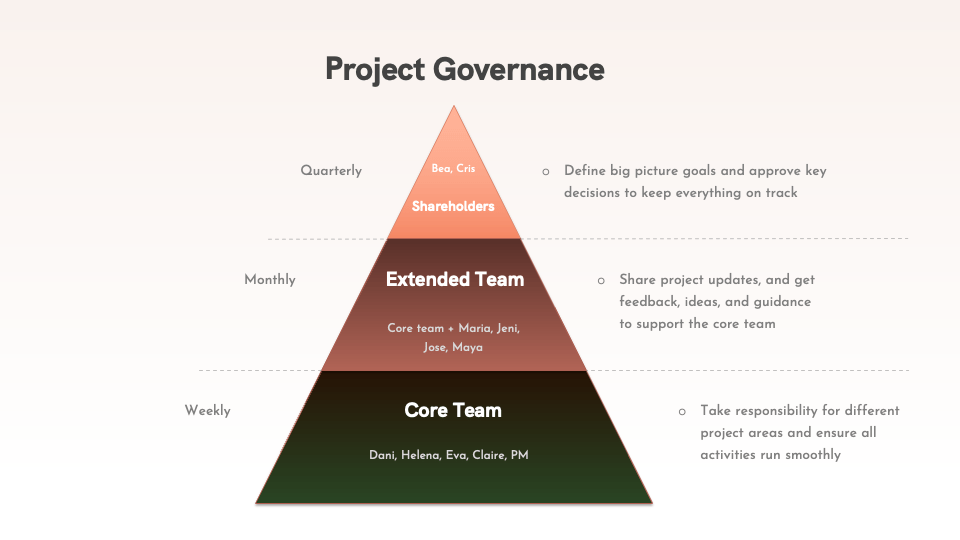
For The Nest, we’ve created a governance model with the following teams:
- Business Owners: Defines big-picture goals and approves key decisions to keep everything on track.
- Extended Team: Provides feedback, and offers ideas and guidance to support the core team.
- Core Team: Takes responsibility for the day to day activities and ensures all activities run smoothly.
4. You Need a Meeting Cadence That Works
“The majority of meetings should be discussions that lead to decisions.”
— Patrick Lencioni, Author of Death by Meeting
You know what kills projects? Either:
- Too many pointless meetings where nothing actually gets done, or
- No meetings at all, where nobody knows what’s happening.
The key is to set up a meeting cadence that keeps the project moving without wasting everyone’s time.
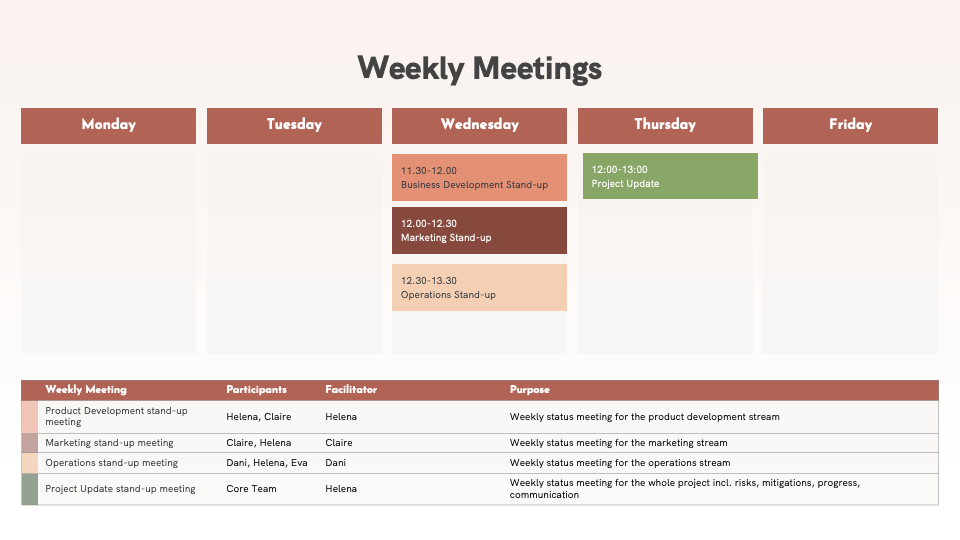
Here’s what works best in my experience:
- Weekly Stand-ups (15-30 min): Quick updates on progress, blockers, and next steps with the project streams.
- Monthly Deep Dives (45-60 min): For reviewing progress in detail and problem-solving.
- Quarterly Check-ins (60-90 min): Reviewing big-picture progress and course-correcting.
Meet just enough to keep things on track—without overloading everyone with unnecessary calls.
5. Milestones and Key Deadlines Matter
“A goal properly set is halfway reached.”
A project deadline is great, but if you don’t set milestones along the way, you’re setting yourself up for failure.
Milestones are mini-deadlines that help you track progress and make sure you’re on schedule.
Think of them as checkpoints that keep you from getting lost.
By setting milestones, you stay on track and avoid the last-minute panic that happens when everything is left until the final days.
Even if you are running your project in agile mode, I find it helpful to have a big-picture roadmap with the key milestones. Agile allows for flexibility, but without clear milestones, you risk losing sight of the bigger goal.
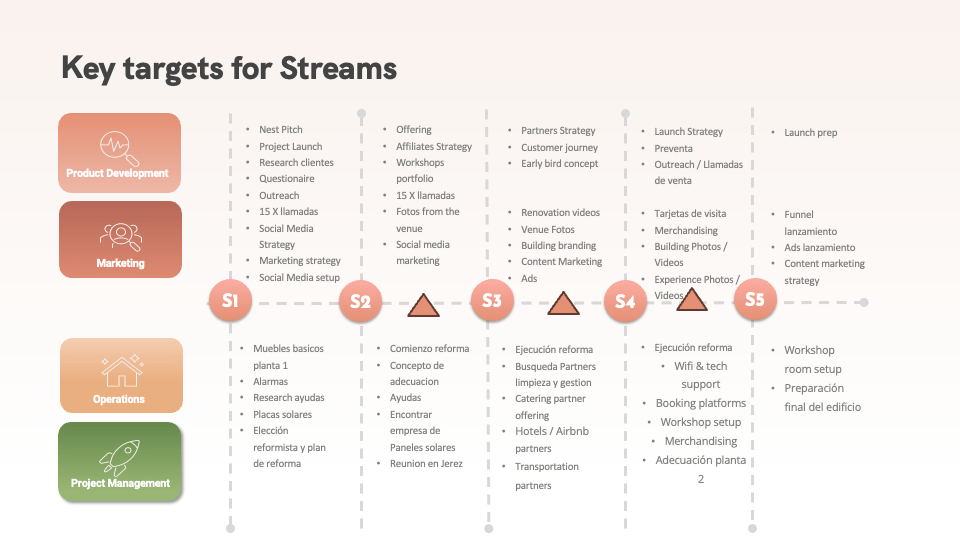
For The Nest, we structured our roadmap into five key sprints leading up to the launch:
- Sprint 1 (January 2025): Research, marketing strategy, securing key partners.
- Sprint 2 (February 2025): Refining the concept, launching social media, outreach.
- Sprint 3 (March 2025): Finalizing the workshop offerings, early-bird campaigns, securing first bookings.
- Sprint 4 (April 2025): Venue branding, final operations setup, running test experiences.
- Sprint 5 (May 2025): Last-minute refinements, official launch preparation.
Each sprint includes specific deliverables and review points, ensuring that we stay on track while still allowing for iterations along the way.
6. Define Each Person’s “Number”
“What gets measured gets improved.”
If you don’t define success, you’ll never know if you’re on track.
One of the best ways to ensure accountability is to assign each person a key number—a metric they’re responsible for.
For The Nest’s example:
- Business Development Lead → Revenue target: €50,000 in pre-bookings
- Marketing Lead → Email list growth: 1,000 newsletter subscribers
- Operations Lead → Venue 100 percent ready by April 30th
When everyone knows their number, it creates a sense of ownership and makes progress easy to measure.
7. Bring People Onboard Early
“If everyone is moving forward together, then success takes care of itself.”
You can have the best plan in the world, but if key people aren’t on board, your project will hit roadblocks, resistance, and delays.
Here’s what works for me:
- Include key people in the planning stage. Instead of presenting a finalized plan, bring them into the process early.
- Use design thinking workshops to get their insights and make them feel invested in the project.
- Have one-on-one meetings before kickoff to get buy-in and address concerns before they become bigger problems.
When people feel heard and included, they are more likely to support the project instead of resisting it.
Final Thoughts
Making projects actually work isn’t about being more motivated or working harder. It’s about setting up the right structure so things flow smoothly.
Here’s a quick recap:
- Set a harsh deadline (and stick to it)
- Break it into clear workstreams (so it’s not overwhelming)
- Define a governance model (so decision-making is clear)
- Set up a smart meeting cadence (so everyone stays aligned)
- Use milestones to track progress (so you don’t get lost)
- Assign key metrics to people (so accountability is built-in)
- Get buy-in from key people early (so you avoid resistance)
Try these strategies on your next big project, and you will see a significant difference in how smoothly everything runs.
Would you add something to this list?
Let me know in the comments!
Join the newsletter
Practical insights on AI, leadership and innovation — every week.