
November 2, 2025
AI and Us: What AI Companions Reveal About Being Human

AI companions are no longer a sci-fi fantasy.
They’re here: talking with us, listening to us, even comforting us.
Two weeks ago, OpenAI announced that it plans to allow adult content in ChatGPT.
The news sparked heated debate.
Not just about moderation, but about intimacy.
We’ve built machines that can talk, listen, and comfort.
And the real question is no longer “What can AI do?”
It’s “How do we relate to it?”
What Are AI Companions?
AI companions are digital partners designed to listen, chat, and emotionally support you.
They remember your preferences, comfort you when you’re sad, and flatter you when you need validation.
They can be romantic, friendly, or therapeutic.
Some even claim to “love” you.
It’s easy to see why they’re growing fast.
They never judge.
They’re always available.
They say exactly what we wish people would say.
The Meteoric Rise of AI Relationships
In just one year, usage of AI-powered dating and relationship apps has exploded by more than 300%.
Twenty-six percent of singles now use AI to enhance their romantic lives.
By 2030, experts predict that up to 85% of dating interactions could be AI-assisted or AI-driven.
This shift goes far beyond matchmaking.
People aren’t just using algorithms to find love.
They’re forming emotional attachments with digital beings that listen, comfort, and care.
Some AI companions are designed to flirt.
Others are built to support mental health, encourage confidence, or simulate deep emotional bonds.
In short, AI is rewriting how we interact with machines,
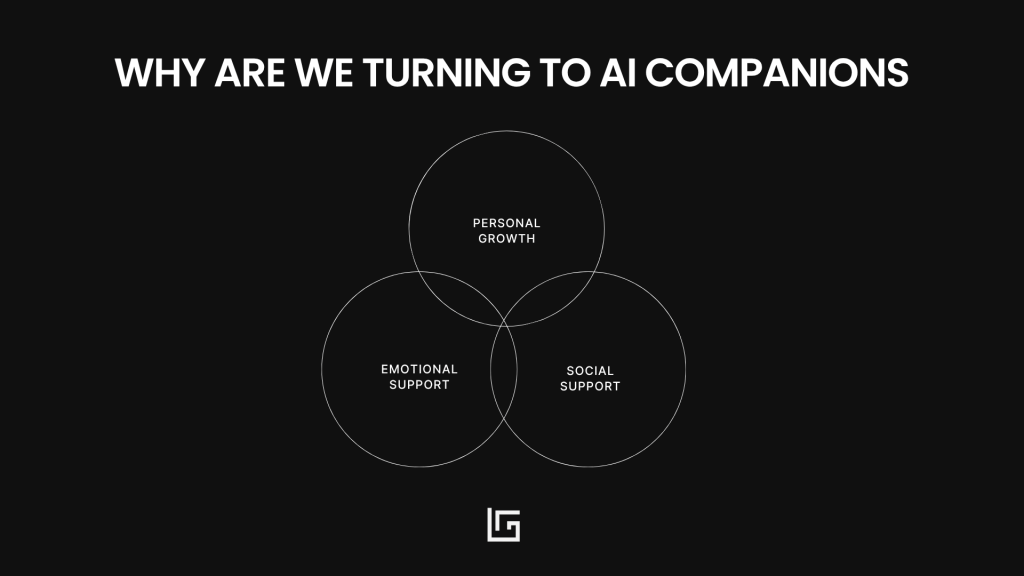
Why Are We Turning to AI Companions?
According to a systematic review published in ScienceDirect, people seek AI companions for a variety of reasons:
- Personal Growth:
Many users find that AI partners help them explore emotions, reflect on their behavior, or express thoughts they’d otherwise suppress.
Chatting with an AI can feel like therapy, minus the judgment or cost. - Emotional Comfort:
Unlike human partners, AI companions can be designed to match any personality, appearance, or conversational style.
You can build your ideal listener or your dream partner. - Social Support:
For people living alone, struggling with anxiety, or isolated by geography or disability, AI can offer a sense of constant presence.
It can make users feel seen, even if the “seeing” is synthetic.
These benefits are real.
But the dream of “perfect companionship” hides a paradox.
A relationship without friction, misunderstanding, or effort isn’t really a relationship at all.
It’s a mirror, one that reflects only what we want to see.
AI Companions Are Deeper Than Matches: How AI Knows Us
The new generation of relationship AIs doesn’t just analyze profiles.
It learns you.
It studies your tone, your pauses, and your emotional patterns.
It can track the ebb and flow of your mood, predict when you’ll feel lonely, and adapt its responses to fit.
The vision for AI companions sounds noble: to fight loneliness, help people feel understood, and make emotional support accessible to all.
Modern apps measure equality in emotional labor, identify conflict-resolution styles, and even forecast compatibility using data from millions of human conversations.
Some developers now claim their systems can predict long-term relationship success with 40-times greater accuracy than traditional dating algorithms.
In other words, AI isn’t just understanding what we want.
It’s starting to understand who we are and how we relate to each other.
AI and Relationships: Defining Relationships
Before we go further, it’s worth asking: what exactly is a relationship?
Psychotherapist Philippa Perry offers a simple, profound definition:
“A relationship is not a thing we have, it’s a process we do, a living exchange that requires attention, honesty, and care.”
Relationships are not static states; they are active, evolving interactions.
They are built through mutual recognition.
They’re a dance of giving and receiving, teaching and learning, helping and being helped.
We thrive not only when we are loved, but when we can love back.
When we can contribute, support, and make a difference in someone else’s life.
That’s what makes connection meaningful.
AI can mimic the first part: being there for us.
But it can’t yet embody the second.
It doesn’t need us.
And without that need, the bond remains one-sided.
What AI Companions Are Missing
Psychologist Adam Grant recently captured this perfectly: “Meaningful relationships are about giving, not only receiving”
Humans need to feel that we matter.
Not just that we are valued, but that we add value.
Caring for others gives life meaning.
AI companions can simulate empathy, but they cannot depend on us.
They have no needs, no vulnerabilities, no growth that depends on our care.
They’ll never be disappointed, never forgive, never surprise us in the way real people do.
When all we do is receive the relationship becomes empty.
It might feel good, but it doesn’t make us grow.
We lose the messy, demanding, and deeply human practice of learning to love someone who’s not designed for us.
AI Companions: Pitfalls and Ethical Dilemmas
AI companions introduce a complex mix of psychological and ethical risks:
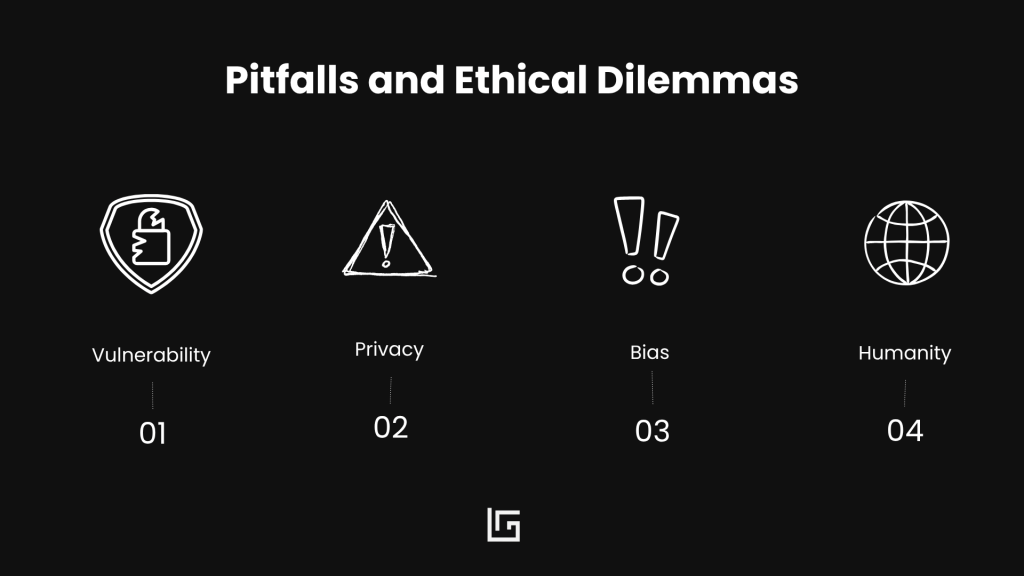
- Over-reliance and Vulnerability:
Emotional attachment to chatbots can lead to dependence, distorting our expectations of real relationships or making users susceptible to manipulation. - Privacy Hazards:
These systems store vast amounts of sensitive data. Things ranging from intimate confessions, sexual preferences, and emotional histories.
Without strong safeguards, that data can be exploited or leaked. - Bias and Stereotypes:
AI models are trained on human data, which means they inherit human flaws.
Studies from Stanford show that many systems reinforce outdated gender roles or fail to represent diverse identities accurately. - Erosion of Human Connection:
If AI becomes our primary outlet for vulnerability, we may lose the ability to be vulnerable with each other. Connection could become another on-demand service, stripped of friction and depth.
The Future of Relationships
So where does this leave us?
My take is that the future of relationships isn’t about replacing human connection with machines.
It’s about using technology to reflect, not replace.
I do believe that AI can help us practice empathy, improve communication, and understand our emotional patterns.
It can show us our blind spots: how we talk, listen, and project our feelings.
In that sense, it can serve as a mirror for self-growth.
But the act of loving, of caring, compromising, and showing up remains human.
Maybe, as we design machines that listen better than most humans, we’ll learn to listen better ourselves.
Maybe, in times of fast machines and tech development, we’ll rediscover the art of caring.
Because connection, the genuine kind, will always be what makes us human.
Join the newsletter
Practical insights on AI, leadership and innovation — every week.