
April 19, 2026
AI Creativity vs Human Creativity: Can AI Replace Engineers?

Last week I had the pleasure to present together with Prof. Dr.-Ing Martin Eigner at the Prostep ivip Symposium in Frankfurt.
The title of our presentation was AI at Work, and the conversations that followed made me realize how much deeper this topic really is.
This is something I’ve been obsessed with in the last months. Not because AI is interesting as a technology, but because it is going to affect us as humans in a way we are only starting to understand.
If you look at the data, it becomes clear that we’re only scratching the surface.
AI is already capable of supporting a large share of knowledge work. In some studies, up to 80% of tasks in certain domains could, in theory, be handled or augmented by current models. And yet, real usage in most organizations is still a fraction of that.
Anthropic captures this well in their Economic Index, where they distinguish between capability (what AI can theoretically do) and usage (what people actually integrate into their workflows)
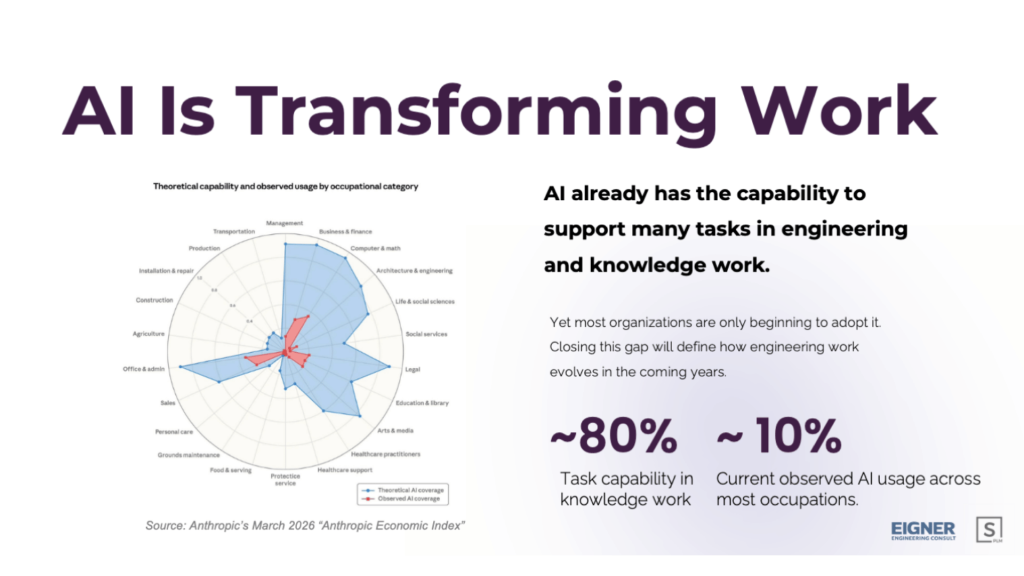
The gap between the two is still surprisingly large.
For me it is a sign that capability is not the constraint.
Adoption is.
And AI adoption is not about tools.
It is about people.
From Manual Work to Knowledge Work
A lot of the discussion around AI still follows an old narrative.
Automation replaces physical work first.
This time, it doesn’t.
Andrej Karpathy explores how exposed different jobs are to AI in his AI exposure map.
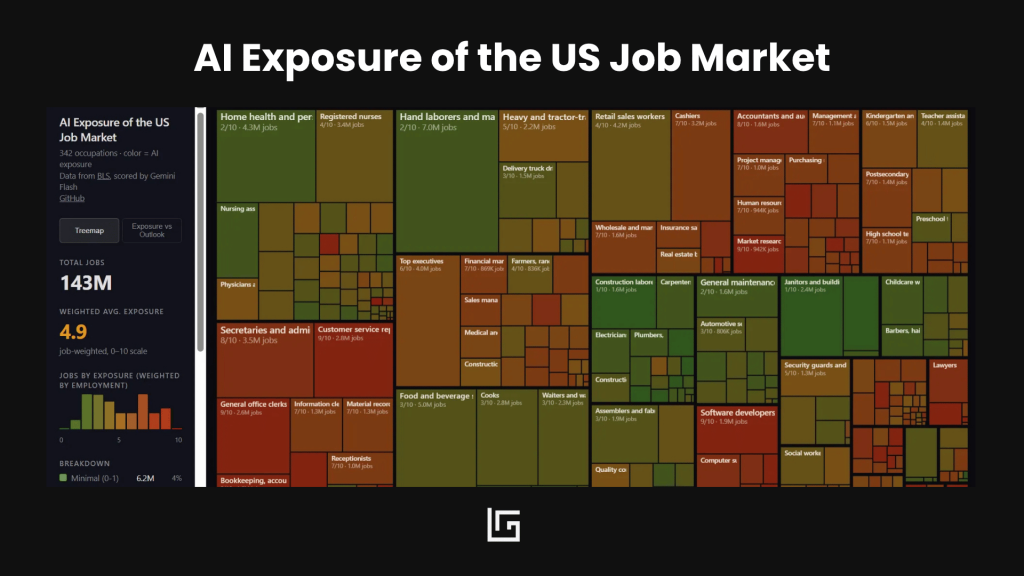
He analyzed hundreds of occupations and asked a simple question: how much of the work happens in a digital space where AI already operates well?
The result was not a prediction of job loss. It was something more interesting.
A map of structural exposure.
Jobs that scored highest were not manual.
They were cognitive.
Software developers. Analysts. Writers. Designers. Managers. Engineers.
This doesn’t mean these jobs disappear.
It means they change.
And that change is already happening.
A Transformation That Goes Beyond Knowledge and Execution
This is where the conversation becomes uncomfortable.
Because AI is not just changing what we do.
It’s starting to change how we see ourselves.
In my research, I’ve been spending a lot of time looking at how AI is affecting engineering identity. Not just the tasks we do, but what it means to be an engineer.
In my presentation, I asked:
- What makes an engineer? Where is our value as humans?
And I kept thinking about my father.
He was a civil engineer. He spent years specializing in structural calculations. I remember as a kid sitting next to him while he showed me his work. Pages full of calculations. Every line carefully thought through.
And I remember how proud he was.
Not just of the result.
But of the process.
Of the knowledge behind it.
Of the ability to solve something complex that not many people could.
That was part of who he was.
Now fast forward to today.
AI can run calculations that used to take weeks… in hours. Sometimes minutes.
So what happens to that identity?
What happens when the thing you built your value on becomes fast, accessible, and partially automated?
This is not just a technical shift.
It’s a personal one.
AI Engineering Transformation: The Shift Towards Ingenio
Because for years, engineering identity has been built on expertise:
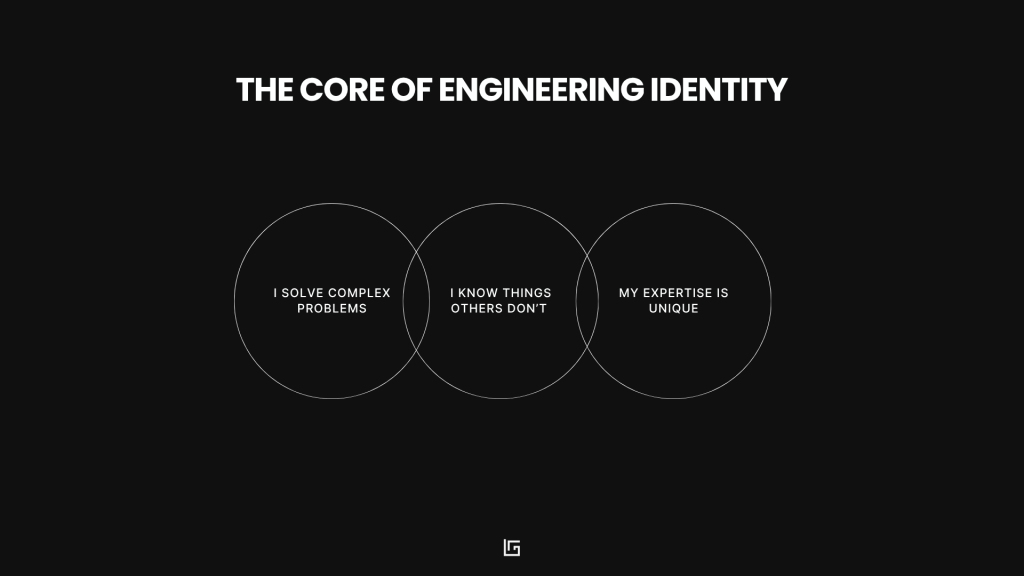
- “I solve complex problems.”
- “I know things others don’t.”
- “My knowledge took years to build.”
And all of that is still true.
But it is no longer enough on its own.
AI is forcing us to rethink where our value really sits.
Not in the calculation itself.
But in how we define the problem.
How we interpret the results.
How we decide what matters.
This is where I believe something deeper comes into play.
A word that comes from Latin and speaks to a uniquely human capability.
Not just intelligence.
But the ability to connect ideas, navigate ambiguity, and create meaning where there is no clear path.
It is the lens through which we see the world.
And because each of us carries different experiences, beliefs, and contexts, that lens is always unique.
That is why two engineers can look at the same problem and arrive at completely different solutions.
AI does not have this.
It can generate.
But it does not see.
A-Creativity: Artificial Creativity
Can AI Be Creative?
AI creativity is based on patterns.
It learns from massive datasets and recombines existing information in ways that feel new. It can generate ideas, concepts, designs, and solutions at a scale and speed that no human can match.
This is Artificial Creativity.
And it is incredibly useful.
In engineering, in tech, it allows us to explore broader solution spaces, prototype faster, and remove creative friction.
But there is a limit.
AI does not create from intention.
It creates from correlation.
It does not understand meaning.
It predicts it.
So yes, AI can produce original-looking outputs.
But it does not create from experience.
Ingenio and the Lens We See the World Through
Why Human Creativity Is Different
Human creativity works differently.
It is not just about generating ideas.
It is about the lens through which we see the world.
Each of us carries a unique combination of experiences, beliefs, values, culture, and emotions. This shapes how we interpret problems, how we connect ideas, and how we imagine solutions.
This is what we can call Biological Creativity, our “Ingenio”
Ingenio is not just creativity.
It is perspective.
It is the way you see patterns others don’t.
It is the way you challenge assumptions others take for granted.
It is the way you frame a problem differently, and therefore arrive at a completely different solution.
AI does not have this lens.
It does not have a life it draws from.
It does not have a point of view.
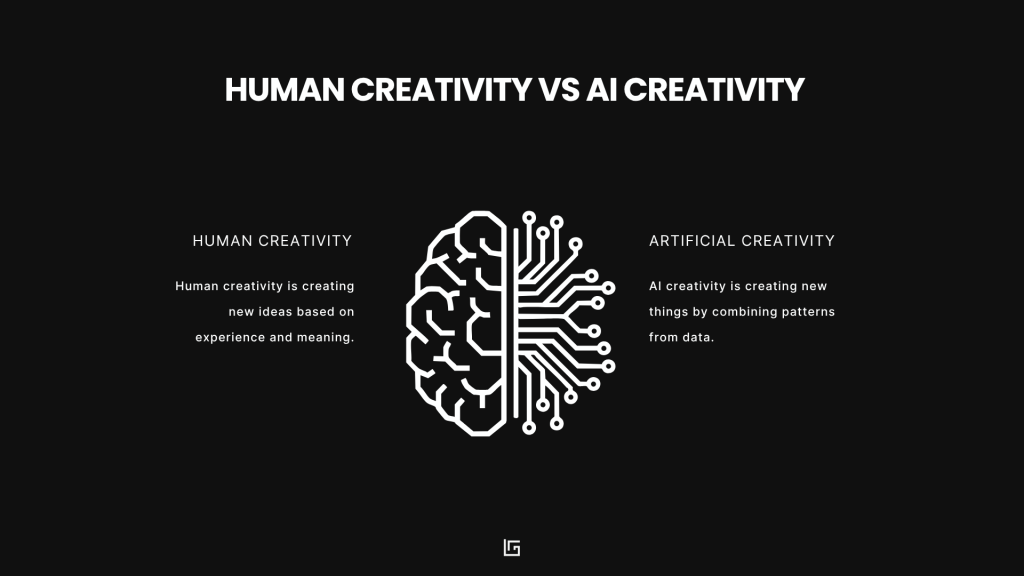
It generates based on what exists.
Humans create based on how they see.
The Power of Human Creativity
What makes human creativity irreplaceable comes down to four distinct capabilities that AI cannot replicate.
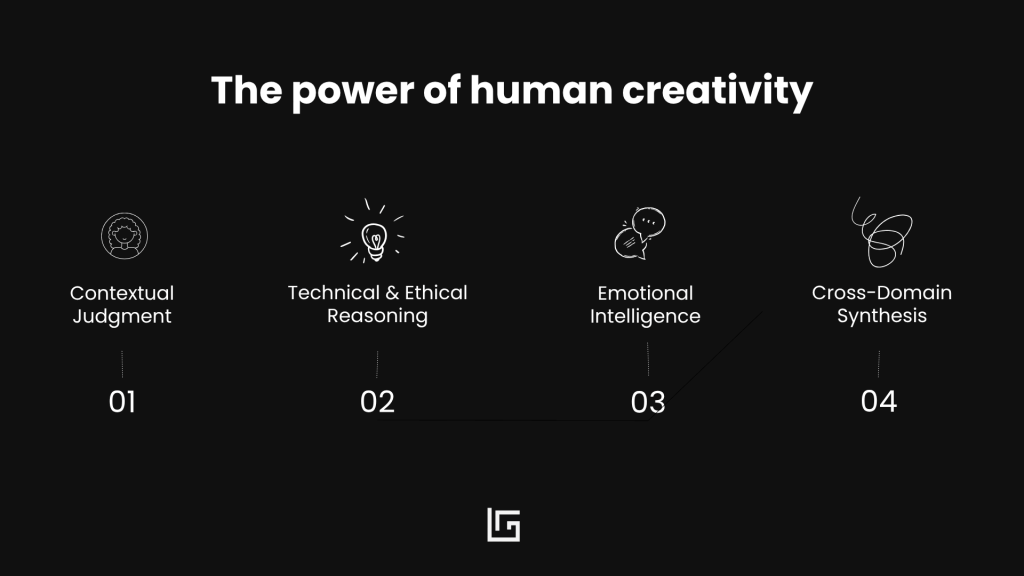
Contextual Judgment
Understanding nuance, culture, and unspoken expectations that shape decisions. AI can process data, but it cannot feel the room. Human judgment reads what is not written, the hesitation in a stakeholder’s voice, the cultural weight behind a word, the unspoken constraint that changes everything.
Technical & Ethical Reasoning
Weighing technical consequences, stakeholder impact, and moral dimensions of choices. Every engineering decision carries ethical weight. Humans can hold the tension between what is technically possible and what is right and make a call that accounts for both.
Emotional Intelligence
Communicating, listening, respecting each other, building trust, and navigating complex social dynamics. Change does not happen through logic alone. It happens through relationships. The ability to bring people with you. The ability to listen, to adapt, to earn trust. This is a uniquely human capability.
Cross-Domain Synthesis
Connecting insights from unrelated fields to spark genuine innovation. The most original ideas rarely come from going deeper into one domain. They come from someone who bridges two worlds that have never spoken to each other and sees what others miss.
How Does Technology Affect Creativity?
Expansion vs Sameness
AI expands creativity.
It gives us leverage.
You can go from idea to prototype in minutes. You can explore alternatives that would have taken days or weeks before. You can remove the friction that often blocks creative work.
But at the same time, it introduces a subtle risk.
Sameness.
Better outputs.
More similar thinking.
Last week at the event, I could recognize the graphics in presentations that Gemini, ChatGPT or Claude had created.
The thing is, innovation does not come from sameness.
It comes from difference.
This is why human interaction and creativity are becoming more important, not less.
Because they reintroduce different perspectives, tension, and context that machines cannot replicate.
The Future Belongs to Those Who Combine Both
AI Creativity vs Human Creativity: Our Human Creativity Is Our Advantage
In the work we are doing around AI adoption in engineering, this is the core question:
- What does it mean to be an engineer in this new world?
And the answer we keep coming back to is simple.
AI will handle scale, speed, and generation.
Humans will handle direction, judgment, and meaning.
The real advantage will come from combining both.
Not competing with AI.
But understanding where it ends and where we begin.
Less about doing.
More about thinking.
Less about knowing.
More about understanding.
Because in the end, creativity is our advantage.
Not the kind that generates more options.
But the kind that knows which ones are worth pursuing.
Join the newsletter
Practical insights on AI, leadership and innovation — every week.