
June 28, 2026
AI Hackathons, Kids, and the New Era of Empowerment
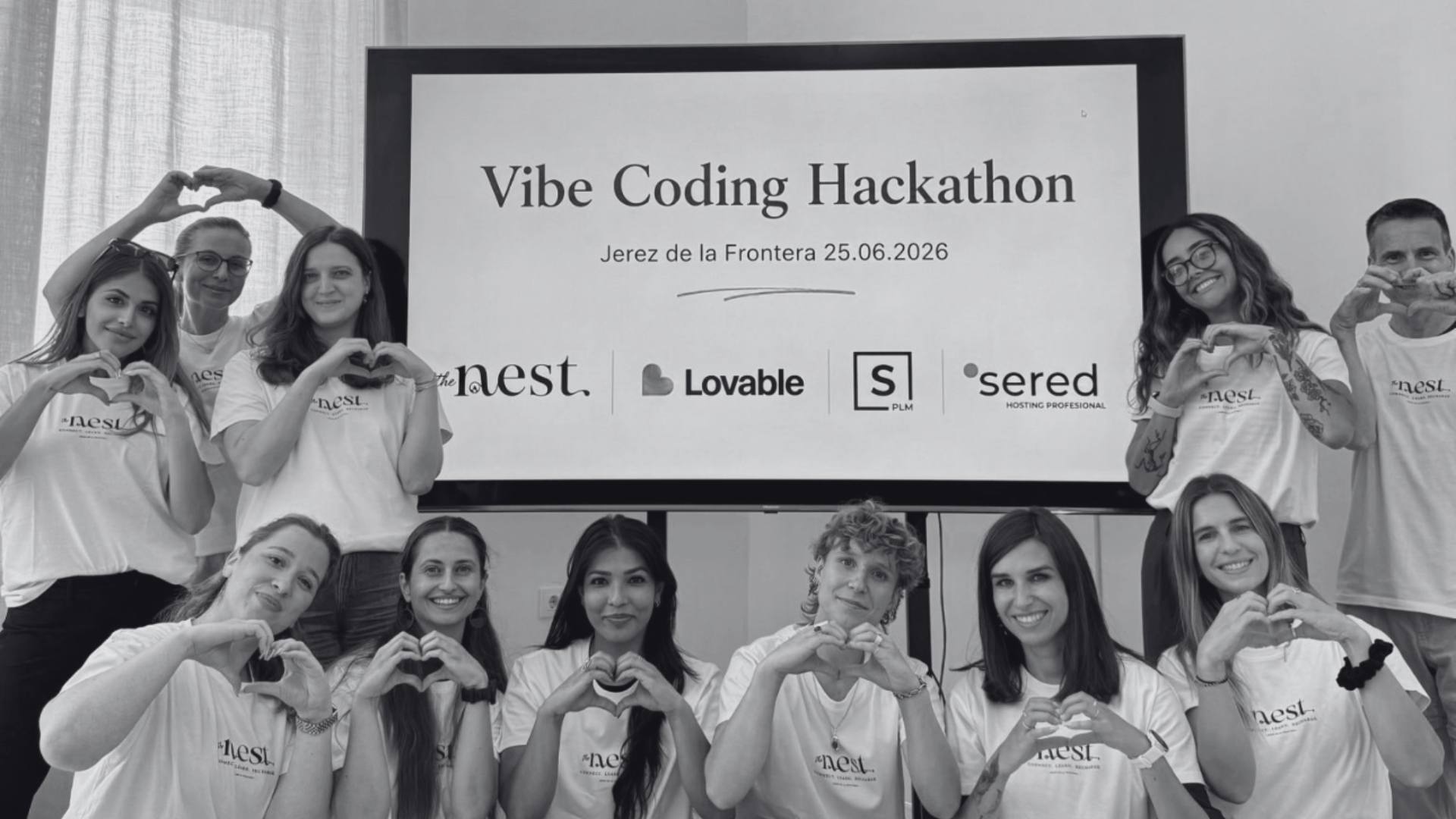
Last week, we organised our very first vibe coding AI hackathon in Jerez at The Nest, in collaboration with Lovable.
And honestly, it was an energy bomb!
We worked on things that are always important, but somehow never urgent enough to get proper time. The new website. Sales configurators. Internal knowledge. Learning content. Ideas that had been floating around for months suddenly became real.
But the best part was not only what we built.
It was how it felt.
People were sitting together, exploring, helping each other, showing what they had created, and getting that beautiful feeling of: “Wait, did we just build this?”
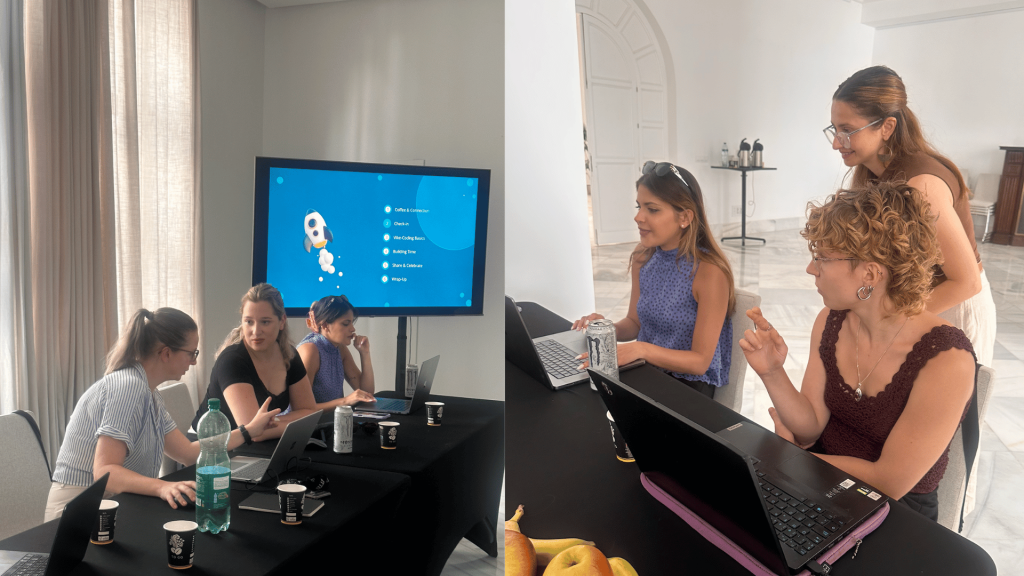
In one day, the team created things we would not have imagined a few months ago.
That is the magic of AI when it is used well.
Not as a distant strategy.
Not as a scary replacement story.
But as a tool that brings people together and gives them superpowers.
The AI Hackhathon for Share PLM: how we got organized
For our team, we organised the work around small projects or verticals. Each vertical had a topic, a focus, and a clear outcome to build.
One team worked on our new upcoming website. They broke the work down into different areas such as “About Us,” partners, learning, and services. Another team focused on sales and worked on sales configurators. A third team worked internally, building the first version of our internal knowledge base.
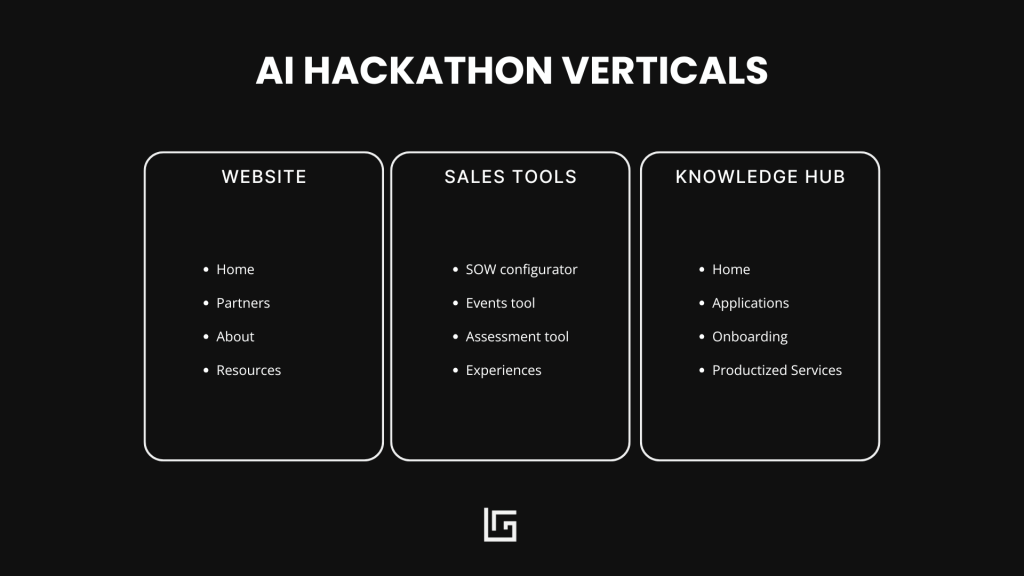
Each team had space to move, decide, build, and show progress.
And this matters a lot.
Because in companies, we often bring people together to align. But alignment can easily become abstract. We talk and talk, discuss, create a ton of slides and try to agree on principles.
But then nothing tangible exists, and we get lost in philosophical discussions that lead nowhere.
A hackathon changes that dynamic.
At the end of the day, you have something you can see, test, touch, improve, and share.
That changes the energy completely.
What is vibe coding and why it Feels Like Magic
Vibe coding is one of those expressions that sounds strange the first time you hear it.
The idea is that you use AI tools to build software, websites, apps, prototypes, automations, or digital products without needing to code everything yourself from scratch.
You describe what you want.
You explain the flow.
You give feedback.
You iterate.
You refine.
You test.
And slowly, something starts to appear.
A page.
A form.
A dashboard.
A small application.
A prototype that explains an idea better than a hundred slides.
That is why vibe coding feels like magic.
Because it reduces the distance between imagination and creation.
For many people, technology used to be something “other people” built. Developers. IT teams. External providers. Specialists.
Now, with AI, more people can participate in the building process.
This does not mean that everyone becomes a software engineer overnight. Good technical skills still matter. Architecture matters. Security matters. Scalability matters.
But something has changed.
The first prototype is no longer blocked behind months of discussions, budgets, requirements documents, and waiting lists.
You can start.
You can explore.
You can make an idea visible.
And once an idea is visible, people can react to it. They can improve it. They can say, “No, not like this.” Or, “Yes, this is exactly what I meant.”
That is incredibly powerful for enterprise innovation.
The Kid Inside Us: Why Hackathons Are Becoming So Popular
I think hackathons are becoming so popular because they reconnect us with something very human.
We love to build stuff.
As kids, we build all the time. We build castles with sand, and cities with Lego. We write stories with toys and create worlds in our heads.
We do not ask for a business case before we start.We just go.
We try something. It falls. We build again. We get dirty. We make a mess. We ask for help. We proudly show the final result to anyone willing to look.
And then, somehow, we grow up.
Work becomes calendars, meetings, dashboards, and endless discussions.
We spend so much time talking about the thing that sometimes we forget the joy of making the thing.
Hackathons bring back that kids play time feeling.
They give us permission to play again.
To experiment.
To build with hands and minds.
To be curious without having every answer from the beginning.
There is something fulfilling about finishing work with something you can keep.
A prototype.
A website.
A concept.
A presentation.
A plan.
A working demo.
Something that did not exist in the morning and exists in the afternoon.
That feeling is powerful.
It reminds us that work can be creative and joyful. That technology brings us back to the playing ground and that people are often much more capable than they think when they are given the right space, tools, and energy.
Enterprise Engagement: From Design Sprints to Hackathons
Over the last years, many enterprises have recognised these issues and tried to become more agile.
They wanted to learn by doing. They wanted to bring busy people together. They wanted to align teams around important problems. And they wanted to get something tangible out of the process.
Design sprints became popular because they responded to that need.
The idea was simple and powerful.
Bring the right people into the room.
Understand the problem.
Map the journey.
Generate ideas.
Choose a direction.
Prototype.
Test.
Learn.
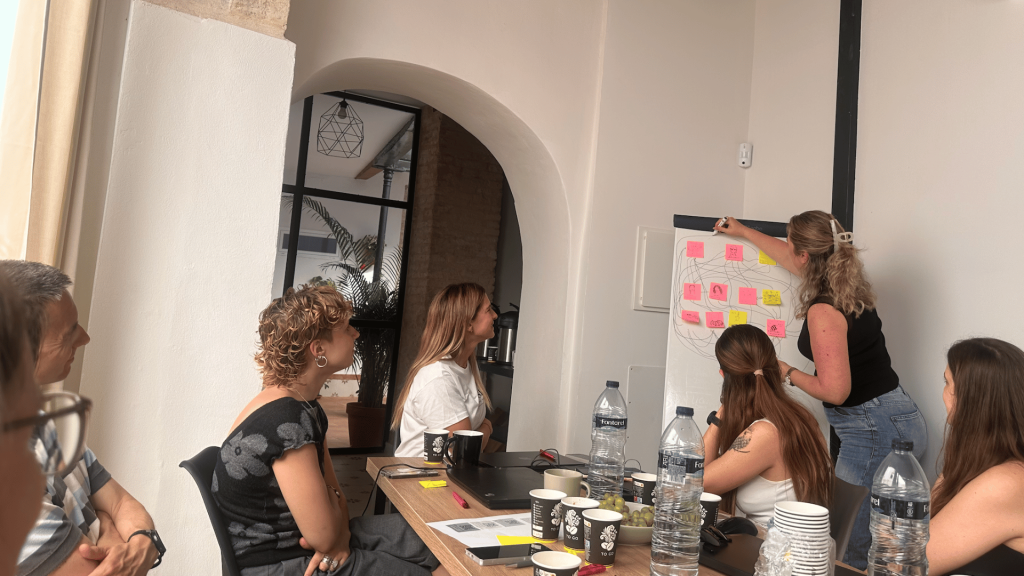
For many companies, design thinking and design sprints created a new way of working. Less abstract. More collaborative. More focused on users. More practical.
Design sprints are cool, but they take time and somethimes the structure is a little rigid for certain teams.
Now with AI, hackathons are becoming the new kid in the building.
Because with AI, we can move even faster from problem to prototype.
We can turn discussions into artifacts.
We can create demos that help people understand what they really want.
I see this more and more with enterprise teams.
One company I worked with used a hackathon to align people around the concept for a new management system. Instead of spending months discussing requirements, they used the hackathon to make the concept visible.
Another company introducing AI started organising bimonthly AI hackathons. The goal is to learn AI in an experimental way while working on topics that mattered to the business, such as strategy, sales, and internal processes.
AI hackathons are not only about code.
They can be about a new strategy deck.
A roadmap.
A process prototype.
A customer journey.
A sales configurator.
A knowledge base.
A communication plan.
A new way of working.
The point is not the format.
The point is creating momentum.
The Relational Era: When Technology Makes Work More Human
I have been writing lately about the relational economy.
As AI takes over more transactional work, our human skills become more important, not less.
Trust.
Connection.
Empathy.
Taste.
The ability to bring people together.
These things become more valuable in a world where technology can produce more and more.
And this is what I felt during the hackathon.
Yes, we used AI.
Yes, we built cool stuff.
Yes, the results were impressive.
But the real magic was relational.
People helping each other.
People explaining ideas.
People getting excited.
People seeing colleagues in a new light.
People discovering that someone had a hidden talent.
People feeling proud of what they built together.
A good hackathon is not only about the output.
It is about the shift in mindset.
From “this is too difficult” to “we can try.”
From “AI is abstract” to “I built something with it.”
From “we need months to discuss this” to “we made a first version today.”
And that is empowerment.
That is the future of work I believe in.
Not a future where AI isolates us behind screens.
A future where AI gives us more reasons to come together, create together, and focus on the human parts of work that really matter.
Related reading: How to Organise an Enterprise Hackathon (Step-by-Step Playbook)
Join the newsletter
Practical insights on AI, leadership and innovation — every week.