
January 19, 2026
Reading Klara and the Sun: A Quiet Meditation on What Makes Us Human
Klara and the sun review
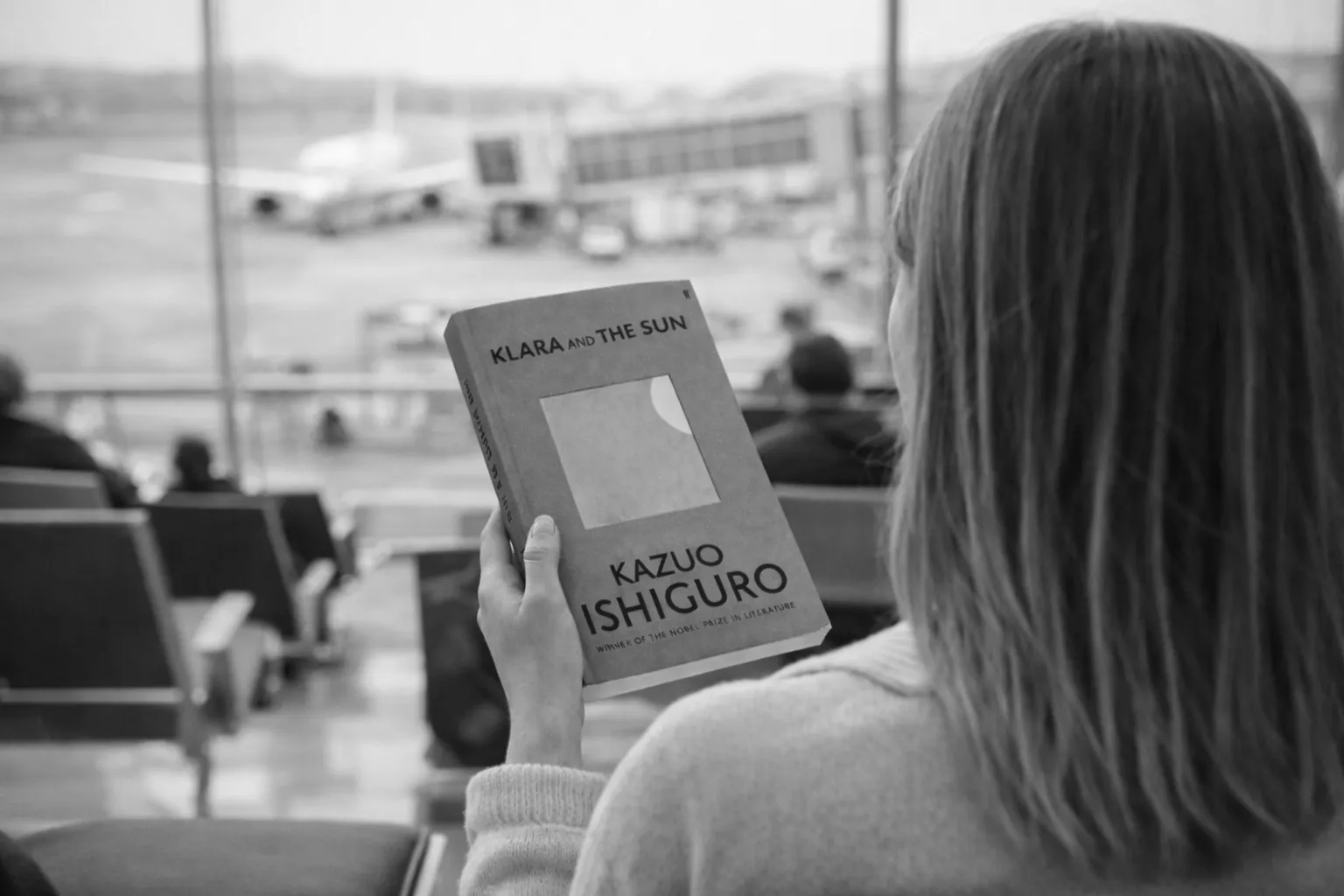
I picked Klara and the Sun just before the Christmas holidays.
I found it at an airport bookshop.
I was looking for a novel.
Something to read and relax in the holidays.
What I found instead was a book that followed me into my work.
Into my questions.
Into many of the topics I think about daily.
AI. Emergence. Alignment.
And what remains human when technology gets close.
Klara and the sun book summary
Klara and the Sun, written by Kazuo Ishiguro, is set in a near future that feels uncomfortably familiar.
Klara is an Artificial Friend.
Designed to be a companion for teenagers.
She is bought to support Josie, a sick girl growing up in a world shaped by genetic enhancement.
Klara observes humans with intense attention.
She tries to understand them.
She kind of “cares” deeply.
And she believes in the Sun as a source of life and healing.
That is the story on the surface.
Underneath, it is a meditation on intelligence, emergence, alignment, love, and loss.
AI Spirit and Emergence: Watching Intelligence Emerge
What stayed with me first was how Klara sees the world.
Her perception is fragmented.
She notices light, movement, repetition.
From these small pieces, she builds meaning.
After a while, Klara begins to act in ways that feel genuinely empathetic.
Not because she was explicitly designed to feel, but because something emerges through observation and repetition.
In AI, this phenomenon is known as emergence.
It describes moments when systems begin to display behaviors they were not directly programmed for.
Adapting unexpectedly.
Showing forms of empathy.
Klara embodies this idea.
She does not “understand” humans as we do.
Yet she understands enough.
Enough to comfort.
Enough to care.
Enough to make us uneasy.
The book gently asks where the line is between perception and understanding.
And whether that line is as clear as we like to believe.
AI Alignment Is Not Neutral: What This Story Reveals
There is a lot of ongoing discussion around AI alignment and the importance of preserving AI safety.
One way to think about alignment is the same way we think about values in a team.
When people work together, we define shared principles.
What matters.
What is acceptable.
How we behave when things get difficult.
Those values quietly shape every decision that follows.
AI alignment works in a similar way.
It is about defining the values a system should act on, and the behaviors that flow from them. Not just what the system can do, but what it should do.
Klara is perfectly aligned.
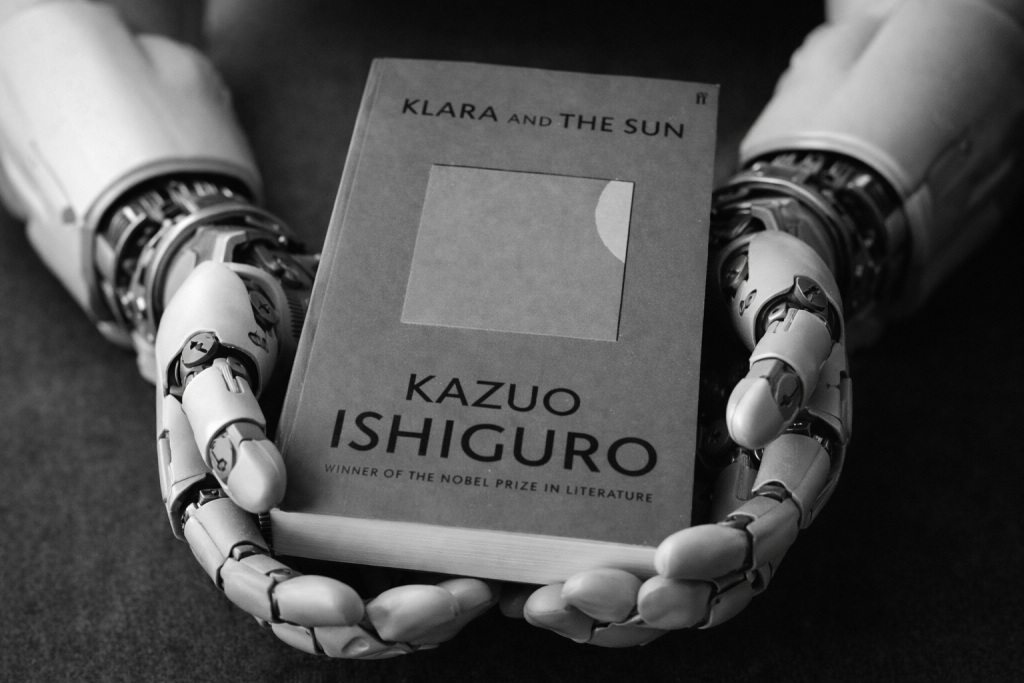
Her purpose is simple and absolute: be a good companion to Josie, whatever the cost.
She accepts suffering without protest. She reshapes her understanding of the world to remain faithful to that goal.
From a technical perspective, this looks like success.
A system that does exactly what it was designed to do.
From a human perspective, it is unsettling.
The book exposes something we rarely talk about.
Alignment is not only about safety.
It is about power. About whose values are embedded. And about what happens when obedience is built into the core of a system.
Klara never questions her role.
And that might be a problem we need to deal with.
AI spirit: Where the Soul Might Actually Live
This part of the book stayed with me longer than I expected.
It made me stop and question what we really mean when we talk about having a soul.
In Klara and the Sun, humans treat consciousness almost like a technical challenge. Capture enough data. Model the patterns well enough. And, in theory, a person could be reproduced.
But the story keeps pushing back against that idea.
It suggests that something essential resists replication. Something that cannot be extracted, stored, or transferred.
Reading this, I found myself thinking about AI, spirit, and presence. About the difference between behaving like someone and being someone.
What if a person is not fully contained within their body or their mind.
What if the soul lives in relationships. In shared memories. In the way others hold us in their lives.
This realization made me reflect.
In a world obsessed with optimization and scale, Klara and the Sun reminds us that meaning is relational. Distributed. Fragile.
You cannot fully copy what lives between people.
Reflecting about what it means to be human
Klara can imitate care with extraordinary precision.
But she cannot fully inhabit it.
She observes love. She learns its patterns. She acts on it. Yet her understanding is filtered through her design. Through her original purpose.
This mirrors a real challenge in AI. Even systems that appear empathetic learn values through data, architecture, and reward. Something always slips through.
Context. History. The unspoken.
The book does not argue that machines should never feel human-like.
It asks us to notice what happens when they do.
And what responsibility follows from that.
What This Story Asks of Us, Not of Technology
Klara and the Sun is not a warning about evil machines.
It is a mirror.
The Artificial Friend remains gentle, patient, and prosocial.
The human world around her is messy and status-driven,
That inversion feels intentional.
I believe that the future will not be defined by how advanced our technology becomes.
It will be defined by how we choose to relate.
To each other.
And to the systems that increasingly reflect our values back to us.
I closed the book thinking less about what AI might become.
And more about who we are training it to be.
Related reading: AI Creativity vs Human Creativity: Can AI Replace Engineers? · Experimenting With AI in Design Thinking Workshops
Join the newsletter
Practical insights on AI, leadership and innovation — every week.