
October 11, 2026
Enterprise Digital Transformation Starts With People

Enterprise digital transformation starts with people. Here is how to build the business case, make the benefits tangible and secure investment before defining the solution.
Some years ago, a client contacted us about a digital transformation initiative. They wanted to modernise several systems and had been trying to secure the funding to move forward.
We started with a small assessment.
Very quickly, we discovered how much work had already gone into the proposed solution. The team had explored technical requirements, considered dependencies and thought carefully about what the organisation might need in the future.
There were some excellent engineers in that team. They wanted to be sure the solution was feasible and understand what it would take to build it. They had invested enormous time and effort in working through the details.
But the initiative was still waiting for funding.
The technical thinking had developed much further than the conversations needed to gain support. The economic benefits were unclear. And management did not yet have a compelling reason to make the investment.
I keep seeing this pattern in enterprise digital transformation: capable people doing a great deal of work, in an order that makes it difficult to move forward.
What is enterprise digital transformation?
Enterprise digital transformation is a coordinated change in how an organisation works and creates value, using digital technology alongside changes to processes, responsibilities and skills.
It can include modernising connected systems, improving how information moves between departments or introducing AI into everyday work. Its scope reaches beyond installing a tool. It changes how people make decisions, collaborate and serve customers.
That is what makes the enterprise part important. A decision that looks sensible within one team can create work somewhere else. A new platform might connect the data while leaving the responsibilities just as unclear as before.
To understand what needs to change, we have to understand the people and the work across those boundaries.
Why good teams get caught in the wrong order
Even now, I find myself in heated discussions with some of my customers’ best engineers and architects. They want to discover the perfect technical solution before they have had a serious conversation with the people who will use it or the people being asked to fund it.
I understand the instinct. When you know how much can go wrong in a complex system, you want to anticipate the difficulties. You want to plan what you will need.
But how much can you meaningfully specify before you have involved the people whose work will change?
And how much can you plan before you know what the organisation is willing to invest?
With the client I mentioned, we worked together in a six-week sprint. We spoke with key stakeholders and developed a business case connected to the company’s strategy. By the end, they had something concrete to discuss with management. A few months later, they secured funding.
The work began to move when the reasons to invest became clearer.
I wrote about why Maria and I are exploring this question in our book in How to win funding and support for digital transformation.
Start with the people who will live with the change
For enterprise digital transformation to work, the people affected need a voice from the start.
A new system can change someone’s responsibilities, routines and confidence in doing their job. If we want people to embrace it, they need to be part of defining it from the beginning.
In practice, those early conversations are where we discover what matters. What makes their work difficult? What would they like to improve? What are they concerned about losing?
For example, imagine a team asking for easier access to product information. We could immediately discuss search, permissions and integrations. But first, it helps to understand what happens when someone cannot find the information they need.
Does a decision get delayed? Is someone repeating work? Or do two teams disagree about which information to trust?
The answers may reveal that the problem also involves ownership or an unclear working process. As a result, that changes what a useful solution would need to do.
It also changes how people experience the initiative. They can see their knowledge shaping it while the decisions are still open.
Build a digital transformation business case around the problem
A digital transformation business case should explain why a change deserves investment, what it could achieve and what it would take to deliver. Technical feasibility belongs in that discussion, alongside the people, costs and practical demands of adoption.
For our client, connecting the initiative to the company’s strategy gave the proposal a context management could recognise. It helped turn a conversation about modernising systems into a conversation about what the organisation wanted to achieve.
These are the questions I would want the early business case to answer:
| Question | What needs to become clear |
|---|---|
| Why change? | The problem, who experiences it and the consequences of leaving it unresolved. |
| Why does it matter now? | The connection to company strategy, current priorities and the cost or risk of waiting. |
| What could improve? | Specific outcomes, current performance and the people who would own the benefits. |
| What are the options? | A proportionate comparison of improving the current approach, making a smaller change or pursuing a broader initiative. |
| What will it take? | A realistic view of costs, internal capacity, feasibility, dependencies and uncertainty. |
| What decision is needed? | The next commitment, what it enables and how progress will be assessed. |
The answers can become more detailed as the work develops. Early on, their purpose is to make a responsible decision possible.
Make enterprise digital transformation benefits tangible
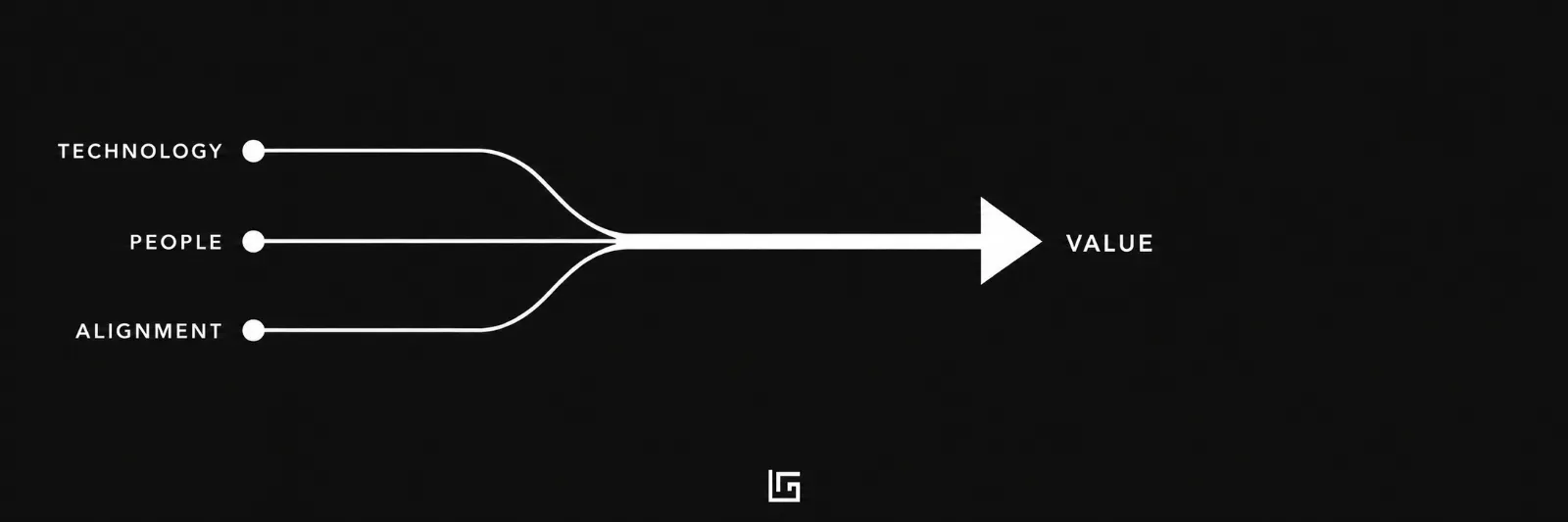
“Better collaboration” sounds good. It is still difficult to fund.
Helping two teams avoid repeatedly checking which version of product information is correct gives us something more concrete to discuss.
The same applies to “greater efficiency”. Which activity would take less time? How often does it happen? What could people do with the capacity that becomes available?
Enterprise digital transformation benefits might include:
- Less rework: fewer corrections caused by incomplete or conflicting information.
- Shorter lead times: fewer delays between a request, a decision and the work that follows.
- Lower operating costs: reduced spending on duplicated tools or support, where those costs can actually be removed.
- Better customer outcomes: more reliable delivery, quicker responses or fewer avoidable errors.
- Greater adaptability: the ability to introduce a new product, process or service with less disruption.
These are possibilities to investigate. In other words, each needs a baseline, an expected improvement and someone who can explain how the change would produce it.
The people closest to the work should help define the benefit. Finance can help test its economic value. Together, they make the case more credible than a technical team estimating the outcomes alone.
Discuss digital transformation ROI without pretending to know everything
Digital transformation ROI compares the financial benefits of an initiative with its total costs over a defined period. A simple calculation is:
ROI = (financial benefits − total costs) ÷ total costs × 100
Suppose an initiative is expected to deliver €450,000 in financial benefits over three years, with total costs of €300,000 over the same period. Its simple projected ROI would be 50%.
That is an illustration, not a result from the client story. It also leaves out the timing of cash flows. Finance may use discounted cash flow, net present value and payback alongside a simple ROI figure.
The harder work sits behind the calculation. Costs can include integration, data migration, training, internal time, ongoing support and retiring the old systems. However, benefits depend on when people can actually adopt the new way of working.
Time saved is not automatically cash saved. If a team gains five hours a week but its costs stay the same, we should describe the capacity released and how it will be used. Counting it as a budget reduction would give the wrong impression.
In its guidance on ERP ROI, Oracle similarly includes training and workplace disruption in the cost assessment and stresses accountability for achieving benefits.
I would rather discuss a range of outcomes with clear assumptions than present one impressive number nobody can explain. What happens if adoption takes longer, integration costs more or only part of the expected benefit arrives?
Those questions help the organisation understand the decision it is making.
Match digital transformation investment to what you know
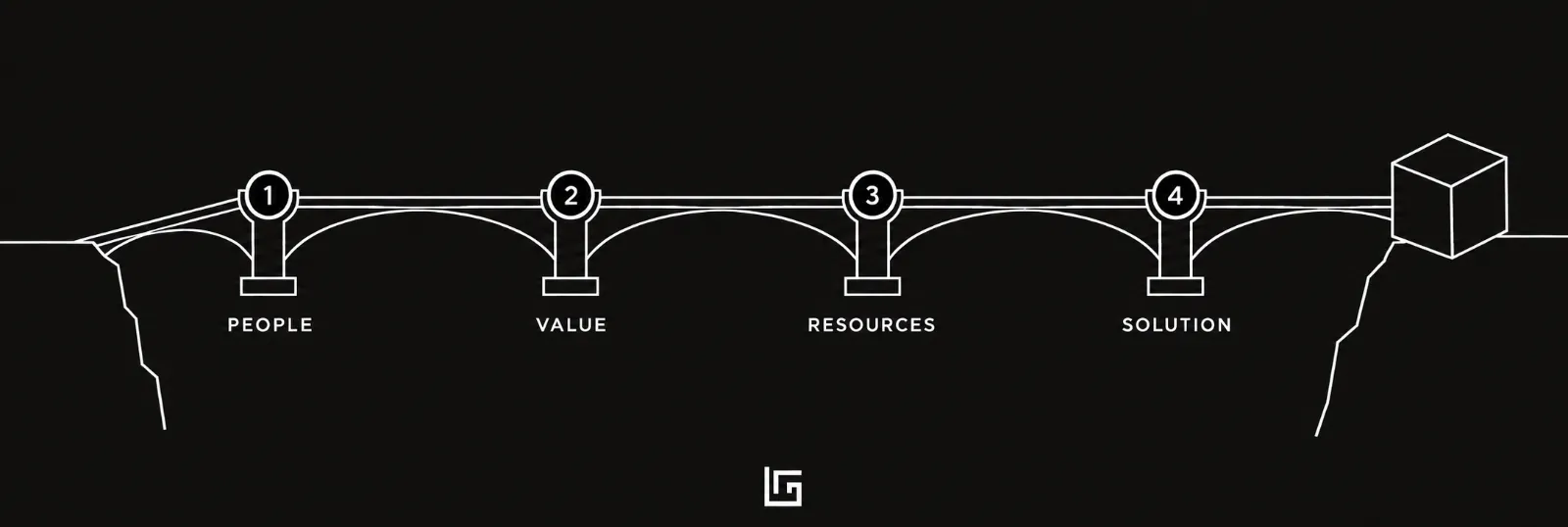
The first funding request does not always need to cover an entire programme. Sometimes the evidence supports an assessment, a pilot or a first phase that resolves a meaningful uncertainty.
Therefore, that first commitment should have a purpose. What will the organisation learn or achieve? Who needs to participate? What evidence would justify moving further?
An enterprise digital transformation investment also commits people’s time. Colleagues need space to make decisions, explain current processes, test changes and help others adopt them. A software budget cannot create unlimited capacity inside a busy organisation.
With that in mind, understanding those constraints helps us decide what is realistic. It may support a substantial programme. It may point towards a smaller starting point.
Either gives the engineering team a much firmer basis for developing the solution.
Leave room for AI and the organisation to evolve
Three years is a long time to assume that every detail of a system will still make sense.
As companies explore AI agents, some activities may move from people transferring information and coordinating tasks to people setting direction, checking outcomes and handling exceptions. Other activities may require more human oversight than expected.
We do not yet know how those changes will unfold in each enterprise. That is a reason to test assumptions and keep some design decisions open.
The same applies to business priorities. A new market, a change in strategy or feedback from users can alter what matters most.
I explore the human side of this shift further in Preparing for AI Adoption Across 3 Levels. The connection here is simple: people need to help shape the change while we are still learning what is possible.
Win hearts before you change systems
For enterprise digital transformation, what I keep coming back to is the order of the work.
We spend so much time trying to describe the future solution. Yet the conversations that would give it a purpose can still be waiting to happen.
Starting with people helps us understand what is worth improving. Making that value clear gives the organisation a reason to commit resources. The solution can then develop with the people who will use it, within a direction the organisation supports.
There is still plenty of engineering to do. But it has a clearer purpose.
Before we put years into perfecting a solution, it makes sense to give people a real part in shaping what it should become.
Win hearts before you change systems.
Where is your initiative today: refining the solution, or having the conversations that will help it move forward?
Join the newsletter
Practical insights on AI, leadership and innovation — every week.