
April 5, 2026
How We Handle Conflict Shapes Our Relationships

A few weeks ago, I was on a discovery call with a company that was struggling with adoption in a large transformation program. It was a big organization and a big investment. And yet… things weren’t landing.
I had prepared quite a bit for that call. I had looked into their structure, their systems, and tried to get a sense of where the friction might be. I went in thinking we would talk about processes, tools, maybe some gaps in the rollout.
But within the first few minutes, it became very clear.
This was not a system problem.
It was a relationship problem.
The boss started speaking first.
He had a strong presence, very direct, very focused.
The kind of leader who moves quickly and expects others to keep up.
He was frustrated, and you could feel it.
He started listing everything that had gone wrong.
Delays, lack of clarity, missed expectations.
And then, quite quickly, the focus shifted to one person in the room.
The project lead.
“You didn’t manage this properly.”
“You should have escalated earlier.”
“This is why people are resisting.”
The room became quiet in that very specific way where everyone is listening, but no one feels comfortable.
Then she responded.
“I don’t have support.”
“Processes aren’t well defined.”
“You didn’t have time for the project.”
Two people describing the same situation, but from completely different realities.
And then something interesting happened.
He didn’t stay only in the blaming mode. He shifted.
“You need to spend more time with users.”
“You need to be closer to the teams.”
“You need to talk to people more.”
He moved from criticizing to trying to fix.
The roles we slip into in conflict
If you’ve ever been in a situation like this, you probably recognize the pattern.
There is a simple way to understand what was happening in that moment.
In conflict, we tend to move between three roles.
- The one who blames.
- The one who feels blamed.
- And the one who tries to fix.
We don’t choose these roles consciously.
We slip into them.
In that meeting, it happened almost instantly.
He started as the one who blames.
She moved into the one who defends.
Then he stepped into the one who tries to fix.
And the conversation stayed trapped there.
Because when we are in those roles, we are not really in a conversation anymore.
We are reacting.
We are protecting ourselves.
We are trying to regain control.
This is something I see very often in my work with companies.
Teams think they have a process problem or a delivery issue, but what is really happening is a people issue.
The story we create about each other
What makes these situations even more difficult is the story we build in our head while the conversation is happening.
What I witnessed in that meeting is something that experts call the Karpman Drama Triangle.
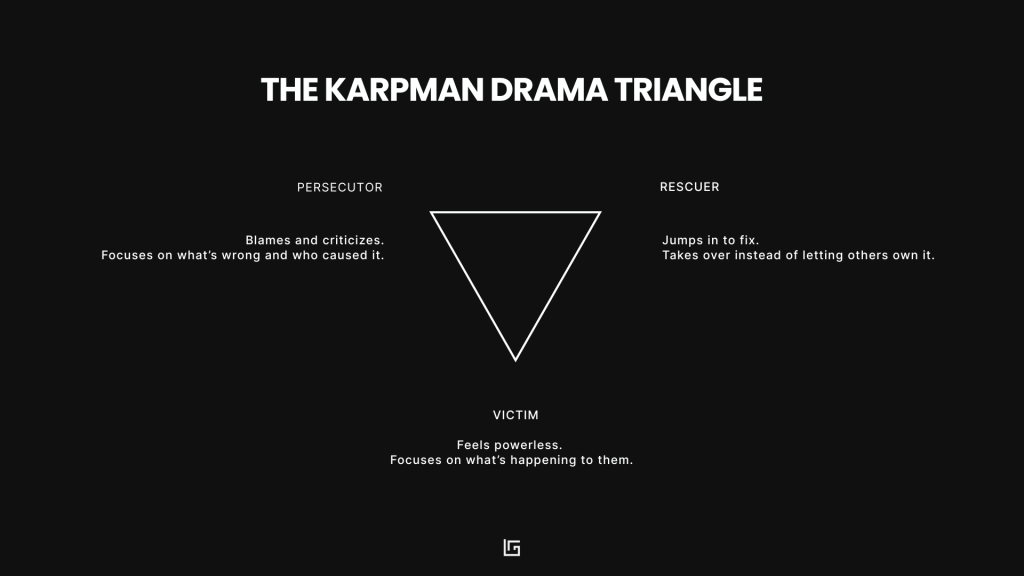
Three roles:
- The persecutor (blaming, attacking)
- The victim (defensive, powerless)
- The rescuer (trying to fix, often unsuccessfully)
He saw himself as the one pushing for results, trying to move things forward, trying to make things happen. From that perspective, it made sense that he would focus on what was not working.
She, on the other hand, saw herself as someone who had been left alone to deal with complexity, without enough support or direction. From her perspective, it made sense to explain and defend.
And once we create that internal story, we stop being curious and start filtering what we hear. We hunt for confirmation instead of understanding.
The other person slowly becomes a role in our story, rather than a person we are trying to understand.
How to handle conflict in digital transformations: Why conflict feels so different depending on who you are
I’ve seen this not only in companies, but also in my personal life.
In my family, we all deal with conflict in very different ways.
I tend to be someone who wants to move forward quickly.
When something goes wrong, I want to understand it, find a solution, and close the loop.
But my mum is different.
She needs to feel first.
She needs to stay with what happened, talk about it, and process it emotionally before she can move on.
For her, feeling understood is the starting point.
If I move too quickly into solutions, she feels like I am skipping things.
If she stays longer in the feeling, I start feeling like we are not moving.
And then there is my brother.
He needs time to think.
He steps back, reflects, and only comes back into the conversation once he has processed things internally.
So you have three people in the same situation:
- One who wants to act.
- One who wants to feel.
- One who wants to think.
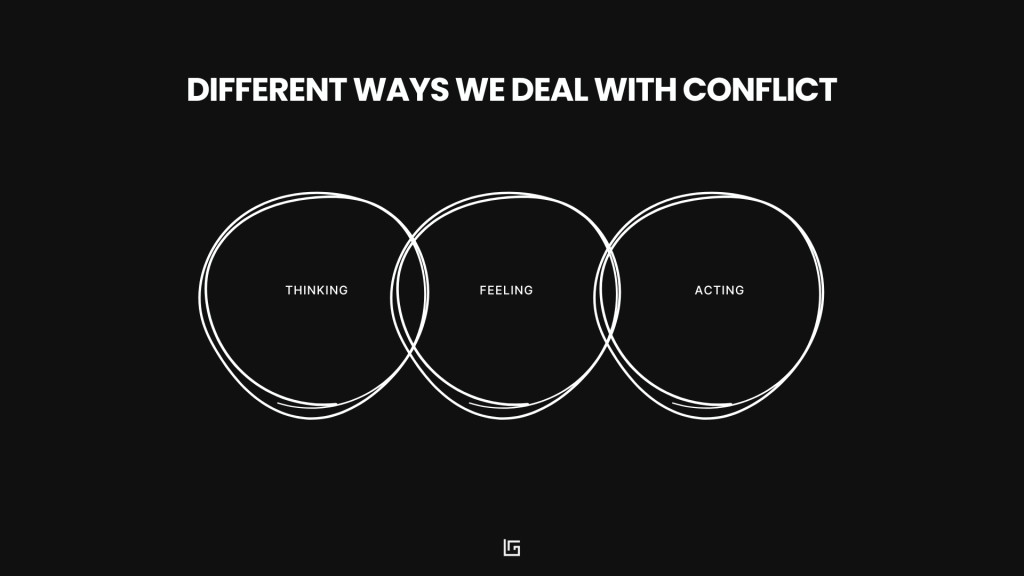
It is almost a perfect setup for misunderstanding.
And yet, no one is wrong: we are simply different.
The instinct in moments like this is to try to change the other person.
To make them see your perspective, to make them understand, to make them behave differently.
But let’s be honest: that rarely works.
What actually helps is something simpler, and more uncomfortable.
To pause.
To notice how the other person is processing.
And to meet them there, even if it’s not your natural way.
Because understanding doesn’t come from winning the argument.
It comes from meeting each other where you are.
Why this matters more than we think
We often think of relationships as something personal, something that belongs outside of work.
But relationships are at the center of everything we do.
They shape how we collaborate.
How we make decisions.
How we deal with change.
In many of the transformation projects I’ve been part of, resistance is rarely about the tool or the system itself.
It’s about trust.
It’s about feeling heard.
It’s about how people experience each other in moments of tension.
This is why learning how to argue well is so important.
Not because we want to avoid conflict, but because conflict is part of how we grow, decide, and move forward together.
A small shift I keep coming back to
There is one idea I try to hold on to, especially in difficult conversations.
You cannot control how the other person reacts.
But you can choose how you respond.
You can react quickly, from habit.
Or you can pause, even for a second.
You can hold on to your story.
Or you can get curious about theirs.
You can try to win the argument.
Or you can try to understand what is really going on.
These small choices shape the quality of your relationships.
At work.
At home.
And in all the spaces in between.
And in the end, that is where most things are decided. Not in the strategy or the tools, but in the conversations we are able to have with each other.
Related reading: Leaders Bring the Weather · What Makes a Team Work? · Why Being Easy to Work With Is a Superpower
Join the newsletter
Practical insights on AI, leadership and innovation — every week.