
February 2, 2025
I Ditched My Smartphone: Why I Got a Dumb Phone and Went Low-Tech
It was one of those gray, dreary mornings—the kind where the rain doesn’t just fall, it soaks into your bones. I was on a train, heading into the city for a customer visit, lost in thought. Then, just like that, the clouds parted, and the sun broke through. A rainbow stretched across the sky, bold and brilliant.
I glanced around, expecting to share this moment with someone.
But no one else noticed.
Heads down, eyes glued to their screens, lost in their phones.
And that’s when it hit me—how often do we miss what’s right in front of us?
Hooked on the Scroll: Rethinking My Screen Habits
That realization really sank in.
When had I started living in reaction mode, letting my phone dictate how I spent my time?
I often found myself reaching for my phone without even thinking—like muscle memory.
Just a quick check, I’d tell myself.
Just one email, one message, one little task.
But one thing always led to another.
I’d respond to an email, then remember I needed to book that flight I forgot about.
Oh, and my friend sent me a message on WhatsApp—I should reply before I forget.
Before I knew it, thirty minutes had disappeared into the black hole of notifications and to-dos.
It wasn’t just about being busy.
It was about the constant pull—the feeling that I always had to be on, available, responding, doing.
And honestly?
It was exhausting.
Understanding the Dopamine Trap
After that day, I started reading about social media addiction and the dopamine cycle that keeps us hooked.
The book that resonated with me the most was Dopamine Nation by Dr. Anna Lembke.
It’s an eye-opening read about how our brain’s pleasure and pain systems are interconnected and how modern technology exploits these systems to keep us addicted. If you want a great summary of the book, check out this interview on The Diary of a CEO‘s podcast.
Here are three key lessons from Dopamine Nation that stood out to me:
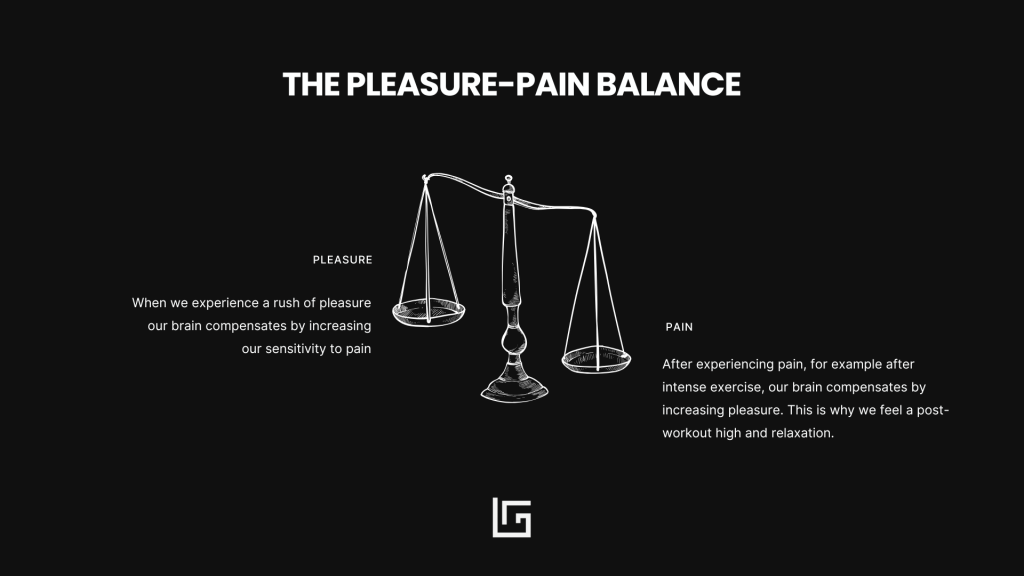
· The Pleasure-Pain Balance
Our brains operate on a delicate balance between pleasure and pain. When we experience a rush of pleasure—like checking social media or receiving a notification—our brain compensates by increasing our sensitivity to pain. The more we seek pleasure, the more we experience subsequent discomfort, creating a cycle of dependency.
· The Age of Indulgence
We are bombarded with dopamine-triggering stimuli 24/7. Social media, streaming platforms, and notifications keep us trapped in a continuous loop of consumption. This overload hijacks our brain’s natural reward system, making it harder to find joy in simple, everyday moments—like watching a rainbow outside the train window.
· Dopamine’s Deeper Role
Dopamine isn’t just about pleasure; it’s about motivation and reward. High-stimulus activities like endless scrolling and constant notifications rewire our brain pathways, reducing our ability to enjoy real-life experiences. Addiction isn’t just about a substance—it’s about how our brain chemistry adapts to overstimulation.
The Dark Side of Social Media (And How It Keeps Us Hooked)
Ever notice how good it feels when you get a new like, comment, or DM?
That’s dopamine at work:
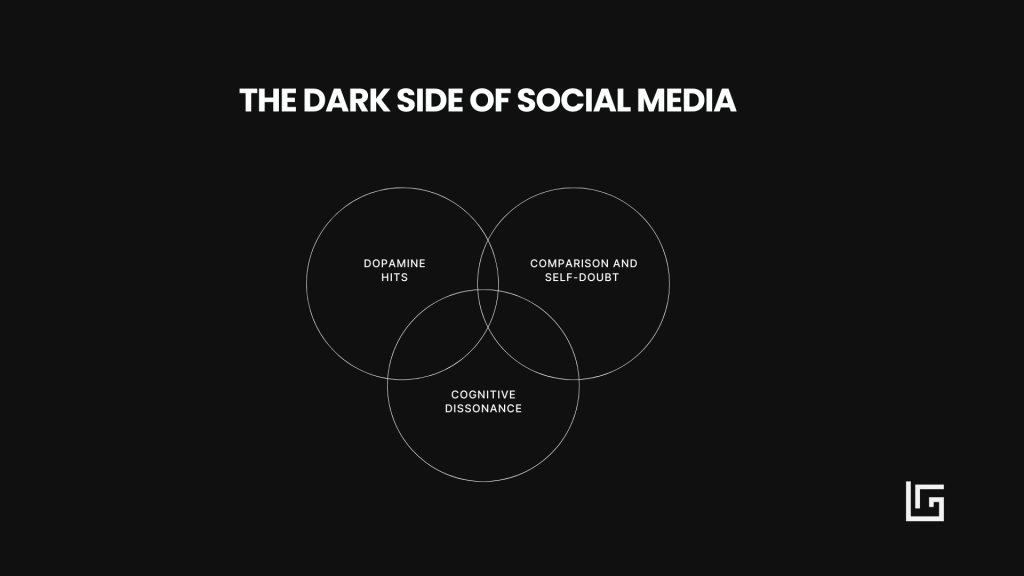
· It Hooks Us Up with Dopamine Hits
Every like, comment, and notification gives a small dopamine hit. Over time, we crave those hits, and before we know it, we’re scrolling mindlessly for hours.
· It Fuels Comparison and Self-Doubt
We all know social media is a highlight reel, but that doesn’t stop us from comparing our everyday lives to someone else’s perfectly curated moments. One minute you’re feeling good, the next you’re wondering why your house isn’t as aesthetic, your vacations aren’t as luxurious, or your career isn’t as impressive. It’s a recipe for self-doubt. It tricks us into feeling like we’re not enough, not achieving enough, not doing enough.
· It Creates Cognitive Dissonance
Social media is designed to manipulate our emotions. Algorithms strategically mix feel-good posts with ones that trigger outrage, insecurity, or FOMO. They show us content that makes us feel good, then content that makes us feel bad—creating a cycle of highs and lows. The longer you stay, the more they can influence you, and the more ads they can show you.
The #1 Reason I Ditched My Smartphone: Why I Got a Dumb Phone in 2025
The biggest reason I decided to change?
My daughter.
She’s seven, and a lot of kids in her class already have smartphones.
If I—a grown woman with a stable career and a strong sense of self—struggle to resist the pull of my phone, what chance does she have?
So, I made the leap.
I ditched my smartphone and switched to a dumb phone.
I owe her an example. If I want her to have a healthy relationship with technology, I need to show her what that looks like. Presence. Boredom. Life beyond a screen.
Logging Off to Tune In: My Digital Detox
So, I made a change.
After work, I go offline. I slip my dumb phone into my pocket and step away from the digital noise.
At first, it felt weird—like I was missing something.
But then? I started noticing things again.
The quiet.
The little moments I used to overlook.
The space to actually think.
I still work on my computer, check emails during office hours, and pop into social media for industry news.
But outside of that? I’m present.
And honestly? I’ve never felt more free.
The Unexpected Benefits of Going Low-Tech
It’s only been a few weeks, but I’ve already noticed some major shifts:
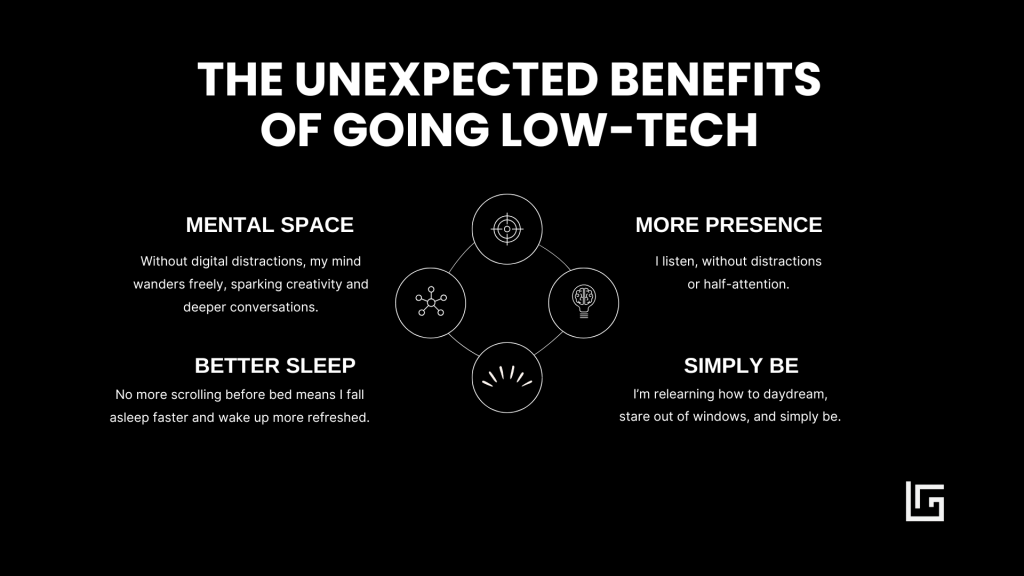
1. I Have More Mental Space
Without constant digital input, my mind has more room to wander. I find myself coming up with creative ideas, noticing small details, and being more engaged in conversations.
2. I Sleep Better
No more scrolling before bed means I fall asleep faster and wake up more refreshed.
3. I’m More Present with My Kids
When they talk to me, I actually listen—not half-listen while checking a notification.
4. I’m Rediscovering the Joy of Doing Nothing
Remember when we used to stare out of windows, daydream, or just be? I’m learning to do that again. And it feels amazing.
Will I Go Back to a Smartphone, or Stay with my Dumb Phone?
I don’t know yet.
Maybe I ditch my dumb phone at some point.
But for now, I’m enjoying this experiment.
It’s helping me reclaim my attention, rewire my brain, and reconnect with the world around me.
If you’re feeling the same pull—the same urge to escape the dopamine trap—consider giving it a try.
You don’t have to ditch your smartphone entirely.
But you can set boundaries.
You can create space for boredom.
You can take back control of your attention.
Because life happens outside the screen.
And I, for one, don’t want to miss it.
Join the newsletter
Practical insights on AI, leadership and innovation — every week.