
January 21, 2025
Get Buy-In Before Kickoff: The Project Compass Canvas

Ever been on a project where half the team seems checked out from day one?
Maybe stakeholders attend meetings but barely contribute. Or team members complete tasks without really understanding why, leading to misalignment and frustration.
When people don’t feel invested, projects stall.
But here’s the thing—people want to be part of something meaningful.
They want a voice in shaping the future, not just to follow orders from behind closed doors.
I find it useful to involve them early in the project design, making them feel like co-creators rather than just executors. When people co-create from the start, they take ownership—leading to smoother execution and way better results.
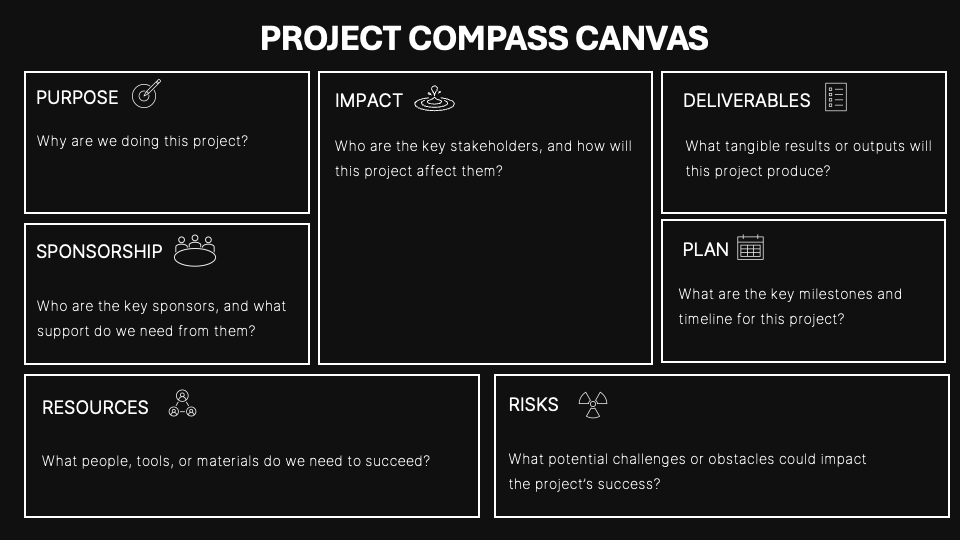
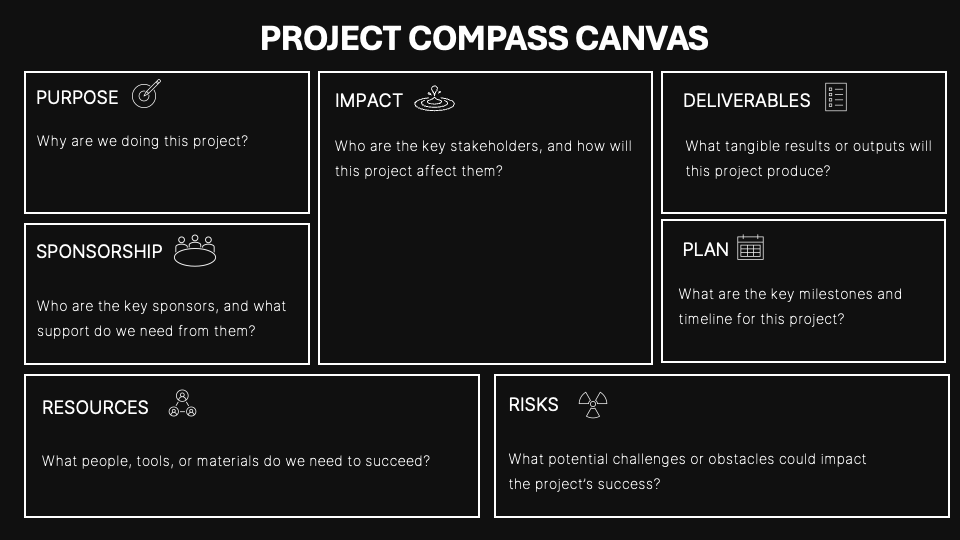
Over the years, I’ve put together a structured Project Compass Canvas—a simple framework to align teams, secure buy-in, and bring clarity before a project even kicks off.
Let’s break it down.
We’ll walk through each section of the Project Compass Canvas using a real-world example: The Nest, a retreat space designed for remote teams.
Ready?
Let’s dive in.
1. Purpose:
Why Are We Doing This Project?
Every project needs a clear purpose. Without it, teams get lost in the weeds, working on tasks without understanding the bigger picture. The purpose should answer: Why does this project exist? What problem does it solve? What opportunity does it create?
Our Purpose for The Nest:
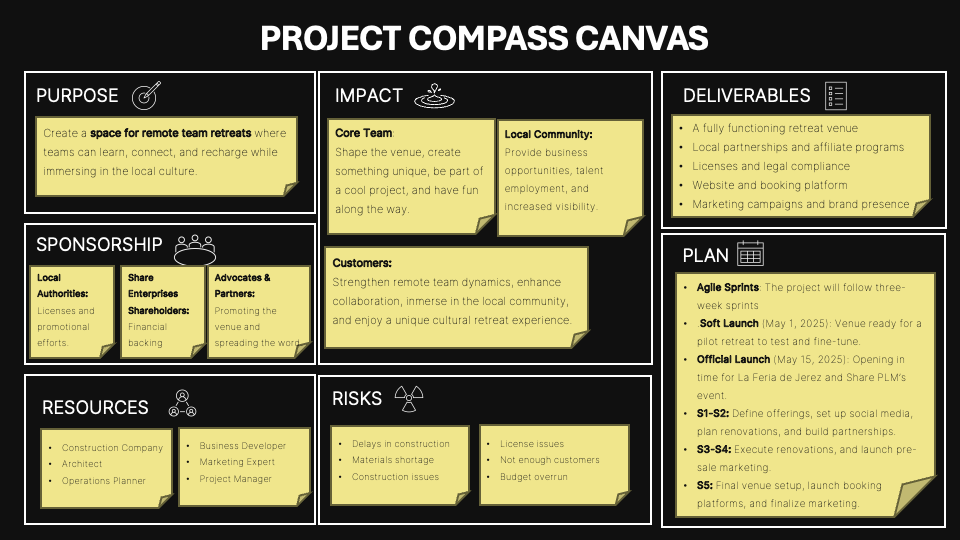
Create a space for remote team retreats where teams can learn, connect, and recharge while immersing in the local culture.
This simple but powerful statement unites the team around a common goal. Everyone involved knows what they’re working towards and why we are all here.
2. Impact:
Who Are the Key Stakeholders, and How Will This Project Affect Them?
Great projects consider who they impact and how from the beginning.
This section identifies the key stakeholders and ensures we think about how the project will affect them
Impact The Nest:
- Core Team: Shapes the venue, builds something unique, and enjoys the process.
- Local Community: Gains business opportunities, employment, and increased visibility.
- Customers (Remote Teams): Strengthen team dynamics, collaborate better, and experience cultural immersion.
By defining these groups early, we make sure to plan how those involved will be affected and what we can do about it.
3. Sponsorship:
Who Are the Key Sponsors, and What Support Do We Need From Them?
No project thrives without support. Sponsorship isn’t just about securing a budget; it’s about having champions who promote your project, push it forward, and remove obstacles along the way. The sooner you identify your sponsors,, the fewer roadblocks you’ll hit down the road.
Sponsorship from The Nest:
- Local Authorities: Provide licenses and promotional support.
- Share Enterprises Shareholders: Offer financial backing.
- Advocates & Partners: Spread the word and promote the venue.
This simple “sponsorship map” helps the team secure the right resources and make the required calls from the start.
4. Deliverables:
What Tangible Results or Outputs Will This Project Produce?
Teams need to know what success looks like. Defining deliverables ensures everyone works towards measurable outcomes rather than vague aspirations.
Deliverables for The Nest:
- A fully functioning retreat venue
- Local partnerships and affiliate programs
- Licenses and legal compliance
- A website and booking platform
- Marketing campaigns and brand presence
Listing these concrete results keeps the team aligned on what they need to accomplish.
5. Plan:
What Are the Key Milestones and Timeline for This Project?
Projects stall when timelines aren’t clear. A well-defined plan with milestones keeps momentum going.
Plan for The Nest:
- Agile Sprints: The project follows three-week cycles.
- Soft Launch (May 1, 2025): Venue ready for a pilot retreat.
- Official Launch (May 15, 2025): Grand opening during La Feria de Jerez and Share PLM’s event.
- S1-S2: Define offerings, set up social media, and plan renovations.
- S3-S4: Execute renovations and launch pre-sale marketing.
- S5: Final venue setup, launch booking platform, and finalize marketing.
With this high level roadmap, every team member knows has an idea of what‘s coming next.
6. Resources:
What People, Tools, or Materials Do We Need to Succeed?
Lack of resources can cripple even the best ideas. Identifying who and what is needed upfront ensures smooth execution.
Resources for The Nest:
- Construction Company (for renovations)
- Architect (for design)
- Operations Planner (for logistics)
- Business Developer (for partnerships)
- Marketing Expert (for branding and visibility)
- Project Manager (to oversee execution)
Clearly defining resources ensures all roles are filled before starting.
7. Risks:
What Potential Challenges or Obstacles Could Impact the Project’s Success?
Most projects encounter unexpected hurdles. Anticipating risks early allows teams to develop mitigation strategies.
Risks The Nest:
- Delays in construction
- Materials shortage
- License issues
- Not enough customers
- Budget overruns
Acknowledging these risks upfront prevents last-minute crises and allows proactive planning.
The Takeaway: Secure Buy-In Early for Success
Most projects don’t fail because of bad ideas—they fail because people aren’t on the same page. Misalignment, confusion, and poor communication can derail even the best plans.
This simple but powerful design thinking tool helps you get buy-in, spark collaboration, and set your project up for success—whether you’re launching a product, driving a tech transformation, or building something new like The Nest.
Next time you start a project, don’t just tell people what to do—involve them in shaping the journey. Try the Project Compass Canvas, and watch your team’s engagement and motivation soar!
So next time you kick off a project, don’t just hand out instructions.
Talk to people.
Get their feedback.
Let them shape the journey.
Join the newsletter
Practical insights on AI, leadership and innovation — every week.