
July 12, 2026
The Skill-Will Matrix: Template, Examples and How to Use It

Last week I found myself sketching the Skill Will Matrix during a conversation with a customer leading a transformation program in a rapidly growing company.
Like many successful organizations, they had grown quickly. New customers. New priorities. New technologies. But growth had brought something much harder to manage than systems or processes.
People.
The Skill and Will You Have Isn’t always the Team You Need
My customer had inherited a team built for the company they were, not necessarily for the company they were becoming.
Some roles had evolved dramatically. New tools and different ways of working demand capabilities that hadn’t been required a few years ago.
As we talked, he described something I have seen many times throughout my career. Some team members lacked the skills required for the next chapter, but what worried him even more was that they didn’t seem interested in acquiring them.
They had spent years doing the same work, and now that everything was changing, they had little desire to change with it.
His question stayed with me long after our conversation ended.
“How do you build a high-performing team when you don’t get to choose the team?”
The Skill Will Matrix: A Compass for Situational Leadership
Some years ago I came across the Skill Will Matrix. Developed by Ken Blanchard, it’s a simple leadership tool that maps people across two dimensions Skill and Will.
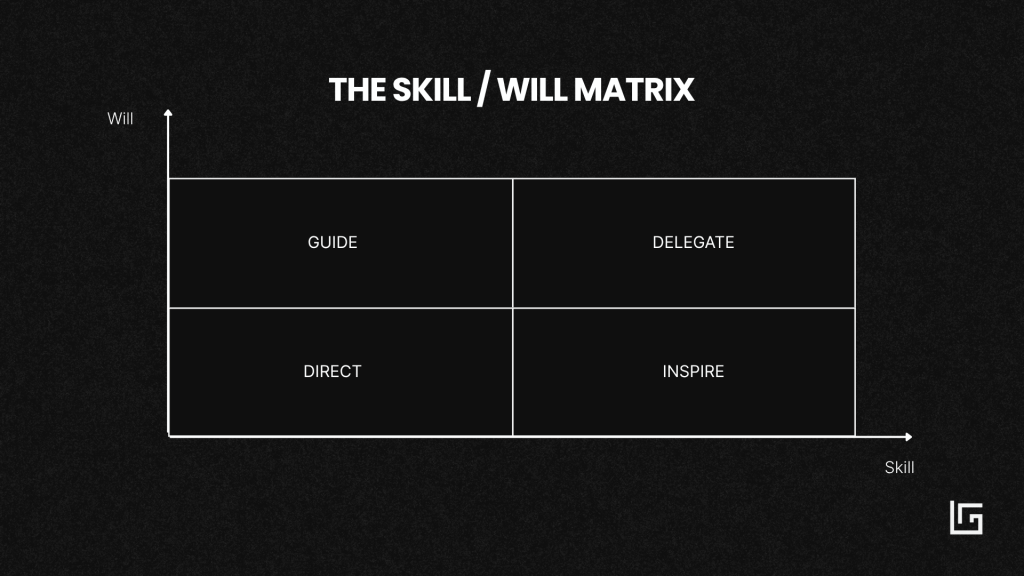
Skill. Can this person do the job?
Will. Do they want to?
I see this tool as a compass to map what we need in different situations.
Because often we need different things at different moments at work.
Here is how the tool works:
How to Use the Skill vs Will Matrix to Develop and Lead People
Guide: When Potential Matters More Than Experience
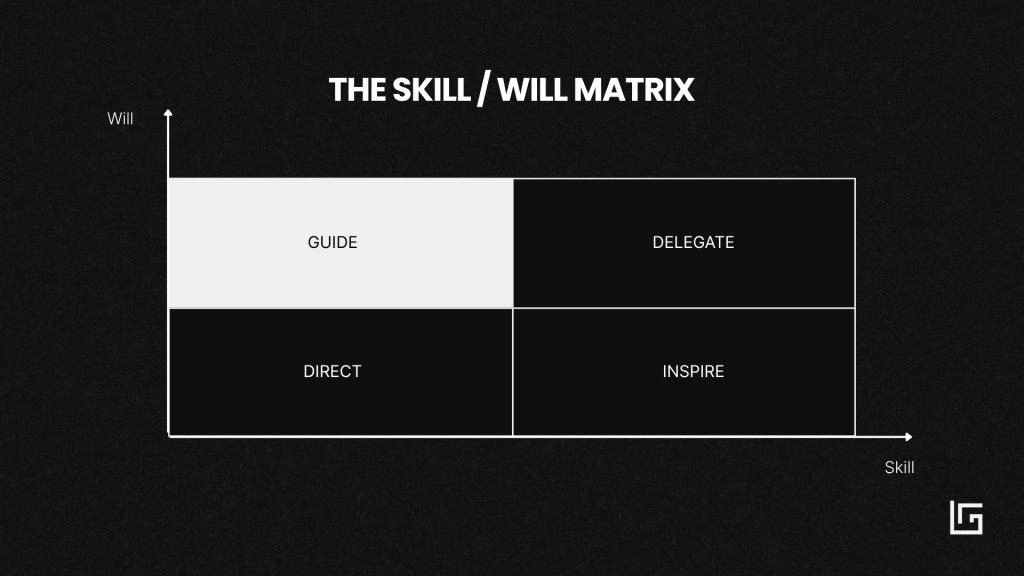
This is probably my favourite quadrant.
I work with many young graduates. They arrive with incredible curiosity, enormous energy and a genuine desire to learn.
They also lack experience and make mistakes.
Lots of them.
When someone has high motivation but limited experience, we need to create the conditions for growth.
That means setting expectations, giving frequent feedback, making time for questions and creating opportunities for them to stretch beyond what they think they’re capable of.
I’ve learned that attitude compounds quickly.
Someone who knows very little today can become one of your strongest contributors in just a couple of years if they receive the right guidance.
Some of the people I’m most proud of today started exactly here.
They joined with little experience but enormous curiosity and top attitude.
Today they lead projects independently and mentor others.
Sometimes the greatest potential is hidden inside people who simply haven’t had the opportunity yet.
Direct: When Change Outpaces People
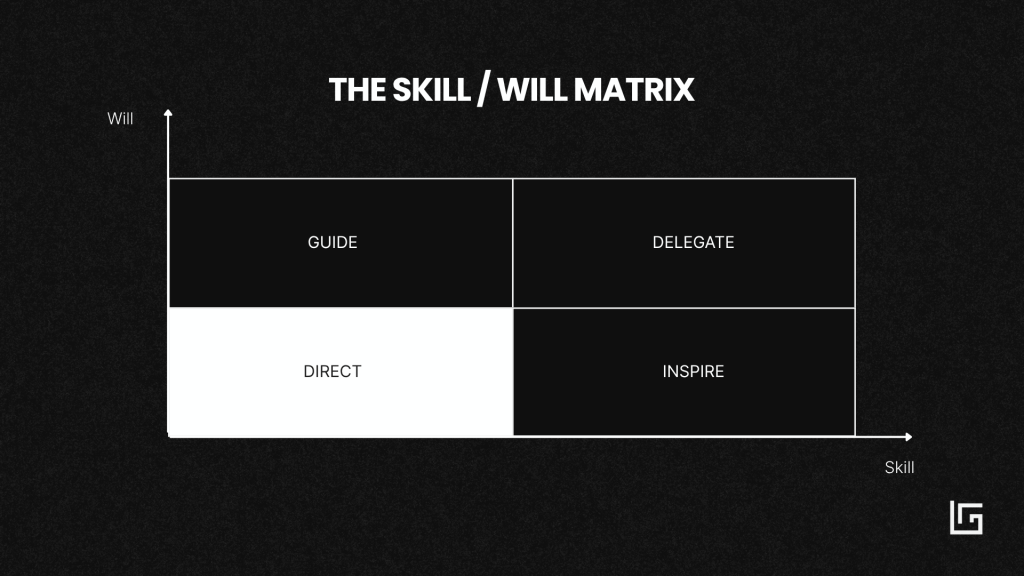
This was exactly the challenge my client is facing.
The people in his team aren’t incapable.
They’re simply no longer prepared for what the business needed.
For years they had done the same work.
Then everything changed.
New systems.
New expectations.
New processes.
The company has evolved faster than they have.
What makes the situation difficult isn’t only the lack of skills.
It’s the lack of willingness to build them.
This is probably the hardest quadrant for any leader because there isn’t a simple solution.
Training alone won’t solve it.
Neither will motivational speeches.
Sometimes people are afraid.
Sometimes they’re overwhelmed.
Sometimes they’ve lost confidence.
And sometimes they’ve simply become comfortable.
As leaders, our responsibility is first to understand why.
Then we provide clarity.
Clear expectations.
Clear priorities.
Clear accountability.
And then, check on people.
Sometimes, despite everyone’s best efforts, the role is simply no longer the right fit.
Inspire: When Great Talent Loses Its Spark
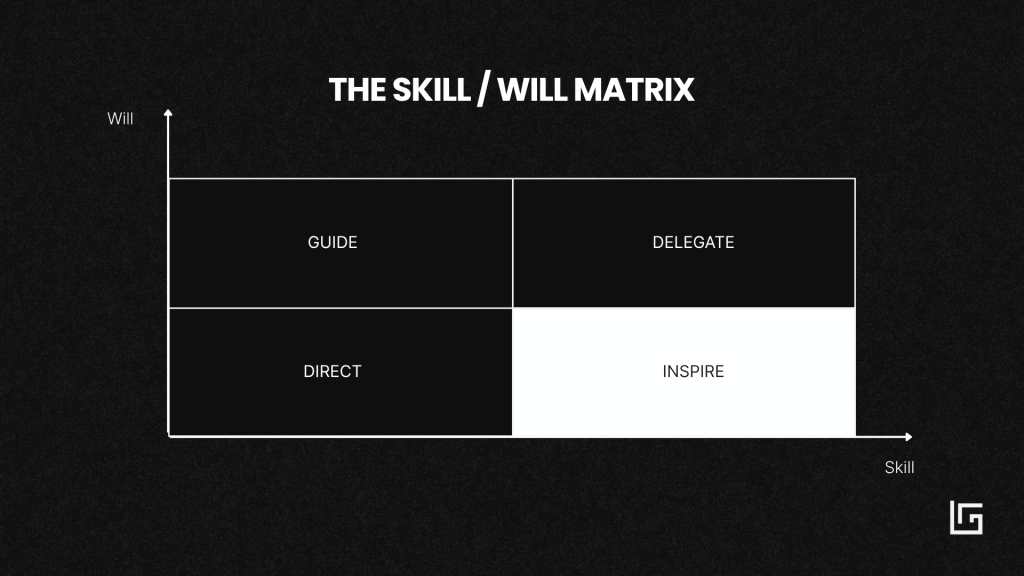
This quadrant always reminds me of my father.
He was an exceptional engineer.
Even towards the end of his career, his technical knowledge was remarkable.
The skill never disappeared.
The motivation did.
Looking back, I realise it wasn’t because he had stopped being capable.
Life had shifted and his priorities had changed.
He was thinking more about family, retirement and everything beyond work.
Sometimes I wonder what would have happened if someone had offered him a completely new challenge. A project that reignited his curiosity instead of asking him to repeat what he had already mastered hundreds of times.
Would it have made a difference?
I’ll never know.
But I do know this.
I’ve met many incredibly talented people who didn’t need more training.
They needed a reason to care again.
We often assume motivation is something people either have or don’t have.
I don’t believe that.
Purpose creates motivation.
Ownership creates motivation.
Learning creates motivation.
Interesting problems create motivation.
Leadership isn’t only about helping people perform.
Sometimes it’s about helping them remember why they loved their work in the first place.
Delegate: The Moment Leadership Starts to Scale
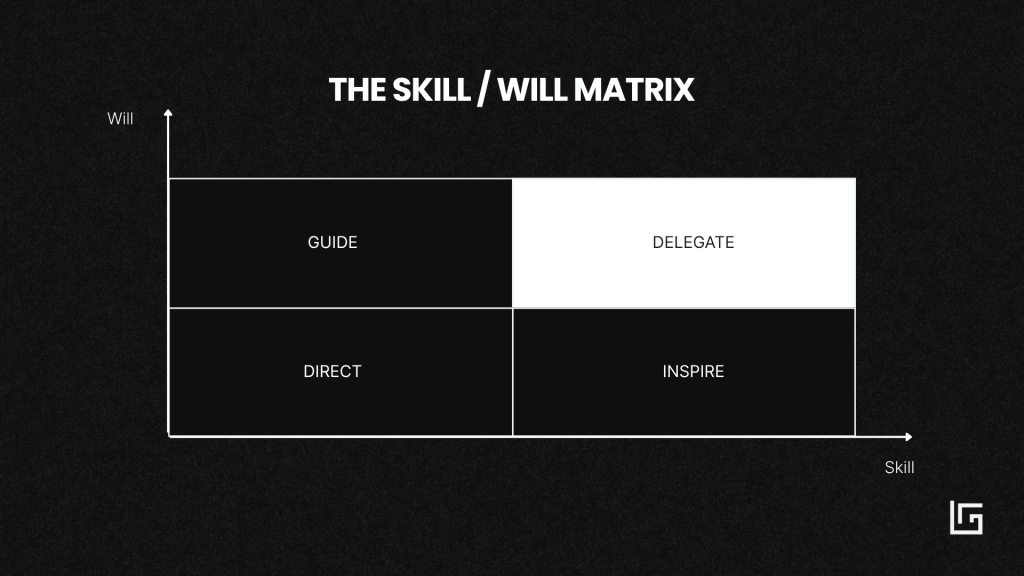
This is where every leader hopes people eventually arrive.
High skill.
High motivation.
High ownership.
These people don’t need constant supervision.
They don’t wait for instructions.
They identify problems before anyone asks.
They make decisions.
They take responsibility.
And perhaps most importantly, they create capacity for everyone around them.
Many of the graduates I’ve worked with started in the Guide quadrant.
Over time they developed their confidence, expanded their expertise and eventually moved into Delegate.
Watching that transition is one of the most rewarding parts of my job.
This is when leadership begins to scale.
Skill-Will Matrix template (free, no download wall)
You don’t need software for this. Draw four boxes, or copy the table below into a doc and fill it in for each person on your team.
| High will | Low will | |
|---|---|---|
| High skill | Delegate — give ownership, stretch goals, visibility. Your job: get out of the way. | Inspire — reconnect the work to what matters to them; investigate what changed. |
| Low skill | Guide — coach, pair, give safe reps and fast feedback. | Direct — clear expectations, short deadlines, honest conversation about fit. |
For each person, jot three things: where they sit today, one piece of evidence (not a feeling — an example), and the single next action the quadrant suggests.
Worked example
Maya (high skill, low will): your strongest engineer, quiet in reviews lately. Evidence: declined two design sessions she used to lead. Action: an honest conversation about what changed — Inspire, not more pressure.
Tom (low skill, high will): new hire, volunteers for everything. Evidence: rework needed on both drafts. Action: pair him with Maya on one real deliverable — Guide. (Notice how one move can serve two quadrants.)
Three rules that keep it fair
1. It’s a snapshot per task, not a verdict per person — someone can be Delegate on client work and Guide on data work.
2. Revisit quarterly; people move, and AI is reshuffling skills faster than ever.
3. Never share the grid with names outside the leadership conversation. It’s a thinking tool, not a leaderboard.
Skill Will Matrix: People Move. Great Leaders Move With Them.
One thing that’s important to remember is that the Skill / Will Matrix is situational.
It doesn’t describe the person, it describes where they are at a particular moment, in a particular role, or facing a particular challenge.
I’ve often seen the same person move between quadrants. Someone can be in Delegate when leading a project they’ve mastered for years, but suddenly be in Guide when learning AI for the first time. A talented expert may move into Excite after years of doing the same work and losing their motivation. And during periods of personal change or uncertainty, even high performers may temporarily need a more Direct leadership style.
That’s why when leading people, it’s important to come back to the question:
“What does this person need from me today?”
Sometimes the answer is guidance. Sometimes it’s direction. Sometimes it’s inspiration. Sometimes it’s trust.
Years from now, nobody will remember the details of the work.
But you’ll remember the people.
The graduate who became a leader.
The expert who found their spark again.
The colleague who only needed someone to believe in them before they believed in themselves.
For me, that’s the most rewarding part of leadership.
Watching people grow.
And knowing that, in some small way, you helped them get there.
Related reading: What Makes a Team Work? · The benefits of diversity in teams and why it’s worth talking to different people · Five Women in a Room of One Hundred
Join the newsletter
Practical insights on AI, leadership and innovation — every week.