
September 14, 2025
The Meaning Economy: Why Attention Is No Longer Enough

I used to be a heavy LinkedIn user.
Every morning, I’d scroll, post, comment.
It felt like the pulse of business.
Then AI entered the arena.
And suddenly, the feed shifted.
Endless AI-generated posts, shallow insights.
The same hooks.
The same phrases.
The same vibe.
Does your LinkedIn feed feel as boring as mine?
Do you also scroll and wonder: why does everything sound the same?
From Clicks to Care: The Death of the Attention Economy
Now,with AI, anyone can generate 100 posts in an hour.
Quantity has exploded, and authenticity has disappeared.
And we are tired of shallow feeds.
Tired of dopamine hits that leave us empty.
We ask ourselves: Why am I giving my time to this?
What we value is shifting.
We no longer reward brands for being loud.
We reward them for being real.
We crave authenticity.
We crave connection.
We’re moving from the attention economy into the meaning economy.
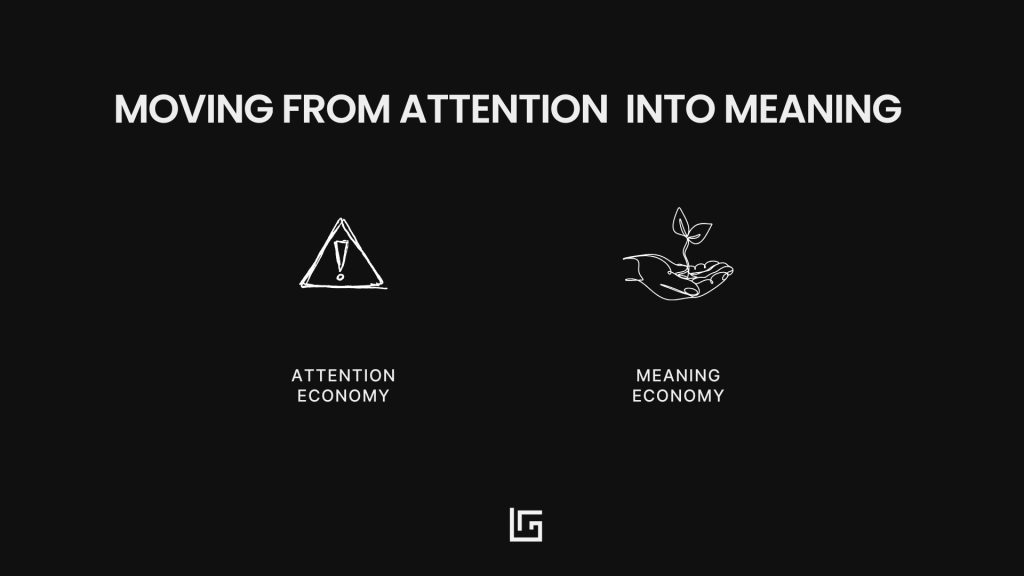
The Rise of the Meaning Economy
The meaning economy is about depth, not volume.
It’s about choosing less, but choosing better.
Meaning is shaping every part of life.
What we wear.
What we eat.
What we post online.
Gen Z is leading this shift.
I used to think they’re are lazy, but I’ve discovered they’re intentional.
They won’t give energy to empty work.
They want to belong to something bigger than themselves.
A stable job used to be the dream.
But stability alone isn’t enough anymore.
Work has to reflect their values.
And so do the brands they buy from.
That’s why they ask: Does this brand stand for something? Can I see myself in it?
This is why meaning is the new competitive advantage.
Why the Future of Work Runs on Meaning
Work used to be about security.
A steady paycheck.
A safe title.
But that’s not enough anymore.
Today, people want more than stability.
They want purpose.
They want their work to mean something.
Especially young people.
They’re not chasing a stable job that makes mum and dad proud.
They’re chasing contribution.
They want to feel proud of what they create.
Proud of what they’re part of.
And if a job doesn’t offer that, they’ll leave.
Not just for money.
But for alignment.
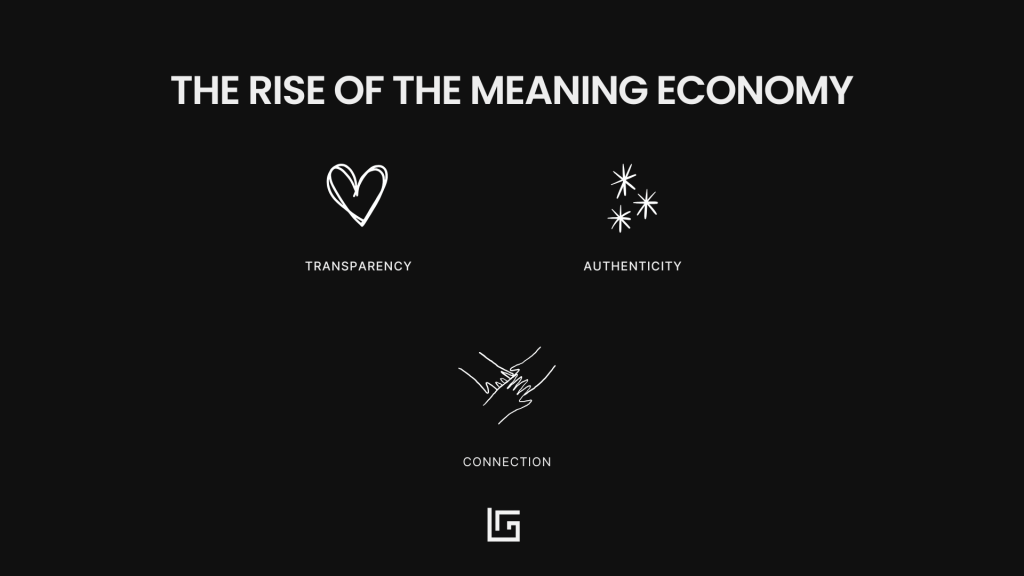
The Future of Work Belongs to Connection
AI is speeding this shift up.
Because when technology takes over the repetitive tasks,
what’s left for us is the human work.
Work that requires connection.
Work that calls for authenticity.
Work that reflects our values.
That’s why the future of work isn’t about hours or titles.
It’s about meaning.
Meaning is what keeps us engaged, inspired, and willing to stay.
From Reach To Resonance: The Shift to the Meaning Economy
For years, we were in the attention economy.
The goal was simple: get noticed.
The louder the message, the bigger the reach.
But that chapter is closing.
Today, success isn’t about reaching everyone.
It’s about resonating with the right people.
Because in the end, we don’t want to buy just products.
We want meaning.
We crave identity.
We need a story we can believe in.
Because our attention is craving meaning.
How I Try To Keep Meaning At The Center Of My Work
Reach gets attention.
Resonance builds belonging.
And belonging is what lasts.
This is what resonance looks like for me:
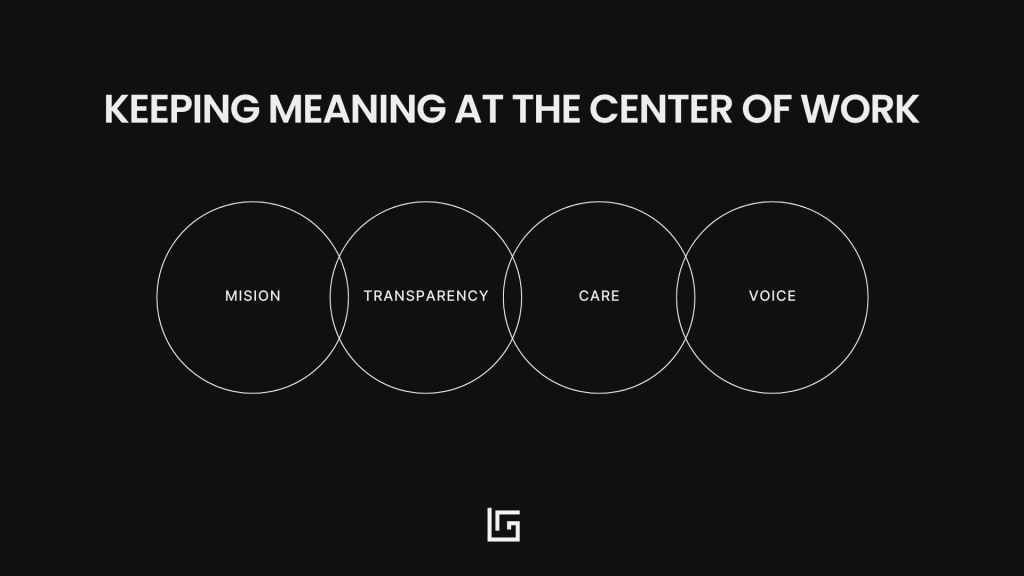
- Being on a mission: I’ve realized meaning grows when there’s a clear purpose. I’m on a mission to inspire women in tech. That purpose fuels me. It gives direction to my work, energy to my projects, and meaning to the risks I take. It’s what keeps me moving forward and what others can believe in too.
- Transparency: I like to show the process, even the messy bits. Opening the door so others can see how things are really built. I feel that it makes things real.
- Care: For me, care shows up in the small things. It’s not big gestures, but small, consistent choices that show what I value.
- Taking a stand: I used to think it was safer to stay neutral. But I’ve learned that neutral is invisible. It’s scary sometimes, but I know silence doesn’t inspire. So I’d rather stand for something even if it’s not for everyone.
The Future Belongs to Meaning
The attention economy had its run.
It kept us scrolling, clicking, comparing.
But it also left us tired, hungry for something deeper.
Meaning changes the game.
It shifts the focus from quantity to quality, from generic to authentic.
The meaning economy is more than a trend.
It’s a movement.
And it’s already here.
The future belongs to brands that stand for something, to leaders who dare to care, and to people who aren’t afraid to choose meaning over more.
That’s the economy worth building.
Keep reading: The Rise of the Relational Economy · AI Workslop: What happens when creation is easy and thinking is optional
Join the newsletter
Practical insights on AI, leadership and innovation — every week.