
March 15, 2026
Why Being Easy to Work With Is a Superpower

Last week I had a conversation with someone I work quite closely with.
She is an amazing professional.
Smart.
Experienced.
Capable.
But she has one habit that drives everyone around her crazy.
When something goes wrong, she disappears.
Not physically.
But emotionally and operationally.
Emails unanswered.
Messages ignored.
Decisions hanging in the air.
Ten days of silence.
Meanwhile the rest of the team deals with the mess.
Eventually she comes back, overwhelmed.
And the cycle repeats.
This Happens More Than We Think
At first I thought this was just a personality issue.
But the more teams I work with, the more I realize something uncomfortable.
This happens much more often than we think.
I believe it is not incompetence, it’s emotional overwhelm.
People struggle to do the basics rights.
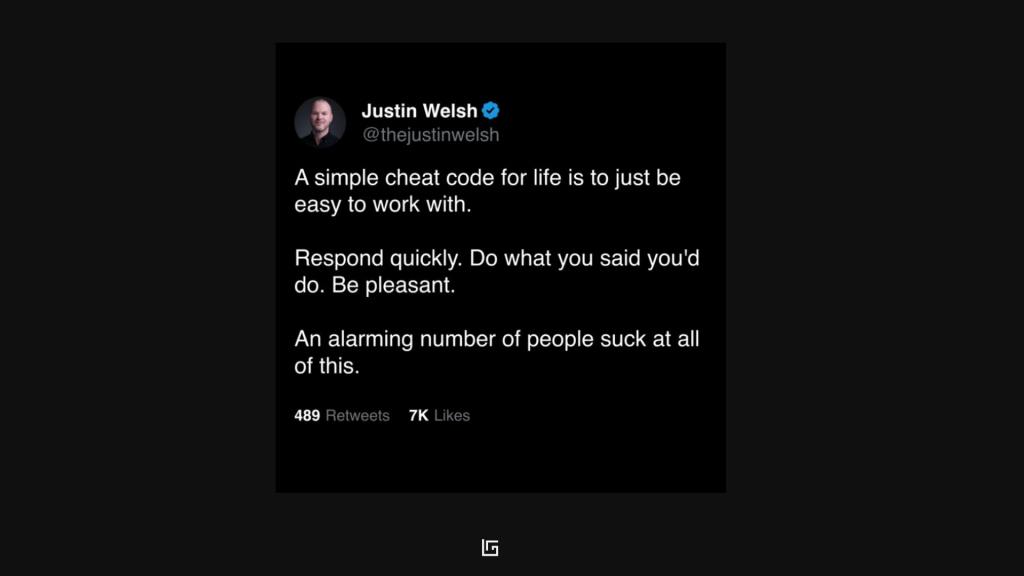
One of the biggest competitive advantages in business and life is really, really basic: get the fundamentals right.
The Basics Still Win
Lately everyone wants the newest AI system.
Or the newest productivity hack.
We are obsessed with advanced tools.
But when you look closely at the people who are consistently trusted and promoted, something interesting appears.
They do simple things extremely well.
They respond quickly.
They follow through.
They communicate clearly.
They are pleasant to work with.
None of this sounds revolutionary.
But over time these behaviors compound.
Into trust.
Into reputation.
Into momentum.
I’ve learnt that doing the basics well is a huge competitive advantage.
The hidden cost of not doing the basics
I work in large transformation projects where many people are involved.
And coordination and ownership are everything.
Most projects don’t fail because the strategy was wrong.
They fail because they slip the basics.
Communication.
Follow-through.
Closing the loop.
This is something I’ve learned the hard way.
At some point someone has to take ownership.
And the moment someone does, things move and work.
The Fundamentals That Actually Matter
Basic #1 — Do what you said you would do
Trust in organizations is built on something very simple.
When someone says they will do something, people expect it to happen.
When it does, work moves.
When it doesn’t, everything slows down.
The bar is not that high.
Promise carefully.
Track what you commit to.
Close the loop.
“Done. Here is the result.”
Basic #2 — Respond quickly
Responsiveness is a massive multiplier.
You do not need to solve everything immediately. But you should acknowledge quickly.
Something as simple as: “Got it. I will come back to you tomorrow afternoon.”
Now people know the request was seen, and they know when to expect an answer.
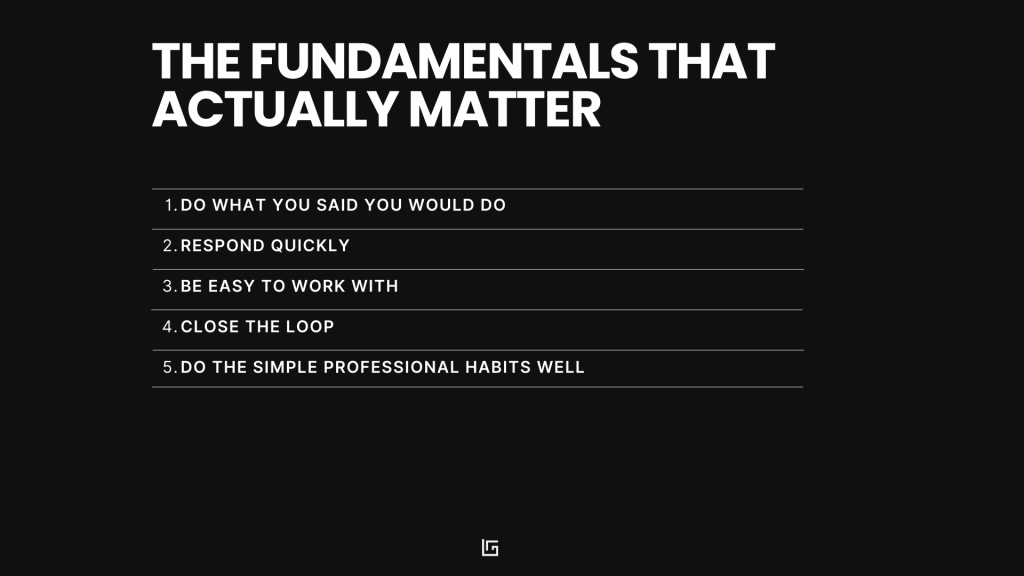
Basic #3 — Be easy to work with
We have all worked with brilliant people who are exhausting to collaborate with.
Reactive.
Negative.
Defensive.
Escalating small issues into big dramas.
Eventually their intelligence stops compensating for the emotional cost of working with them.
Being easy to work with does not mean avoiding conflict.
It means being emotionally low maintenance.
Over time opportunities flow toward the people who make collaboration easier.
Basic #4 — Close the loop
One small habit separates reliable professionals from chaotic environments: closing loops.
It sounds simple but it is surprisingly rare.
You send the recap.
You confirm the decision.
You summarize the next steps.
You make sure everyone knows what happens next.
Without closing the loop, work floats in ambiguity.
Basic #5 — Do the simple professional habits well
We spend a lot of time talking about future skills: AI, technology, digital transformation.
These things matter.
But timeless professional habits still decide who gets trusted with important work.
Show up prepared.
Take notes.
Clarify responsibilities.
Own mistakes and make things happen.
None of these behaviors look impressive, but they quietly build reliability.
Build systems so the basics happen automatically
The basics are simple but not always easy, especially when work becomes chaotic.
This is where systems matter.
Capture commitments in one place. Set reminders for follow ups.
Use simple templates for updates. Create routines for closing loops.
Good systems reduce stress and make reliability easier.
A simple challenge
Try this for the next month.
Forget the hacks.
Focus on the fundamentals.
Do what you say you will do.
Respond quickly.
Close the loop.
You might be surprised how far that alone takes you.
Keep reading: Leaders Bring the Weather · What Makes a Team Work?
Join the newsletter
Practical insights on AI, leadership and innovation — every week.