
October 7, 2025
AI Workslop: What happens when creation is easy and thinking is optional

The workplace is drowning in machine-made work.
A joint study from Harvard Business Review and the MIT Media Lab found that 95 percent of organizations see no measurable return from their AI investments.
The problem is not the tools.
It is the flood of what researchers now call workslop.
The rise of AI workslop
AI has not only changed how we write.
It has changed how we work.
Work is now faster.
But it is also emptier.
Reports, emails, and slides appear in minutes.
They look clean and professional.
Across teams, I see deliverables that look perfect but add no value.
Presentations mix buzzwords with stock images.
Summaries lack sources.
It is work created to be delivered, not to be understood.
What exactly is AI slop work?
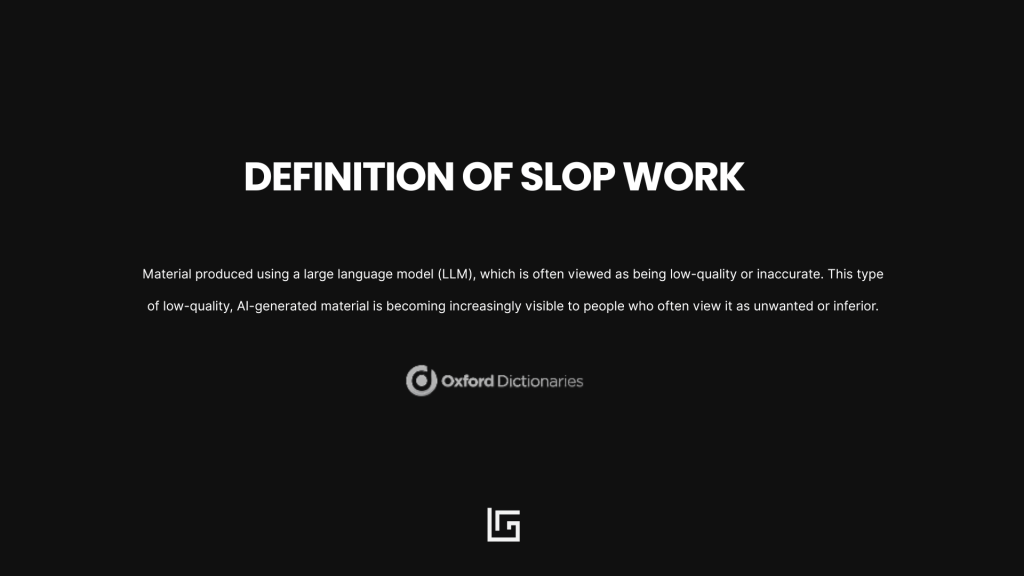
According to The Oxford Dictionary, AI slop is:
“Material produced using a large language model (LLM), which is often viewed as being low-quality or inaccurate. This type of low-quality, AI-generated material is becoming increasingly visible to people who often view it as unwanted or inferior.”
A twenty-page report that could be one page.
A “market analysis” with no verified data.
A project plan that does not match how people actually work.
Slop work is content without context.
It looks right, but it means little.
Slop work happens when creation is easy and thinking is optional.
The guilty behind AI slop
I work with a lot of young professionals.
They are quick, smart, and eager to learn.
They can generate a full market report in less than an half hour.
But often, their work is full of slop.
When we don’t have enough context, we just can’t judge quality.
This isn’t new and the problem isn’t just AI.
It is the lack of context and meaning around it.
The key is context
Context is what turns words into insight.
It connects data to decisions.
When context is strong, AI becomes a partner.
When context is missing, it becomes a noise machine.
The skill that will define the next decade is context engineering.
Fighting AI Slop: Context engineering in practice
Context engineering means designing the environment where work makes sense. It is not about writing longer prompts. It is about knowing what matters before you create.
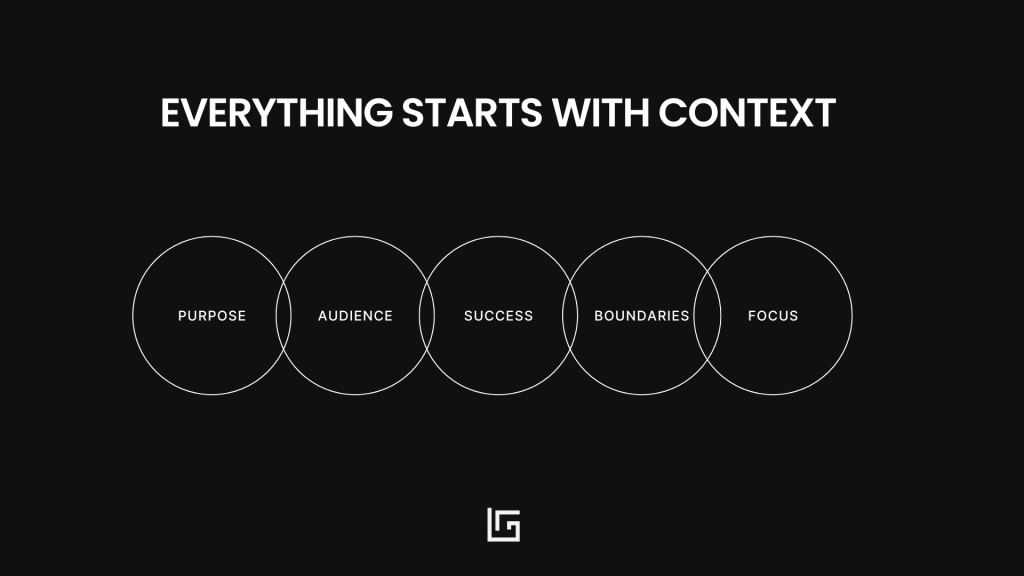
It starts with a mission.
- What decision will this support?
- Who is the audience?
- What does success look like?
Then it sets boundaries.
- Which sources are trusted?
- What information is off limits?
- What are the limits of time and attention?
Finally, it brings review, verifies claims and data.
Human signal wins: we are craving authenticity and meaning
AI can replicate form, but not context.
It does not know the story behind a metric or the tension in a meeting. It cannot read a room or sense a shift in tone.
Experience gives meaning to data.
Judgment turns it into action.
That is still human work.
The future belongs to those who understand context and use AI with care.
Join the newsletter
Practical insights on AI, leadership and innovation — every week.