
December 12, 2024
Trust in the Age of Clicks

Why Relationships Matter More Than Algorithms
The hesitation megatrend is here to stay.
Internet isn’t what it used to be.
Browsing, shopping, and connecting online once felt “fresh”.
The Internet was full of possibilities, like opening a door to a new world.
Fast forward to smartphones and AI’s-led world, and everything feels a bit murky.
Is this product real? Is that review trustworthy? Was this article written by a human or an AI?
Trust issues are everywhere. And they’re turning our online experiences into a game of “Spot the Fake.”
The hesitation megatrend: When Clicks Feel Risky
We used to click without a second thought. A shopping link? Click. A news headline? Click. Not anymore. Now, every click carries hesitation.
Is this a scam? Am I about to get misled, hacked, or worse?
The very convenience of the internet—the thing that made it irresistible—has become its Achilles’ heel.
From fake reviews to misleading ads, it’s getting harder and harder to tell what’s real and what’s not.
This hesitation isn’t just inconvenient for us as users.
It’s very bad news for brands. No trust? No sales, no followers, and no engagement. People are starting to opt out altogether.
In the attention economy, trust makes things even more tricky.
The Cost of Digital Hesitation
Hesitation might seem like a small thing, but it’s definitely not.
It’s the difference between the click and the scroll.
Between trusting a brand and moving on to its competitor.
Every moment of doubt chips away at the relationship between brands and people.
The stakes are high.
If brands can’t rebuild trust, they risk losing their customers altogether.
People won’t just hesitate—they’ll walk away.
Generative AI: Friend or Foe?
Generative AI is a double-edged sword.
On one hand, it’s a great tool for creating content.
On the other, it’s making it easier than ever for bad actors to deceive.
Deepfake videos, AI-generated reviews, and fake ads are muddying the waters. What could be a space for discovery has become a digital minefield.
And it’s not just about outright scams.
Even well-meaning content can feel off. AI might write faster, but it doesn’t always write better.
The result? A flood of soulless content that people are increasingly tuning out.
How We Got Here: The Perfect Storm
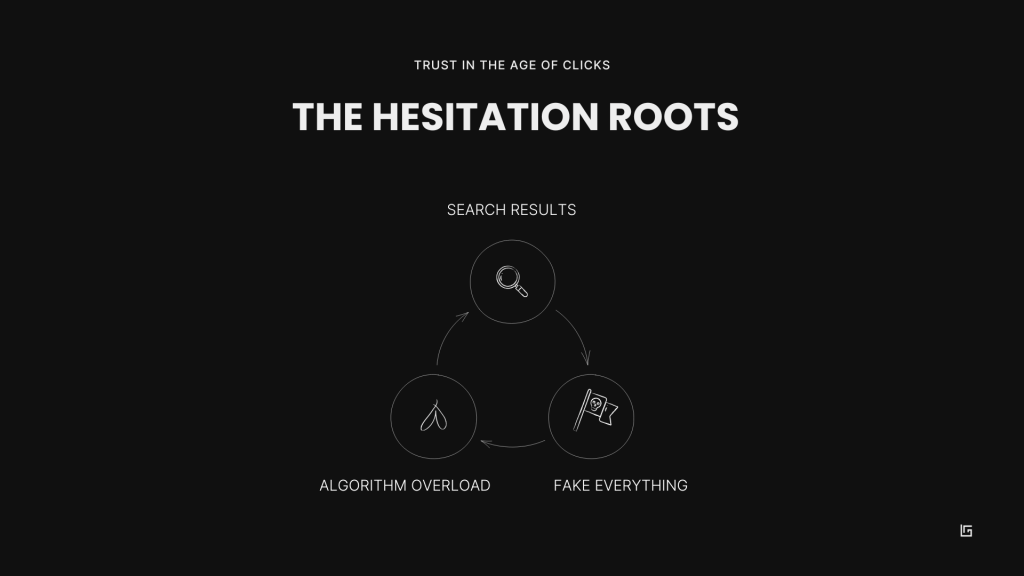
Overloaded Search Results
Search engines are cluttered with ads, sponsored posts, and SEO-optimized fluff. Finding genuine, useful content feels like searching for a needle in a haystack. Even AI tools competing in the search space are now discussing including ads in their results. Perplexity is experimenting with the idea of including ads as part of their business model, and Open AI – who’s Sam Altman used to be against it – is also considering including sponsored content.
Fake Everything
From AI-generated images to bogus reviews, the online space is teeming with deception. Last week, I spoke with a friend who owns a hair salon. He proudly explained how he amassed thousands of reviews using a new AI tool. This is an example of a feat that blurs the lines between genuine feedback and artificial manipulation. These tactics contribute to a growing sense of unease and skepticism among online users, making it harder for brands to earn trust.
Clickbaiting Algorithm
Social media and search platforms are so focused on keeping us engaged that they often prioritize clickbait over quality. For instance, platforms like Facebook and YouTube optimize for content that keeps us scrolling or watching. This often ends up with sensationalized headlines, emotionally charged posts, or low-effort viral videos in our feeds.
The result?
A less meaningful user experience that leaves us feeling overwhelmed, and disconnected. Instead of fostering meaningful connections, these platforms are prioritizing engagement metrics over substance.
The Silver Lining: A Call for Change
As messy as things feel, there’s hope.
People are pushing back against the slop and demanding better – seeking out trusted platforms and real connections.
And this, is a huge opportunity for businesses willing to step up.
Authenticity Matters More Than Ever
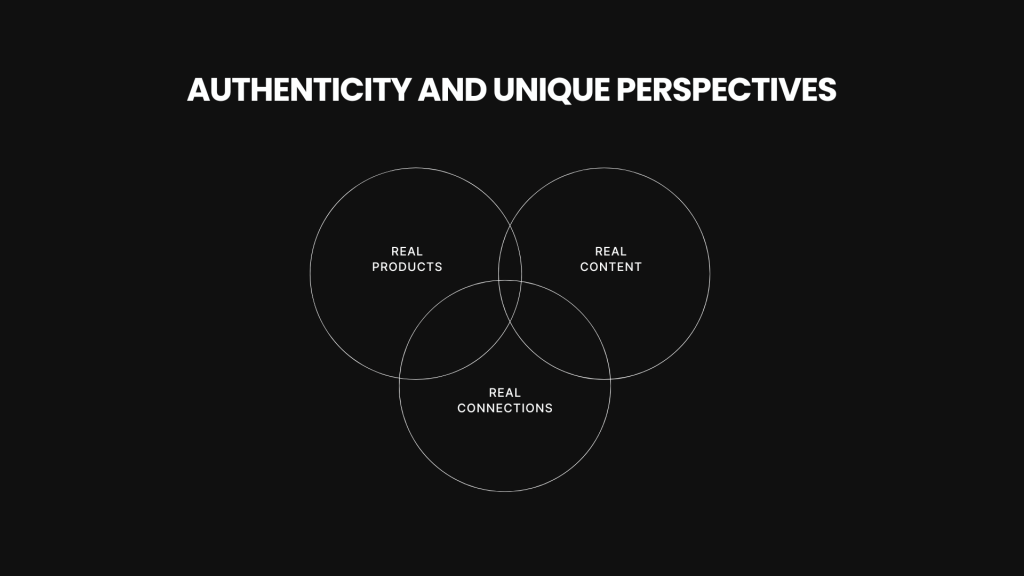
We‘re tired of fakes. We crave is authenticity and unique perspectives.
Real products. Real reviews. Real connections.
The brands that win trust will thrive.
Those that can’t? They’ll struggle.
But how do brands prove they’re the real deal? It starts and ends with people.
People trust people – not faceless brands.
Transparency matters, but it’s the human touch that seals the deal.
What Brands Can Do to Stand Out
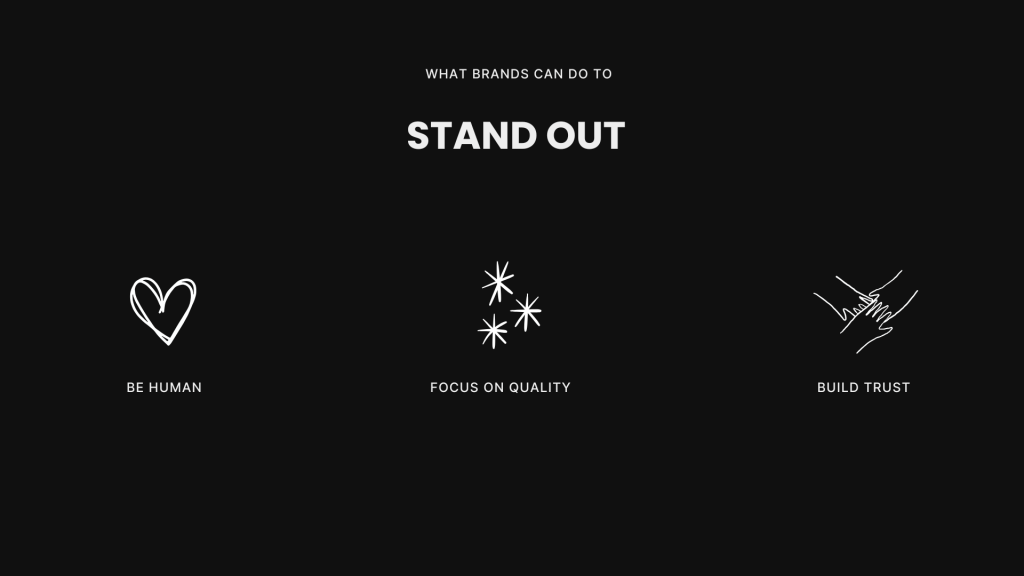
1. Be Transparent and Human
A relatable, human presence builds stronger connections and trust.
Let people know who you are, what you stand for, and why they should trust you. Share your story—how your brand started, what challenges you’ve overcome, and what values drive your decisions.
Red Bull doesn’t show bottles in their marketing—they show people. Human-led branding builds trust by showcasing authentic, relatable stories and experiences.
And we associate Red Bull’s with their slogan, “Red Bull Gives You Wings,” has guided the brand to the highest market share of an energy drink. This slogan, created to target their target audience, nods to giving you and your thoughts wings with the energy to take off.
2. Focus on Quality
Prioritize meaningful, authentic content over quantity.
Think of Patagonia’s “Don’t Buy This Jacket” campaign, which focused on sustainability and was deeply aligned with their core values. This bold message resonated with their audience by emphasizing conscious consumerism, ultimately boosting trust and brand loyalty.
Another example is Nike’s “Dream Crazy” campaign featuring Colin Kaepernick, which sparked meaningful conversations and reinforced the brand’s commitment to standing by its values. Both campaigns illustrate how authentic, values-driven messaging can captivate audiences and build lasting connections.
3. Build Trust
Use verified badges, customer reviews, and other trust-building tools to reassure users. For example, Amazon’s “Verified Purchase” badge helps customers distinguish genuine reviews from potentially fake ones, building confidence in the product.
Trust-building tools like these are crucial for creating a sense of security and reliability. By emphasizing trust signals, brands can foster confidence and create stronger connections with their audience.
What’s Next?
If we want to thrive in this new reality, we need to rethink the approach. This isn’t about new tricks or shiny new AI.
It’s about going back to basics: trust, authenticity, and respect – what has been at the core of humanity and business for centuries.
The internet doesn’t have to feel like a battleground. With the right approach, it can be a place of connection, discovery, and growth.
Because humans are the spark that turn clicks into connections and growth.
And it’s up to us to lead the way.
Related reading: Is AI a Bubble? Or the Start of Something Bigger? · The Meaning Economy: Why Attention Is No Longer Enough
Join the newsletter
Practical insights on AI, leadership and innovation — every week.