
May 11, 2025
How to clone voice with AI
Voice connects us.
It carries tone, trust, and presence.
In a business world filled with slides, docs, and dashboards, that connection is often missing.
But what if content could speak?
Imagine turning your training guides, onboarding journeys, or townhall updates into natural-sounding audio.
No studios.
No scheduling.
Just clear, human-like voice at the click of a button.
That’s what AI-generated audio makes possible.
In this guide, we’ll walk through what AI audio is, how to clone voice with ai, why it matters and how you can start using it.
Let’s dive in.
What is AI-generated audio?
AI audio refers to speech generated by artificial intelligence instead of being recorded by a human. It’s created through AI technologies like deep learning, neural networks, and speech synthesis.
Today, these AI models can produce voices that sound natural, expressive, and lifelike.
I’ve been creating educational content for over 10 years. Until recently, AI voices were too robotic to use.
Now they sound human—natural tone, real emotion, and rhythm that connects.
And the difference in engagement is clear.
How to clone voice with AI: The process step-by-step
1. Provide voice data
Start with a short voice recording, anywhere from a few seconds to a few minutes. The AI uses this sample to understand the characteristics of the speaker’s voice, including tone, pitch, accent, pace, and emotion.
2. Train the voice model
The AI processes the voice data and builds a model that mimics the way that voice sounds. This can either be a custom-trained voice clone or a selection from a pre-trained library of lifelike voices. The goal is to create a model that can now “speak” anything written.
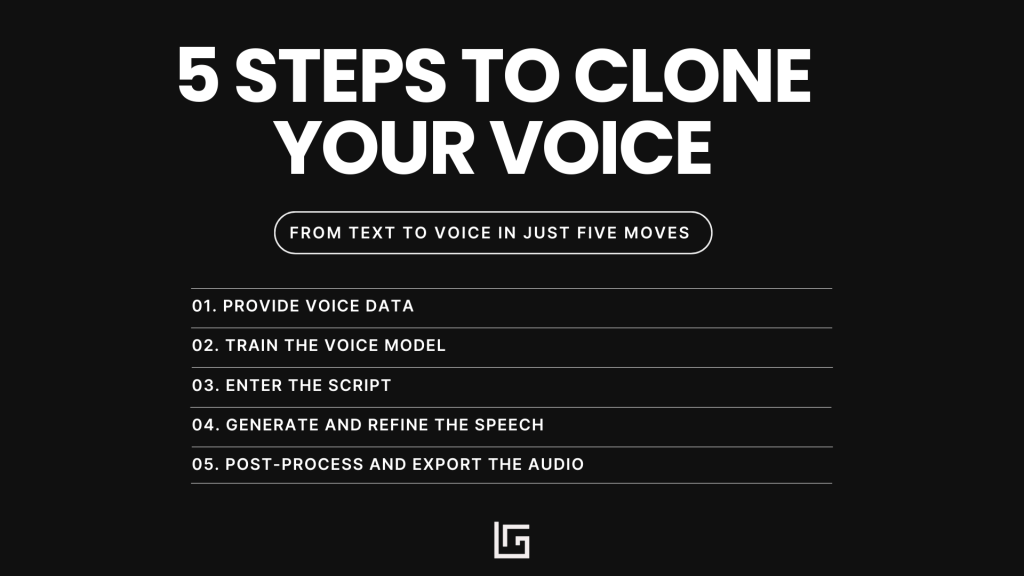
3. Enter the script
You type the text you want the AI to speak. The system converts it into sound instructions, a bit like translating written language into how it should be spoken out loud, with correct pacing, emphasis, and expression.
4. Generate and refine the speech
This is the core of AI voice generation. Multiple technologies work together to turn text into natural, expressive audio:
- Phoneme sequence: The AI breaks the script into phonemes. Phonemes are the smallest sound units in language. The AI sequences them to reflect natural speech rhythm.
- Encoder-decoder models: The encoder interprets the phoneme sequence and maps it into a high-dimensional representation of how it should sound. The decoder then reconstructs an audio waveform from that representation, predicting one tiny audio sample at a time.
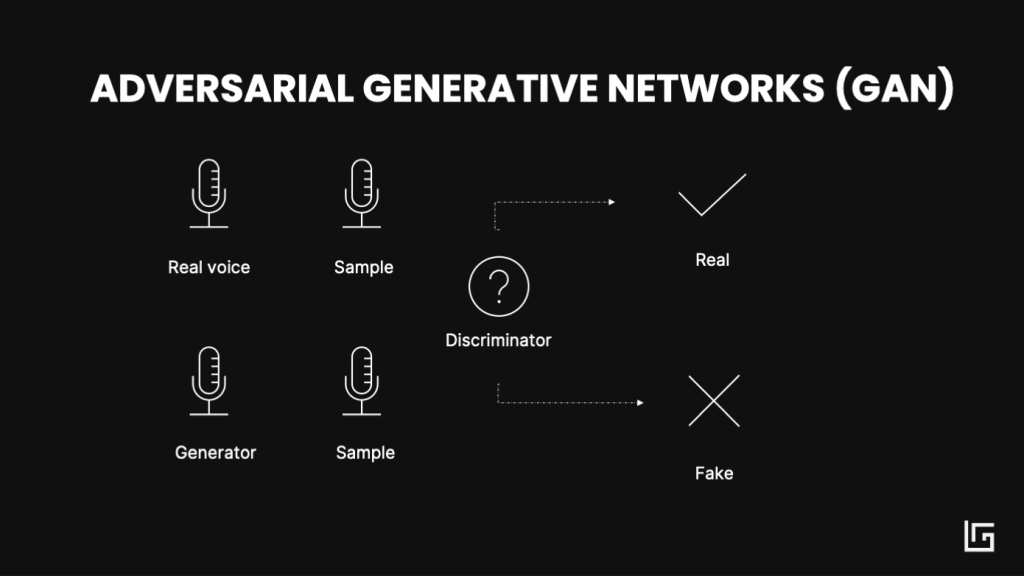
- GANs (Generative Adversarial Networks): In some systems, a second model (the discriminator) critiques the audio created by the generator. The generator learns and improves based on this feedback. This loop continues until the voice output sounds convincingly human, even in complex or emotional passages.
5. Post-process and export the audio
The final touches are applied: background noise is removed, timing is adjusted, and emotional inflections are smoothed out. You get a clean audio file in your chosen voice, ready to be used in training, communications, chatbots, or voice assistants.
AI voice clonning apps: Use cases
In my work, I’ve seen too many good ideas die in long documents. Too many important changes shared in boring, unread PDFs.
Sometimes, people need to hear the message.
Here are some use cases for AI voice clonning apps:
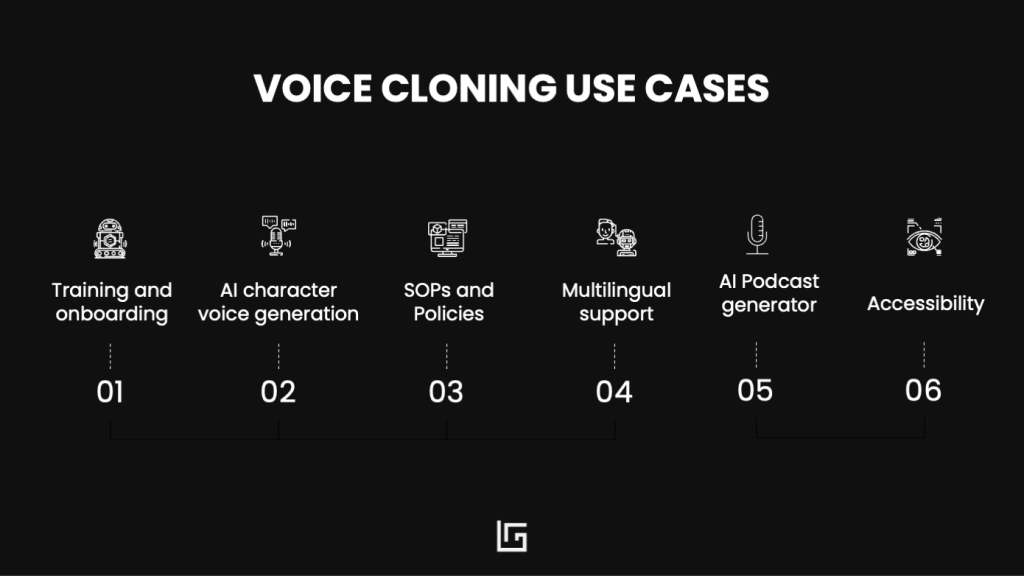
- Training and onboarding
The first use case is training and onboarding. You can imagine how much faster it’s got to add voice to onboarding guides and training materials. Instead of a dense manual, include short audios to provide guidance
- AI character voice generation
This is something newer, but worth noting. In training simulations or gamified learning environments, we can now create digital “coaches” with distinct personalities. AI helps shape the experience with voice and AI avatars.
For one of our clients, we crafted a CEO avatar created with AI voice cloning software. They used this avatar in a leadership tour. The tour was a set of CEO messages in multiple languages for different trade fairs. Thanks to AI voice cloning and AI narration, he was able to “be present” at three events at once, each with a warm, localized message that sounded like him.
- SOPs and Policies
Rather than pushing policies through endless emails, voice turns them into something listenable. Something you can absorb during a walk or break.
- Multilingual support
Last year, we had a project in China. We needed to teach technical workflows to local teams. Using AI-generated Mandarin voices, we translated our training content, not just in words, but in tone. The result was respectful and smooth and the team appreciated it.
- AI Podcast generator
I’ve been experimenting with AI podcast generators like Notebook LM, and they’re proving to be powerful communication tools for companies looking to share knowledge in a more engaging way.
Accessibility
This one is close to home. My husband works at a school for children with disabilities. Some of his students cannot speak. Recently, they started using AI to create unique voices that fit the child’s age, gender, and mood.
How to clone voice with AI: Best AI voice cloning software
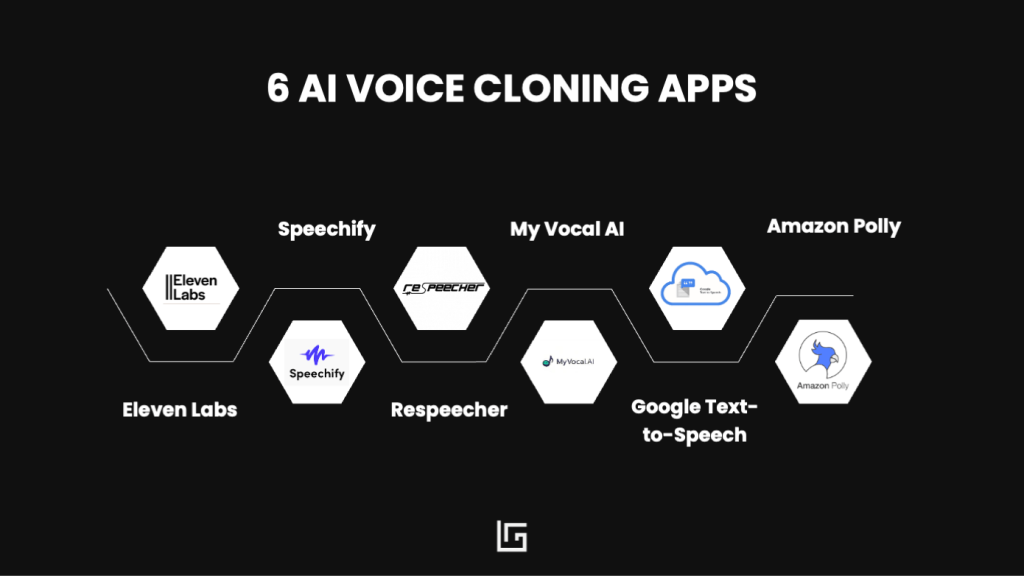
Here are tools I’ve personally tested and recommend:
- ElevenLabs – High emotional nuance, excellent for voice cloning.
- Speechify – User-friendly, ideal for reading long-form content.
- Respeecher – Great for recreating specific voices, widely used in media.
- MyVocal AI – Free to start, great entry-level experience.
- Google Text-to-Speech – Reliable, developer-friendly.
- Amazon Polly – Multilingual and scalable, good for enterprise use.
Most let you choose a voice, input a script, and download your audio in minutes.
AI voice communication: creating voice with words
Voice brings presence into busy schedules.
With just a few words, you can now create experiences that feel personal, human, and close.
And the best part?
Creating with voice is no longer complex.
It’s becoming as easy as writing.
So speak your ideas.
Let your voice do the work.
Related reading: How to Create a Logo with AI · AI Icons and Illustrations: Leveraging AI Art in Corporate
Join the newsletter
Practical insights on AI, leadership and innovation — every week.