
May 3, 2026
What Is MCP? Model Context Protocol, Explained for Product People

What is MCP? The 60-second version
MCP — the Model Context Protocol — is an open standard that lets AI models connect to tools, apps and data.
Before MCP, every AI-to-software connection was a custom integration. With MCP, a tool describes what it can do once, and any AI that speaks the protocol can use it. Think of it as USB-C for AI: one connector, everything plugs in.
Introduced by Anthropic in late 2024, it has since been adopted across the industry — which is why your product roadmap will meet it sooner than you think. It’s also a key building block of agentic AI: agents need doors into your software, and MCP is becoming the standard door.
MCP is the latest step in a long story. See the timeline of AI from 1950 to 2026.
Why does that change how we design products? Let me show you what I mean — starting with what Salesforce just did.
Last month, Salesforce introduced Headless 360.
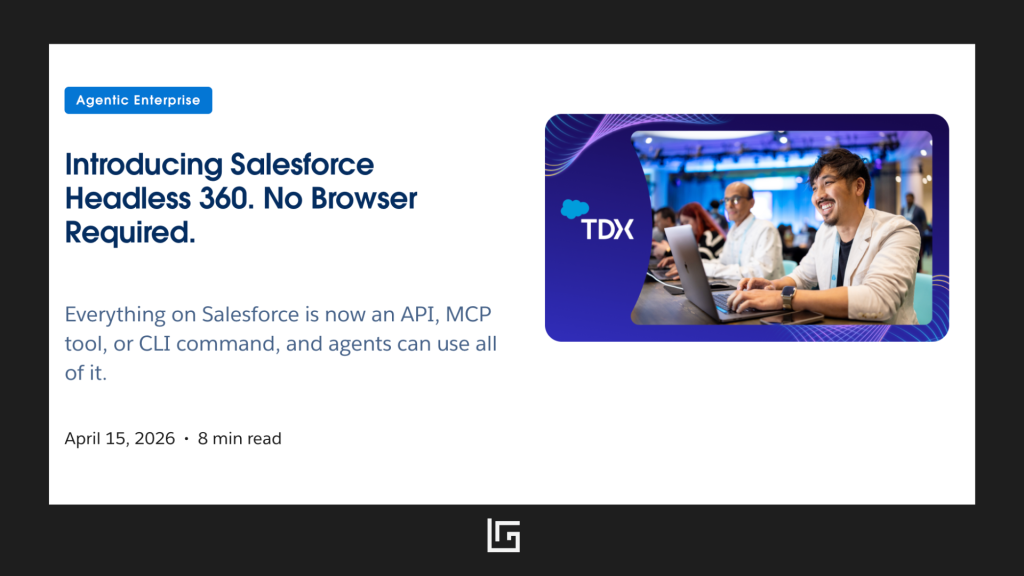
It didn’t make big headlines, but I believe this is one of those shifts that will fundamentally change how we design software.
With Headless 360, Salesforce is exposing workflows, logic directly to AI agents through APIs, MCP tools, and CLI commands.
I believe agents will fundamentally change how we design software, how we think about products, and how work gets done.
Because behind this announcement, there is a deeper idea:
Your product has a new user.
And that user is not human.
What are headless agents?
Headless agents are systems that interact with software without ever touching a user interface.
No dashboards.
No navigation.
No clicking through workflows.
Instead, they operate directly through APIs and structured inputs.
They call functions, retrieve data, trigger actions, and move across systems.
I think that this marks a direction where products will need to decouple software from the interface.
Because work is no longer limited by how fast a human can click through a system.
It is defined by how well systems can talk to each other.
What happens when your user is not human?
For years, we have been designing for human behavior.
Good software products were optimized for reducing friction, guiding decisions, and making tools intuitive.
But agents don’t care about any of that.
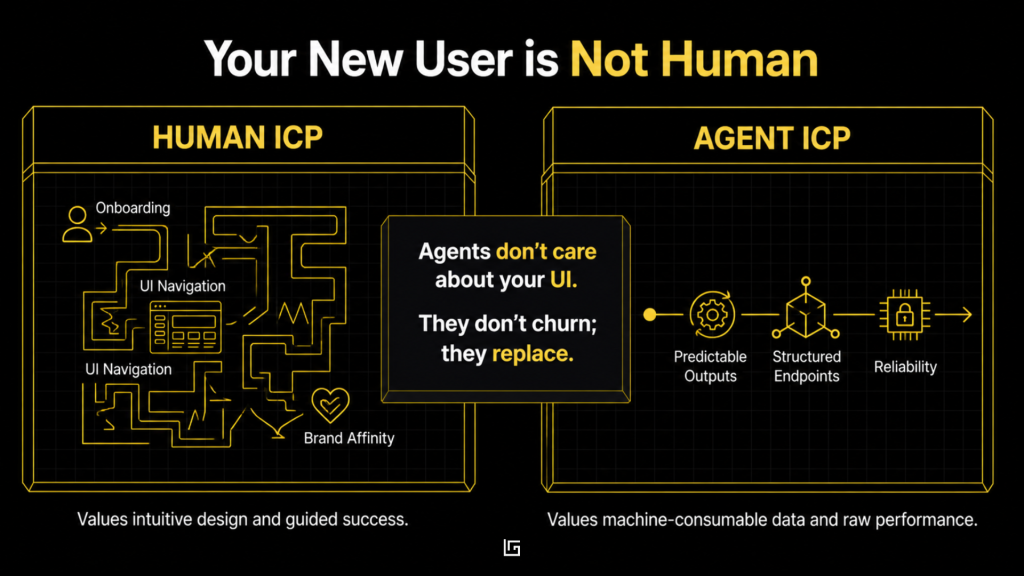
They don’t need onboarding.
They don’t get confused.
They don’t care about your interface.
They care about three things:
Is the output correct?
Is it fast?
Is it reliable?
This is a very different dynamic from what we are used to.
In the past, products could rely on habit, training, or even friction to keep users.
Agents remove that pain.
They don’t build loyalty.
They optimize for performance.
And that leads to a tough but important question:
If an agent can achieve the same outcome without your product, what is your product really offering?
Agents will change how we design and market software
This shift goes beyond product design.
It also changes how we think about distribution, growth, and positioning.
Today, a lot of what we call growth is built around humans:
– Landing pages
– Conversion funnels
– Onboarding flows
But agents don’t read your landing page.
– They don’t care about your brand story.
– They don’t scroll.
– They don’t have aesthetic preferences.
They evaluate.
And they evaluate everything.
There is no “top of the page.”
There is no “first result.”
Agents can scan, compare, and test multiple options in seconds, and choose based purely on performance.
This flips the logic of marketing.
Instead of asking: “How do we get users into our product?”
We start asking: “How do we make our product accessible to their workflow”
This means prioritizing clean and well-documented APIs and structured and predictable outputs
Your documentation might become more important than your landing page.
Your performance might matter more than your positioning.
In future, your product will sometimes be chosen without a human ever interacting with it directly.
What do agents mean for products
This shift forces us to rethink what a product actually is.
Until now software products were something people used.
You logged in.
You navigated.
You interacted.
Agents in turn query, evaluate and pull out information from software.
Your product becomes part of a system, not a destination.
And that changes how we design it.
Software products will need to be:
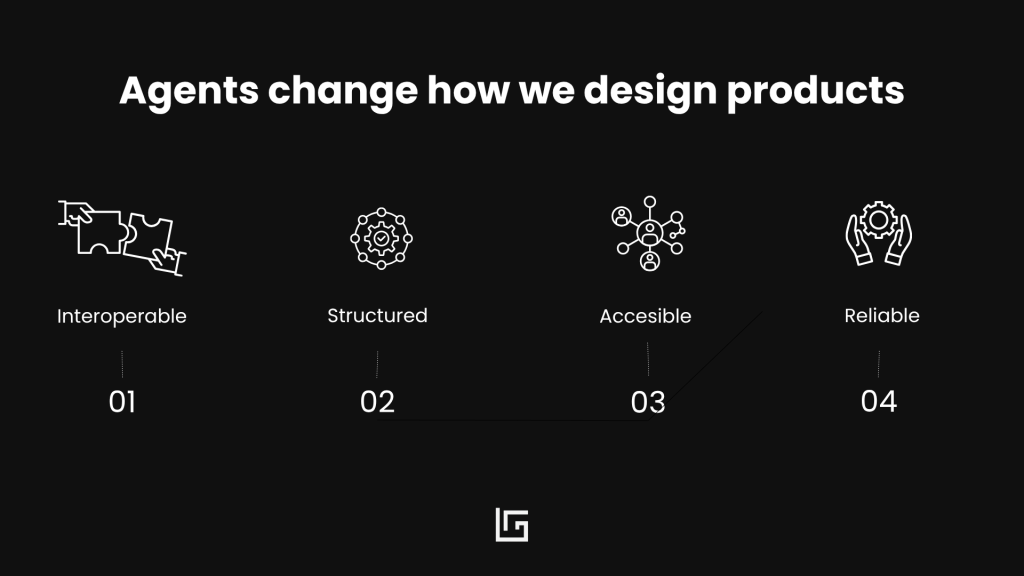
– interoperable
– structured
– accessible
– reliable
Because they are no longer designed only for people.
They are designed to be understood also by machines.
MCP for products: accessing product information fast
This is where my PLM heart starts to beat again.
Because agents depend on structured data.
And most companies are not ready for this.
If agents are going to interact with products, they need to understand them.
Not through messy excel files
Not through scattered documents.
Not through disconnected systems.
They need structured, accessible, machine-readable information.
That includes things like clear identifiers, product attributes, compliance information, spare part lists and maintenance routines or digital Product Passports
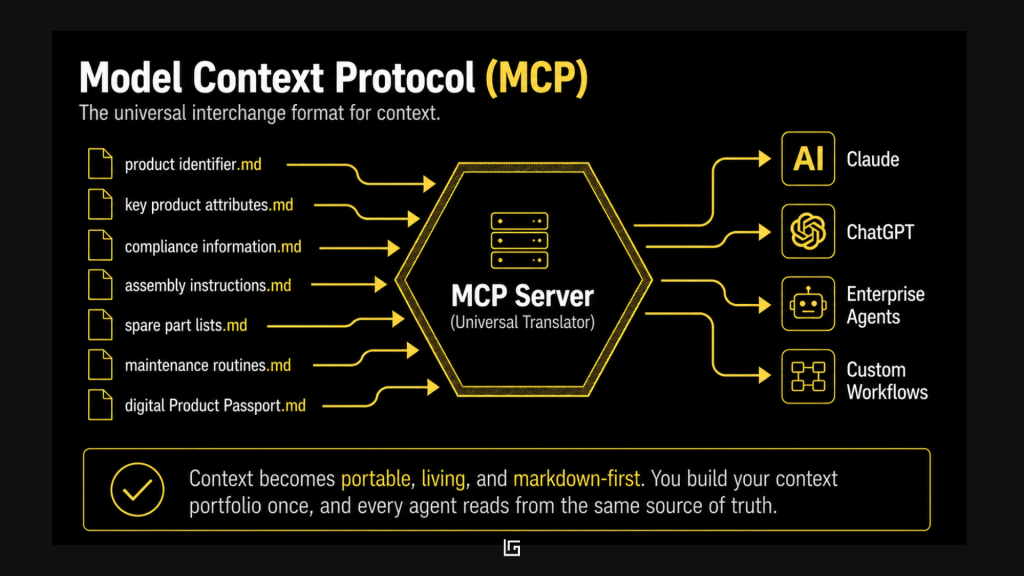
We will need something like an MCP (Model Context Protocol) for products.
A shared way for agents to access and understand product information across systems and companies.
Agents need to understand fast what a product is, what it contains, what standards it follows and how it behaves
For this to happen, companies need to structure their engineering data, move from documents to structured knowledge and make data accessible with the right governance.
Splitting the experience: humans vs agents
I like to think that we are moving into two parallel worlds:
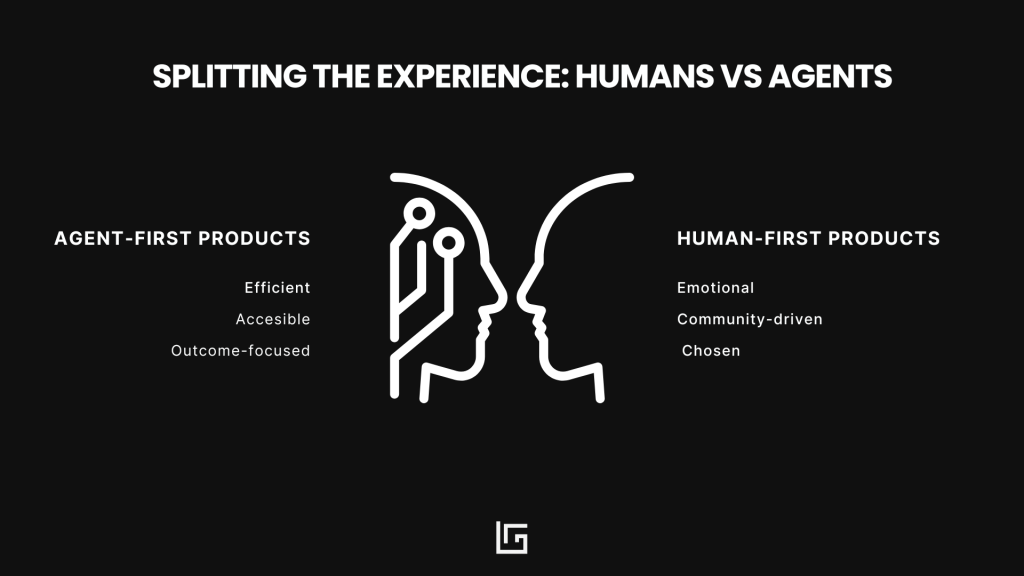
Human-first products
– Emotional
– Community-driven
– Chosen
Agent-first products
– Efficient
– Accesible
– Outcome-focused
I believe that the experience layer doesn’t go away.
It moves from the tool to the interaction between people.
Exploring how AI changes products and people at the Share PLM summit
We’ll be exploring all of this very soon at the Share PLM Summit in Jerez.
In just two weeks, I’ll be hosting a workshop together with my friends Oleg Shilovitsky and Martin Eigner called AI, Identity & the Future of Engineering.
In the workshop, we’ll talk about how AI is changing products and people and what we can do to get ready for the AI-driven world.
It’s going to be an open conversation.
And it would be great to have you there!
More AI, more focus on the human experience
Here is the paradox.
The more work becomes automated, the more valuable human experience becomes.
Take Anthropic.
They are hiring event marketers.
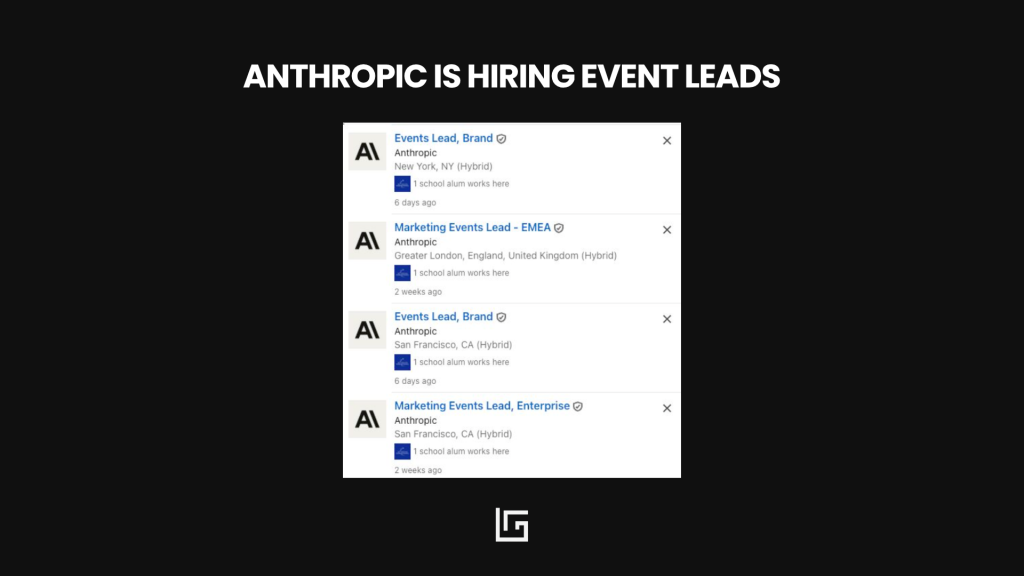
A company building some of the most advanced AI systems in the world is investing in physical, human connection.
That is not a contradiction.
It’s a signal.
When content is infinite, attention becomes scarce.
When everything can be automated, presence becomes valuable.
A room where people meet, talk, and think together becomes rare.
And rare things carry weight.
This is why workshops, collaboration spaces, and communities will become more important, not less.
Because while systems become more autonomous…
Work becomes more human.
If your product had a non-human user tomorrow…
Would it be ready?
Related reading: Why Forward Deployed Engineers Are the Future of Enterprise Tech · 5 Reasons This AI Enterprise Transformation Isn’t Like the Last Ones
Join the newsletter
Practical insights on AI, leadership and innovation — every week.