
February 15, 2025
The Discovery Process: The Secret to Creating Something People Actually Want

Ever had a “brilliant” idea… that totally flopped?
Yeah, me too.
I’ve learned the hard way that great ideas don’t start with assumptions—they start with discovery.
So when I started working on The Nest, I knew the first step wasn’t sketching designs or picking out furniture—it was understanding what people truly needed.
Two weeks into the discovery process, and it already feels like I’ve struck gold.
Instead of making decisions based on gut feeling, I’m I’m leaning on insights from people I trust to guide the renovation and concept development process.
Why Bother with Discovery?
I first got to know about discovery work when I was at Star Alliance.
My boss used to run multiple experiments at once, and one of my main jobs was to talk to people, gather insights, and sift through the data to find meaningful patterns.
It was eye-opening.
Since then, discovery has become my secret weapon.
It sets the foundation for any great design or business decision because it starts from the most powerful place: listening to people.
Also, let’s be honest—discovery is a stealth sales strategy.
When people feel involved from the start, they naturally become more invested in your project. They start thinking about you when opportunities arise, and suddenly, you’re top of mind.
When to Use Discovery?
Discovery isn’t just for new products—it’s the secret tool behind any successful change.
In software development, it helps you solve real problems instead of making assumptions.
When rolling out a new process, it gives you insight into how people actually work, so they’re more likely to adopt it.
And during a transformation, discovery helps you understand what people need, what they fear, and how to make change feel exciting instead of overwhelming.
Anytime you’re creating something that affects people, discovery is what turns a good idea into something that truly works.
The Discovery Process in a Nutshell
Here’s how I’m structuring my discovery process for the Nest:
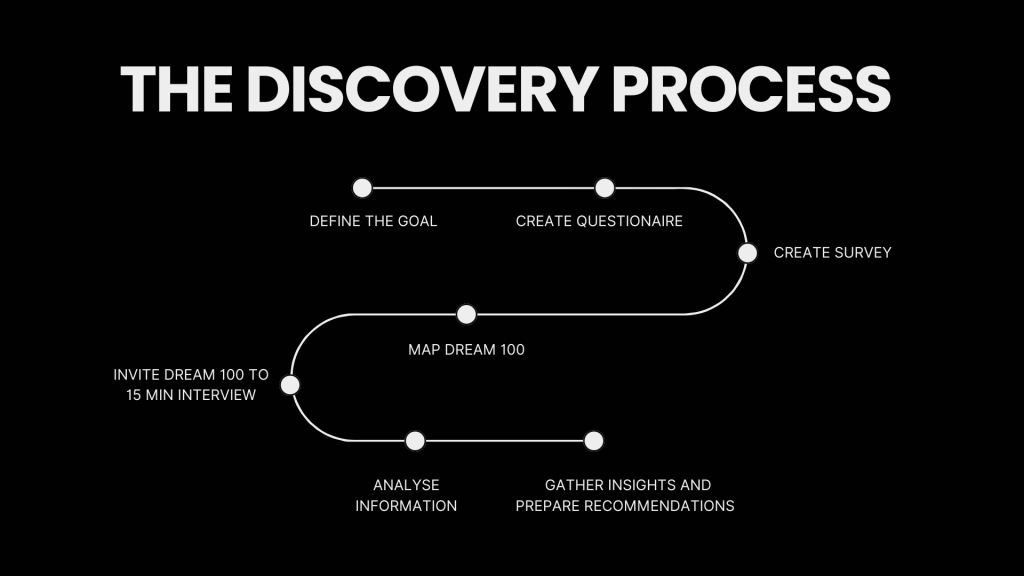
1. Define the Goal
What do I actually need to learn?
Before diving in, get crystal clear on the research question. In this case, I want to understand what business leaders look for in a retreat space. If there’s one thing I’ve learned from academics, it’s that a sharp question leads to sharp answers. The fuzzier the question, the fuzzier the insights.
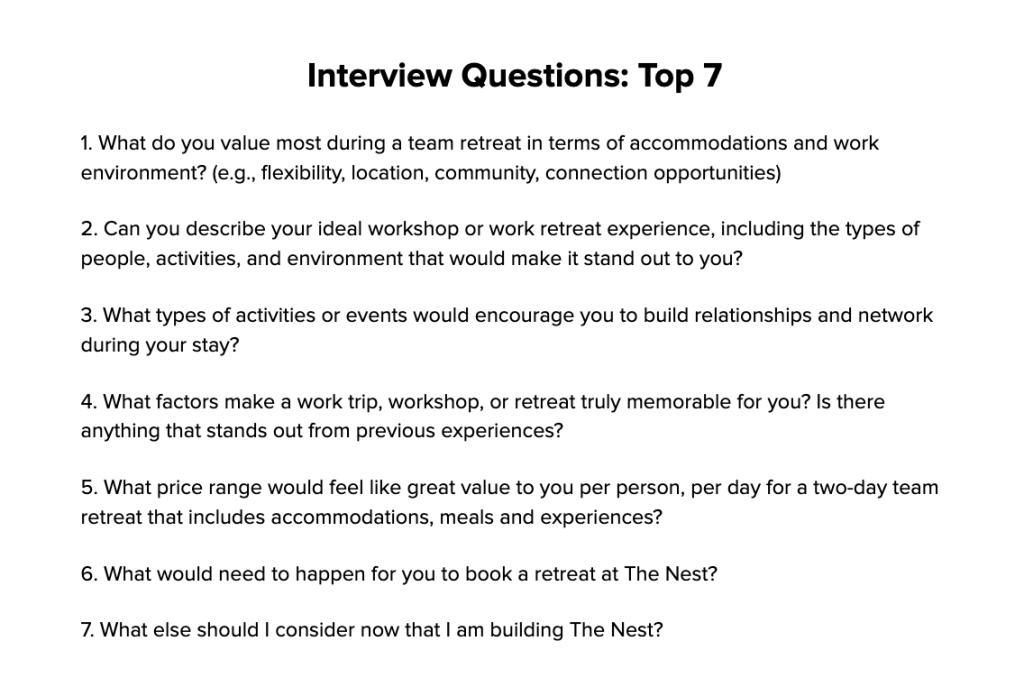
2. Create a Questionnaire
I keep my questionnaires short—five questions, max. Why? Because people are busy, and giving you their attention is a gift.
The sweet spot for an engaging conversation is 15 to 30 minutes.
Anything longer, and you risk losing them.
The key is to ask open-ended questions that reveal real pain points and desires.
3. Create a Survey
A simple survey can complement your interviews, helping you reach a larger audience and validate your findings.
For The Nest, I’m using Typeform, but tools like Microsoft Forms or SurveyMonkey work too. AI can even help you craft quick surveys.
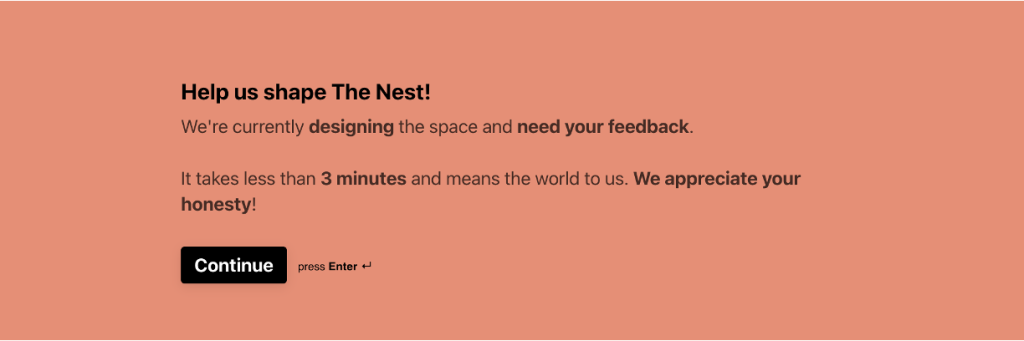
Big mistake alert: Too many surveys are way too long. Keep it under three minutes and set expectations upfront: “This will only take three minutes—promise.” A solid hook makes all the difference in getting responses.
4. Map the Dream 100
Identify your key people.
Who has the experience and insights that will actually make a difference? I like to start with people I trust because—spoiler alert—your first set of questions probably won’t be perfect.
Testing them early helps you refine and adapt.
If you’re doing this in a corporate setting, consider segmenting by department, role, or location to get a full picture.
5. Invite Your Dream 100 to 15-Minute Interviews
Keep it short and powerful.
These aren’t drawn-out meetings; they’re quick, focused conversations.
I use Calendly to schedule calls, but if you want a higher response rate, personally reaching out to each person makes a big difference.
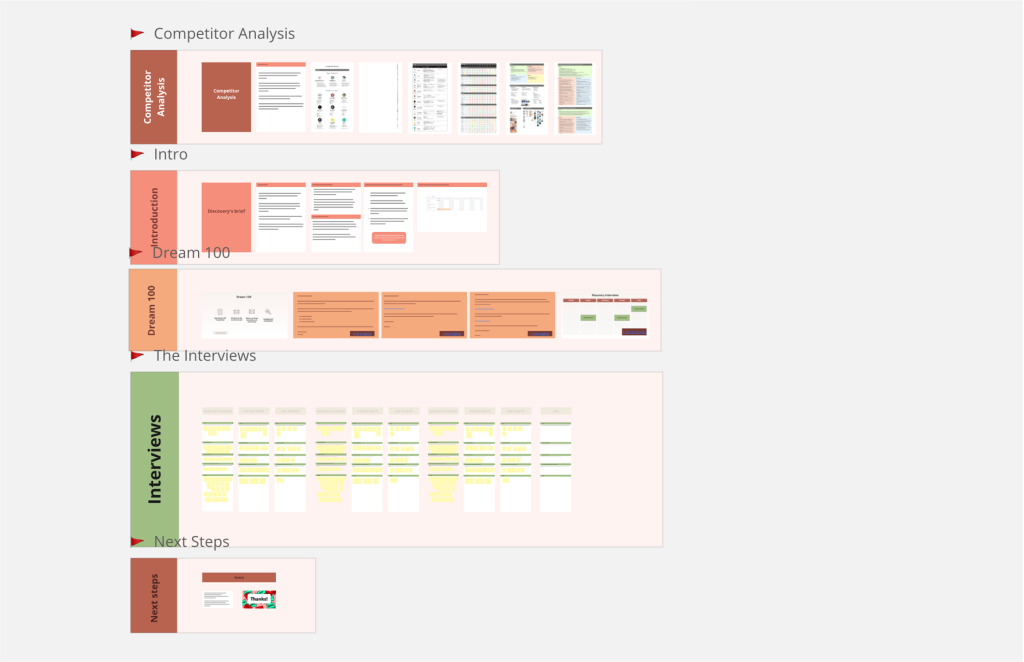
Pro tip: Think about how you’ll document responses. I use Miro because it’s built for discovery—you can organize insights visually, making patterns easier to spot. Some people use Copilot AI for analysis, but from my experience, manual documentation still captures more nuance. AI can summarize transcripts, but sometimes, the real gold gets lost between the lines.
6. Analyze the Information – Look for patterns early.
Don’t wait until you’ve gathered all the data to start spotting trends. Patterns emerge from day one, so adjust your research questions as needed.
I track everything in Miro, and use its AI tools to highlight key themes faster.
7. Gather Insights & Take Action
Data means nothing if you don’t use it.
The real magic happens when you turn insights into action.
For example, thanks to this process, I’ve already found some interesting insights for what people want:
- Outdoor space for fresh air between sessions
- A bright, sunlit workshop room that feels energizing
- More bathrooms (because, well… breaks)
Discovery takes time, but it’s worth it.
More than just gathering insights, it sparks conversations and helps you design something that people don’t just like—they actually want.
How to Make Discovery Work for You
Over the years, I’ve learned a few things about making discovery effective.
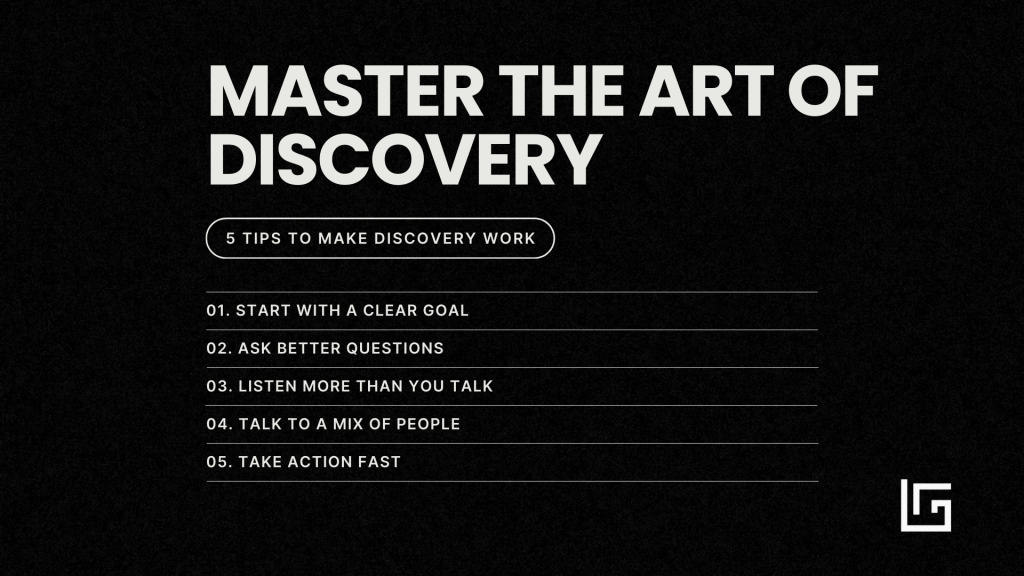
Here are my tips:
✔ Start with a clear goal – If you don’t know what you’re looking for, you’ll drown in information.
✔ Ask better questions – The way you ask matters. Open-ended, thoughtful questions lead to golden insights.
✔ Listen more than you talk – People will tell you everything you need to know—if you give them space to do it.
✔ Talk to a mix of people – Your best insights often come from unexpected places.
✔ Take action fast – Insights are only valuable if you use them. Start applying what you learn immediately.
What’s Next for The Nest?
With these conversations underway, I’m already seeing patterns that will shape how The Nest evolves.
The best products aren’t just designed—they’re co-created with the people who will use them.
That’s what makes discovery so powerful.
I’ll keep sharing what I learn along the way.
If we haven’t talked yet and you have 15 minutes, I’d love to connect.
And if you know someone who frequently organizes retreats, it would mean a lot if you could share this survey with them:
Gracias!
Related reading: Experimenting With AI in Design Thinking Workshops · Nail Your Next Talk: The simple presentation structure that works every time · Ideal Customer Profile Template: A Simple Framework to Actually Drive Sales
Join the newsletter
Practical insights on AI, leadership and innovation — every week.