
November 8, 2026
Change Readiness: How to Run a Change Readiness Assessment That Involves Your People

Change readiness is how prepared, willing and able people and organisations are to adopt a change. Before you decide how to lead people through a transformation, you need to understand where they are starting from. A change readiness assessment gives you that starting point, and if you do it well, it already brings people into the change.
Some years ago, I worked with a company that wanted to reinvent itself. Management had a bold vision: transform the business and move into new sectors. Digitalisation was a central part of the plan. And the team leading the initiative was exactly the team you would want: ambitious, experienced and genuinely motivated to make it happen.
There was just one problem. The organisation was not ready.
The company was a big, slow-moving elephant. Processes had been built over decades. Many people were close to retirement, and they were not ready to change the way they had worked for most of their careers. I understood them. Why would someone a few years from retirement want to learn a completely new way of working? What was in it for them?
The vision at the top was clear. The energy in the project team was real. But between the boardroom and the people who would actually live the change, there was a gap nobody had measured. That experience taught me something I still carry into every transformation: you cannot lead people through change if you don't understand where they are starting from.
In my previous article, I explained how to build a stakeholder engagement plan: who will be affected, who can influence others, and who needs to be involved. Change readiness is the next step. In this guide you will find:
- what change readiness means for individuals and for organisations
- why it matters, and the warning signs that an organisation is not ready
- what a change readiness assessment is and when to run one
- the three-stage change readiness assessment I use, with 12 sample questions
- a three-hour pains and gains workshop agenda you can adapt
- how to improve change readiness once you know where people stand
What is change readiness?
Change readiness describes how prepared, willing and able people and organisations are to adopt a change. It is not simply about whether employees support a new initiative. Someone can support a change in a meeting and still be far from ready to work differently on Monday morning.
It helps to look at change readiness on two levels.
Individual change readiness
For individuals, readiness is about four questions:
- Understanding: Do I know why this change is happening and what it means for my work?
- Willingness: Do I want it, or at least accept it?
- Ability: Do I have the time, skills and support to adopt it?
- Belief: Do I believe this change will actually happen and succeed?
Organisational change readiness
For the organisation, readiness is about the conditions around people: how aligned leadership is, how much capacity teams really have, how decisions are made, what the culture rewards, and what people have learned from previous transformations. Organisational change readiness is the sum of these conditions across all the groups affected by the change.
Why support alone does not mean readiness
Readiness has several layers, and they don't always move together:
- Understanding without security: Someone may understand why a transformation is necessary and still be worried about what it means for their job.
- Enthusiasm without capacity: A team may be enthusiastic about a new technology but lack the time, resources or skills to adopt it.
- Experience without belief: Sometimes people have lived through so many transformation programmes that they simply don't believe the next one will be different.
A good change readiness assessment helps us uncover these realities. But I believe it should do something more: it should not only help us understand people. It should also involve them.
What is a change readiness assessment?
A change readiness assessment is a structured way to find out how ready people and the organisation are for a specific change, before you design how to lead it. It shows you where understanding, willingness, capacity and belief are strong, where they are missing, and which groups need what kind of support.
Many change readiness assessments are run as surveys. Surveys are useful when many people are affected, but they tell you what people think, rarely why. That is why my change readiness assessment is built on conversations and workshops, with a survey as an optional complement.
When to run a change readiness assessment
- after you have mapped your stakeholders, and before you design the change strategy
- before you ask for budget, so your case reflects how ready the organisation really is
- before a new technology or AI rollout, when enthusiasm for the tool can hide a lack of time or skills
- when a previous transformation stalled and you need to understand why
Why change readiness matters
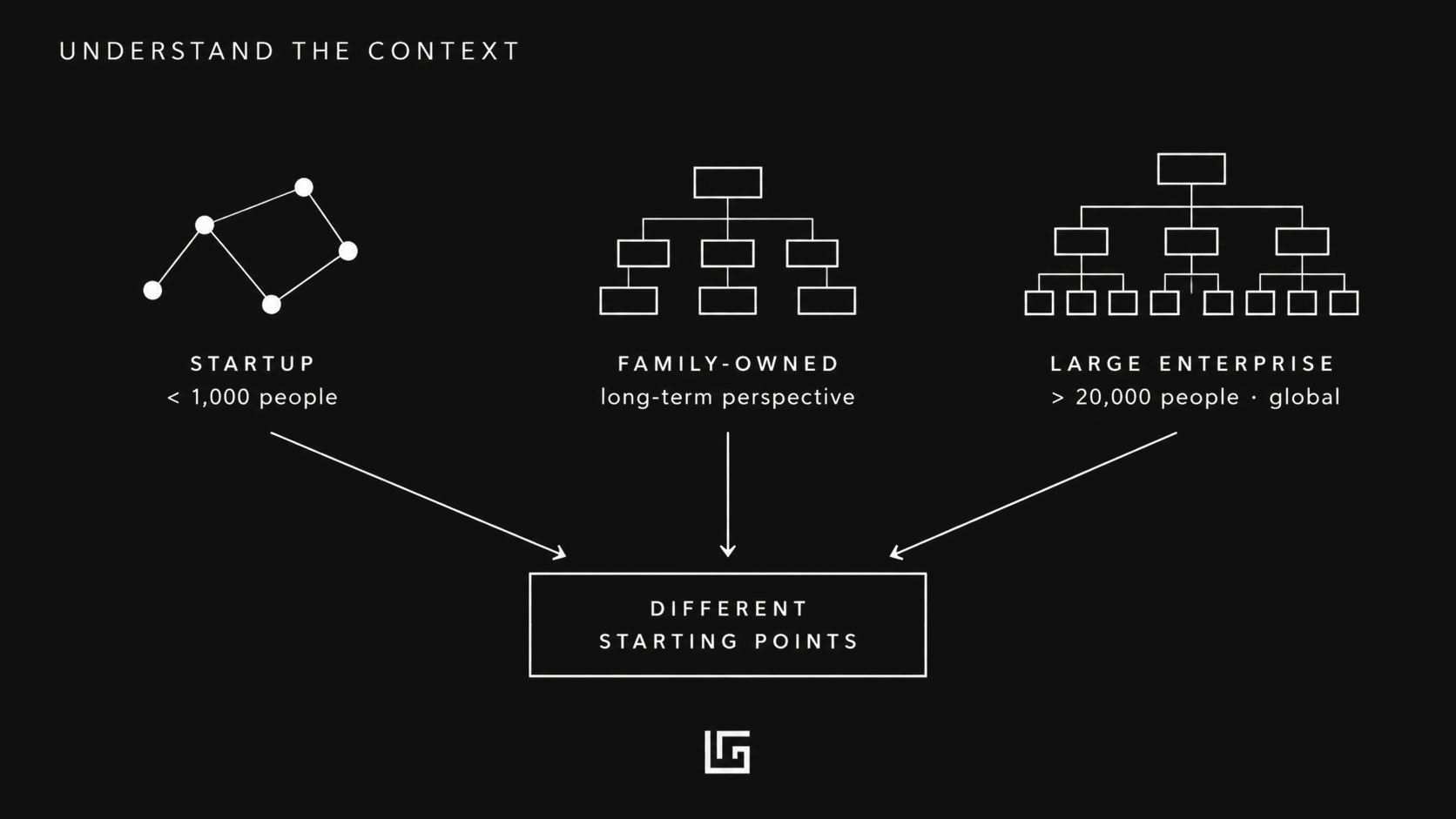
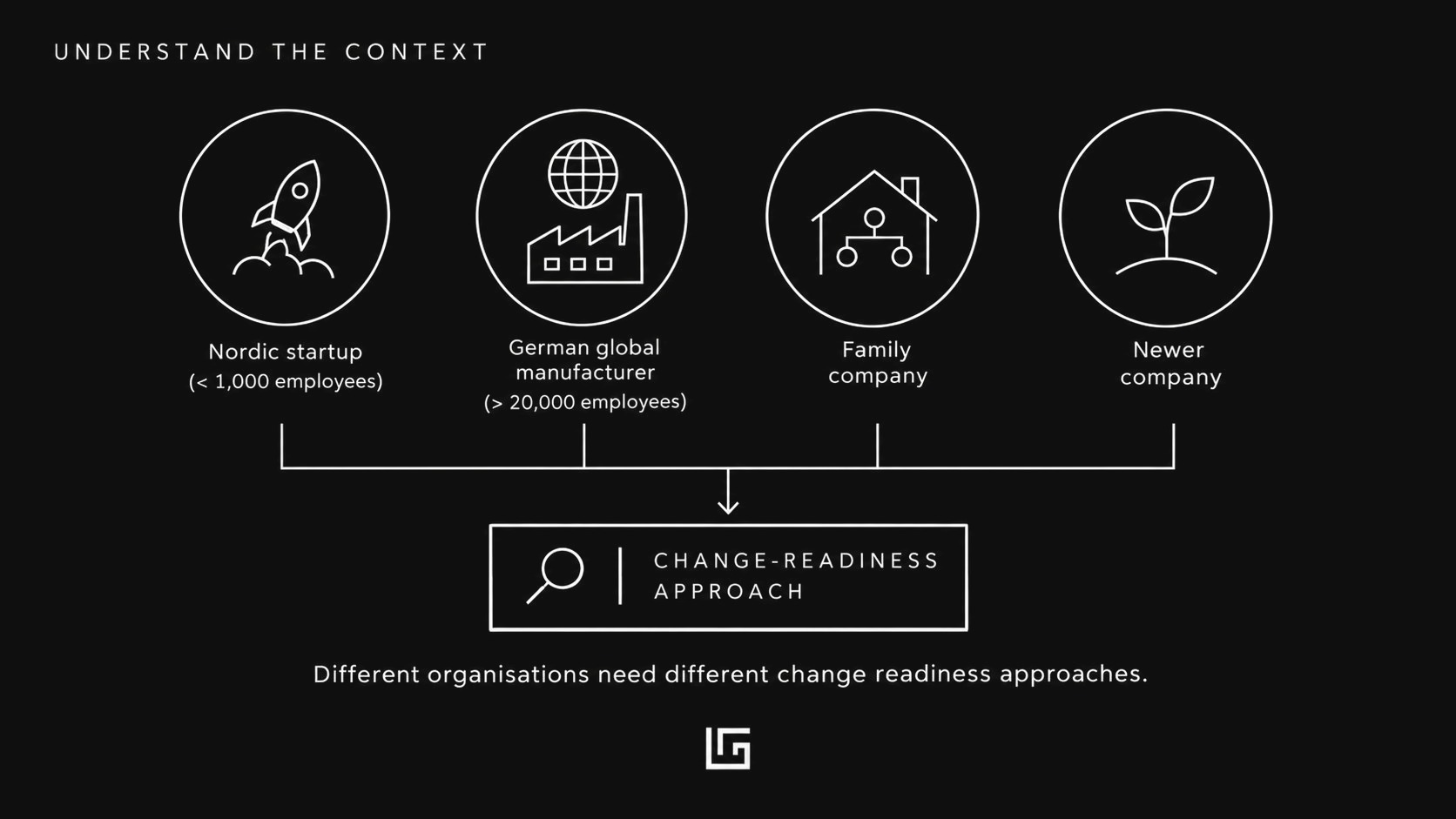
Imagine working with a Nordic technology company with fewer than 1,000 employees, operating in a startup environment. Now imagine a German manufacturer with over 20,000 employees across different countries, factories and business units. Would you approach change in exactly the same way? Of course not.
No two organisations start from the same place
The differences go much further than size or geography. Is it a family-owned business where relationships and traditions have developed over generations? A young company growing rapidly? An organisation that has already experienced several unsuccessful transformations? How are decisions made? How much autonomy do people have? How do employees feel about management?
I've worked with organisations of very different sizes and backgrounds, and one thing I've learned is that you cannot copy and paste a change management approach from one company to another. I explore why the human side comes first in Enterprise Digital Transformation Starts With People.
What understanding change readiness gives you
When you know the starting point, you can:
- focus communication, training and leadership engagement where the gaps really are
- spot risks and barriers before they appear in the project plan as delays
- build on what already works instead of replacing everything
- design a change approach that fits this organisation, not a generic template
Signs your organisation may not be ready for change
Low change readiness rarely announces itself. These are the signals I look for:
- The vision is clear at the top but people further down cannot explain why the change matters to them.
- Teams are enthusiastic about a new tool, but nobody has time in their week to learn it.
- People mention previous transformations that "came and went".
- Important concerns are discussed in corridors, not in meetings.
- Influential people in the organisation have not been asked for their view.
- Leaders describe the change differently from one another.
If you recognise several of these, a change readiness assessment is not optional. It is the work that makes the rest of the transformation possible.
How to run a change readiness assessment: a three-stage process
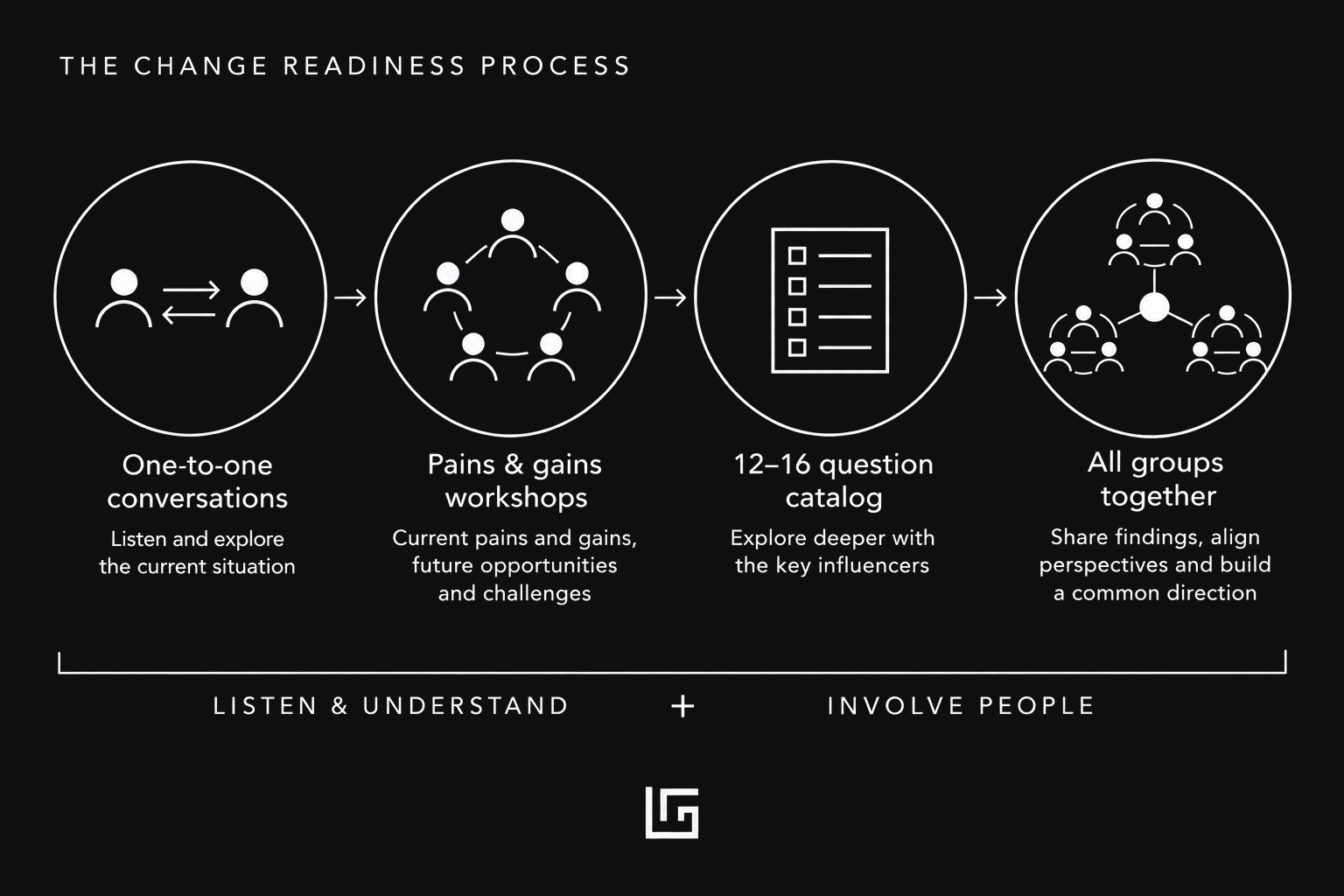
This is the approach I use, building on the stakeholder groups identified during stakeholder mapping. It moves from individual conversations to group work and then to one shared picture:
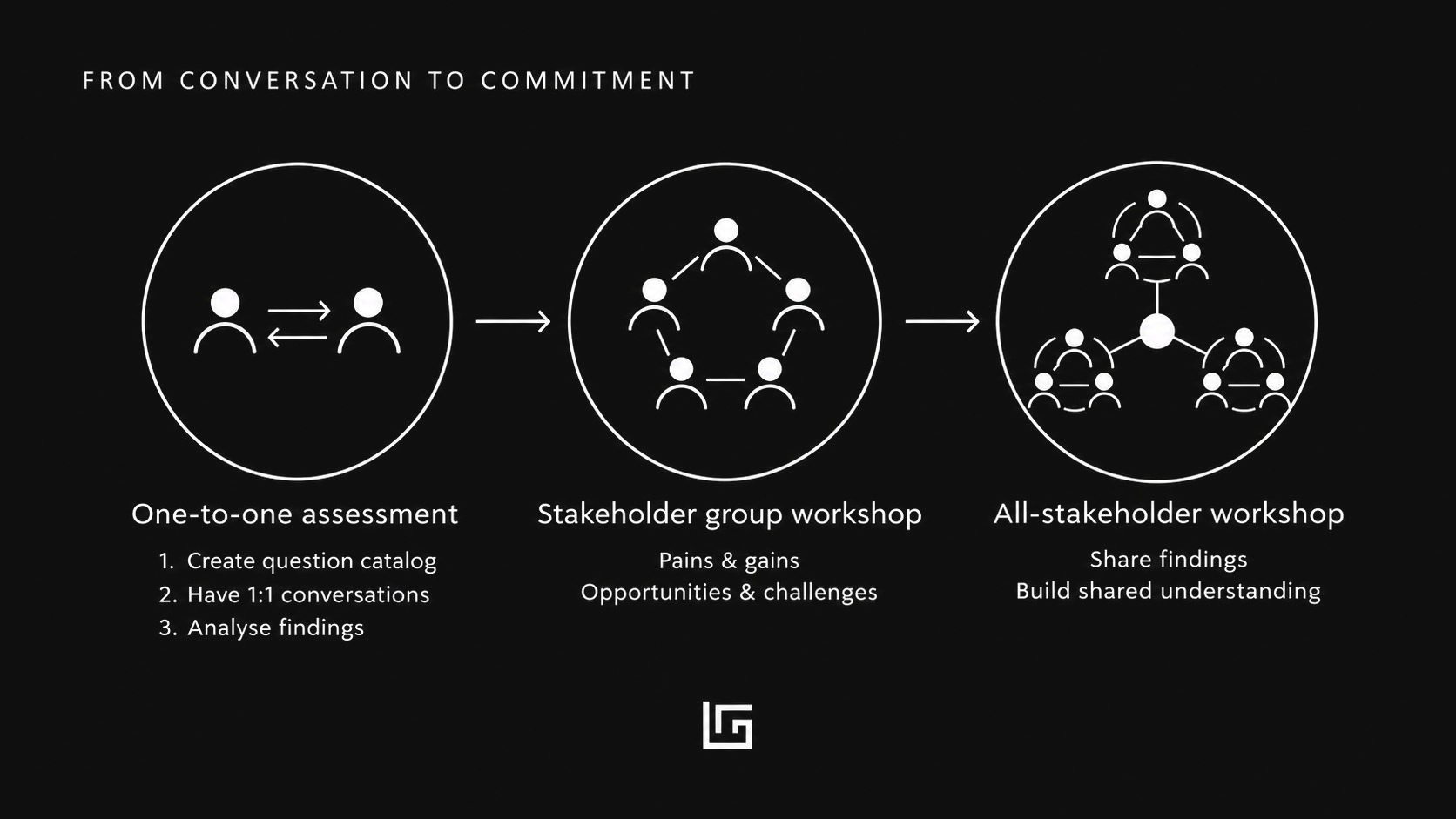
- Assess readiness in one-to-one conversations. Interview the influencers to understand the organisation's starting point.
- Explore pains and gains with each stakeholder group. Run collaborative workshops to describe today's reality and a better future.
- Bring all stakeholders together. Share the overall picture, make connections visible and agree common priorities.
Each stage builds on the one before. The interviews shape the workshops, and the workshops feed the shared picture.
Step 1: Change readiness assessment interviews with influencers
We begin with the influencers identified during stakeholder mapping. These are people who understand how the organisation really works and can help us see what is happening beyond the official organisation chart.
The objective is simple: understand the starting point before bringing the larger groups together. This part of the change readiness assessment has three steps.
Create your change readiness assessment questions
Before conducting interviews, we prepare a short catalogue of approximately 12 to 16 questions. We want enough structure to compare answers across stakeholders, but not so many questions that the conversation becomes a survey.
The questions should explore understanding, leadership, trust, capacity, previous experiences and expectations.
12 change readiness assessment questions
Use these as a starting point and adapt them to your organisation:
| Area | Example question |
|---|---|
| Purpose | What do you think the organisation is trying to achieve with this change? |
| Understanding | How clearly do you understand why this transformation is necessary? |
| Impact | How do you expect this change to affect your daily work? |
| Concerns | What concerns you most about the proposed changes? |
| Trust and leadership | How confident are you in the organisation's ability to deliver? |
| Capacity | Do you and your team have the time, skills and resources to take this on? |
| Support | What support would you need to work in the new way? |
| Previous experiences | What worked well or poorly in previous transformations? |
| Decision-making | How are decisions usually made here, and how are they received? |
| Communication | How do you usually hear about important changes, and what works best? |
| Involvement | Who should be involved in this change who isn't yet? |
| Expectations | What would make this change successful for your team? |
The catalogue should reflect the specific organisation and transformation. There is no point asking the same questions in exactly the same way at a young startup and a large global manufacturer.
Free tool · Change readiness
Change Readiness Question Builder
Create your catalogue of change readiness assessment questions for your influencer interviews. Tell me about your change and the signs you see, and you'll get the 12 questions with the ones to probe deeper marked. Then adapt them to your organisation.
Listen in one-to-one interviews, sceptics included
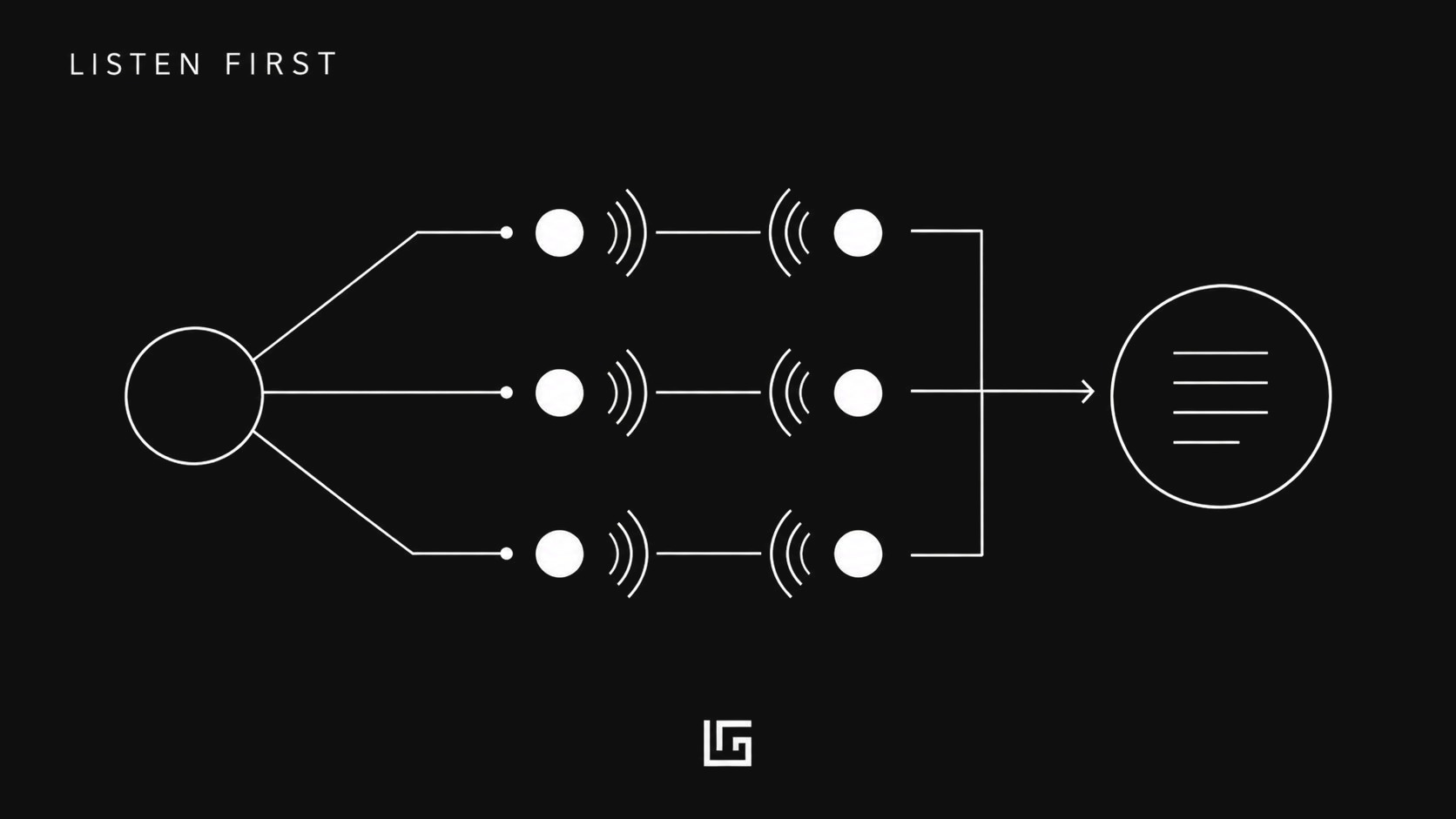
Next, we conduct individual interviews with the influencers. Here one principle is especially important: we are not there to convince people. We are there to listen.
These conversations help us understand how different people see the organisation, what they expect from the transformation and what concerns them. They also create space for sensitive topics that people might not feel comfortable discussing in a group.
Don't just interview enthusiastic supporters. Some of the most valuable conversations I've had were with sceptics. They often see problems others prefer not to discuss.
Analyse the findings to build a picture of organisational readiness
Once the interviews are complete, we consolidate what we've heard. We look for recurring themes, differences between groups and potential barriers to change:
- Are people clear about the purpose?
- Do they trust leadership?
- Do they have enough capacity?
- Are there concerns that appear repeatedly?
We also identify strengths that could help the transformation succeed. The outcome is an initial picture of organisational change readiness, grounded in people's actual experiences rather than assumptions.
Step 2: Explore pains and gains in change readiness workshops
Now we move from individual conversations to collaborative workshops. Using the stakeholder groups created during mapping, we organise dedicated pains and gains workshops. This is one of my favourite exercises in change management.
How a pains and gains workshop works
We create a structured space where people can describe their current reality and explore what a better future could look like. We usually run these workshops over three hours, onsite or online using collaborative tools such as Miro. The conversation is divided into four areas: two about today and two about the future.
Current pains: What isn't working? Where do people lose time? Which processes are unnecessarily complicated? What makes collaboration difficult? Participants first write down their observations individually, then we share, discuss and cluster similar points. That way everyone contributes, not just the loudest voices.
Current gains: What works well? This is something organisations often overlook. Some processes work well. Some relationships are strong. Some ways of working are worth preserving. A successful transformation should build on what already works.
Future opportunities: What could be better? Could we eliminate unnecessary work? Make information easier to access? Use technology or AI to simplify daily activities? This is where people start thinking creatively about the future.
Future challenges: What could stop us? Which dependencies could become problematic? What skills, resources or support might be missing? We don't need to solve every challenge during the workshop. The goal is to understand the landscape.
A three-hour change readiness workshop agenda
| Activity | Duration |
|---|---|
| Introduction and objectives | 15 min |
| Current pains | 45 min |
| Current gains | 30 min |
| Break | 15 min |
| Future opportunities | 35 min |
| Future challenges | 30 min |
| Reflection and closing | 10 min |
| Total | 180 min |
Workshops rarely go exactly to plan. If you are facilitating one, these 7 unexpected things that can go wrong in workshops will help you prepare.
By the end, we have a much richer picture of each stakeholder group's reality. And something else has happened: people have started participating in the transformation.
Step 3: Bring everyone together in an all-stakeholder workshop
After the group workshops, we analyse and consolidate all the findings. We now have two complementary perspectives: the individual insights from the readiness interviews and the collective input from the pains and gains workshops. We look for common patterns, differences and connections.
Then we bring representatives from all stakeholder groups together and share the overall picture: the common pains, the existing strengths, the opportunities people see and the challenges they anticipate.
Make connections between groups visible
Sometimes one department's gain is another department's pain. Sometimes two teams are struggling with exactly the same issue without knowing it. Making these connections visible is powerful. People see how their input connects to the bigger picture, and they start understanding the realities of other groups.
Build a shared understanding and common priorities
The objective of this final workshop is not just to present findings. It is to build a shared understanding of where the organisation is today and where it wants to go.
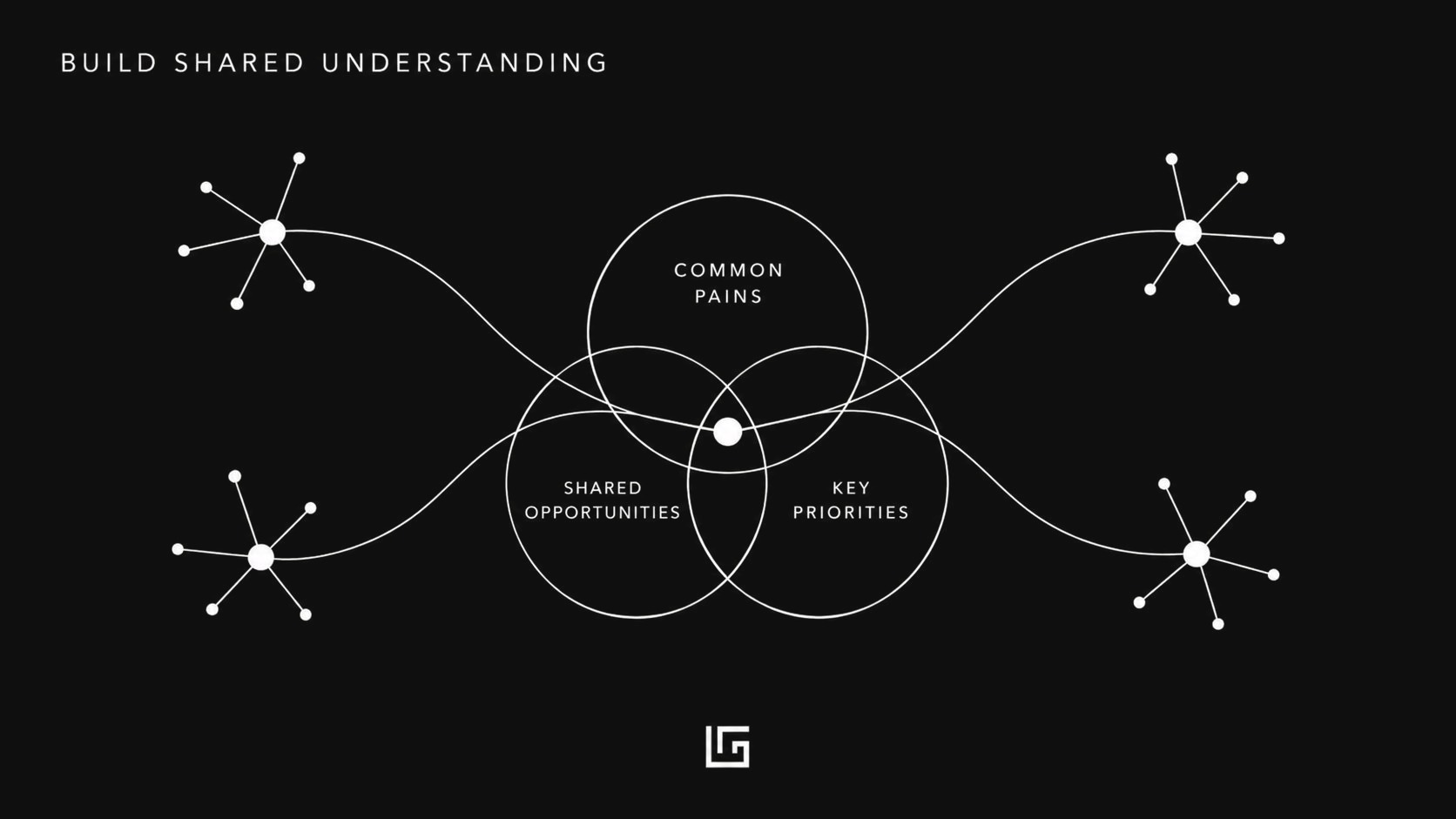
We also begin identifying common priorities that guide the next stages of the transformation. When those priorities need investment, they become the foundation for winning funding and support for digital transformation.
How to improve change readiness after the assessment
A change readiness assessment is only useful if it changes what you do next. Depending on what you find, these are the levers I use most:
- Close understanding gaps with communication that answers "what does this mean for me?" and arrives at the right moment. I wrote about timing in change management communication.
- Create capacity before asking for adoption: pause or remove work so people have real time to learn.
- Involve the sceptics in shaping the solution. Their objections often point to the real risks.
- Build on current gains so people see that the change protects what already works.
- Align leaders on one story about why the change matters and what will be different.
- Start with a pilot area where readiness is highest, and let results travel through the organisation.
Two objectives of change readiness: listen and involve
For me, this entire process has two equally important objectives.
The first is to listen and understand. Before designing a change strategy, we need to understand the organisation's starting point: its strengths, frustrations, concerns and ability to change. That tells us where to focus communication, leadership engagement and training.
The second is to involve people. Something changes when people are invited to describe their reality instead of simply being informed about a decision. That doesn't mean everyone will agree or become enthusiastic. But people are no longer just recipients of change. They are participating in it, and that makes a difference.
Why change starts before implementation
Think back to the elephant. The vision was bold and the team was ready. What was missing was the conversation with the people who would have to carry the change.
One of the biggest mistakes I see in transformation programmes is treating change readiness as a box to tick before implementation. I see it differently: the interviews and workshops are already part of the change. They create awareness, build relationships and bring people into a conversation about their future.
As AI makes the technical side of transformation more accessible, this human work becomes even more important. If you are introducing AI, my AI adoption framework for mid-size companies walks through the wider adoption journey in five stages. Developing a solution is one thing. Getting people to understand it, trust it and use it is another.
Change readiness assessment checklist
Before you schedule the first interview, ask yourself:
- Do my questions reflect this specific organisation and transformation, not a generic template?
- Am I interviewing sceptics as well as enthusiastic supporters?
- Am I going into these conversations to listen, or to convince?
- Will I capture what already works, not only what is broken?
- How will people see that their input connects to the bigger picture?
Change readiness FAQ
What is change readiness?
Change readiness is how prepared, willing and able people and organisations are to adopt a change. It covers understanding, willingness, capacity and belief at the individual level, and leadership alignment, culture, capacity and past experience at the organisational level.
What is the difference between change readiness and change management?
Change readiness describes the starting point: how ready people are today. Change management is the work of moving people from that starting point to the new way of working. A change readiness assessment is usually one of the first activities in change management, because it tells you where to focus.
How do you measure change readiness?
I measure change readiness through structured one-to-one interviews with influencers, pains and gains workshops with each stakeholder group, and an all-stakeholder workshop that consolidates the findings. Surveys can complement this when many people are affected, but conversations reveal the reasons behind the numbers.
What is a change readiness assessment?
A change readiness assessment is a structured way to understand how ready an organisation is for a specific change. It identifies strengths, concerns, capacity gaps and barriers so you can design a change approach that fits the organisation.
Who should be involved in a change readiness assessment?
Start with the influencers identified in your stakeholder map, including sceptics, then involve each affected stakeholder group. Leaders should take part too, but the assessment should not be limited to people who already support the change.
How long does a change readiness assessment take?
It depends on the number of stakeholder groups. Each interview follows a catalogue of 12 to 16 questions, each pains and gains workshop takes about three hours, and a final all-stakeholder workshop brings the results together.
Before deciding how to move people forward, understand where they are today. That is where change really begins.
Free tool
Build your stakeholder engagement plan in 5 minutes
Map your stakeholders and get a plan for who to speak with first, why, and what each conversation should decide.
Open the plan builder →Join the newsletter
Practical insights on AI, leadership and innovation — every week.