
August 23, 2026
Reinforcement Learning: How Machines Learn from Trial and Error
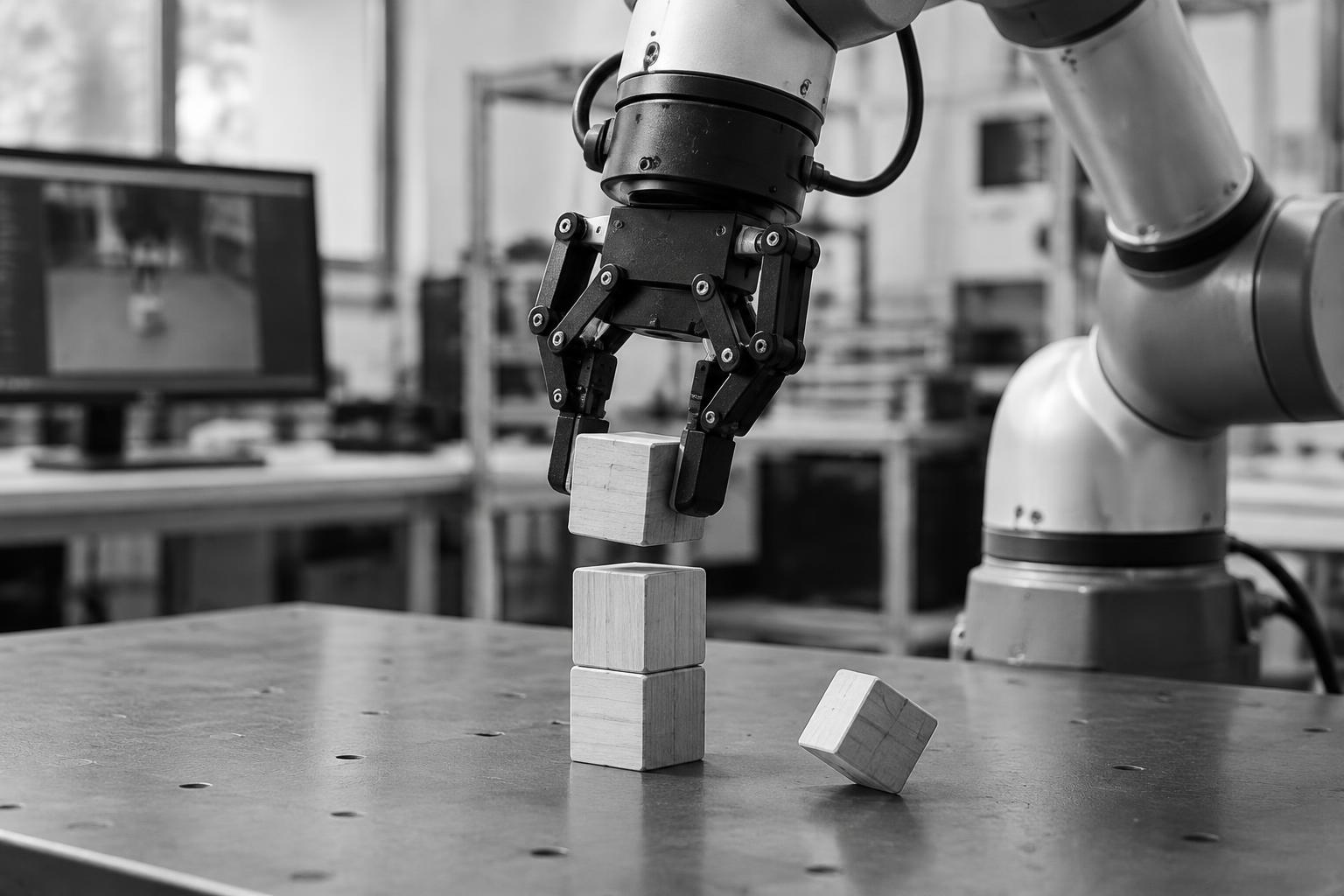
How did AI learn to beat world champions at Go, control robots, and — more recently — reason through hard problems step by step?
Not from labelled examples.
From trial and error.
That’s reinforcement learning, the fourth and most fascinating way machines learn.
What is reinforcement learning?
Reinforcement learning (RL) is learning by doing.
An agent takes actions in an environment. Good outcomes earn a reward. Bad ones don’t. Over thousands of attempts, the agent discovers which behaviour leads to the most reward.
Nobody shows it the right answer. It finds the right answer.
You’ve watched this before
It’s how a child learns to ride a bike. Nobody can explain balance in words. You wobble, you fall, you adjust, and one day your body just knows.
It’s also how you trained your dog: reward the sit, ignore the chaos. Same algorithm.
The three pieces that matter
The reward
The single number that defines success: points scored, energy saved, task completed. Design it badly and you get exactly what you asked for — which is not what you wanted. (Reward a robot for “not falling” and it may learn to never move.)
Exploration vs. exploitation
Keep doing what works, or try something new that might work better? Every RL agent balances this — and so does every business. It’s my favourite leadership metaphor hiding inside an algorithm.
Delayed gratification
The winning move in a game may pay off twenty moves later. RL’s hardest trick is crediting the right early action for a late reward — something humans struggle with too.
Where RL shows up in real life
Game-playing AIs (AlphaGo’s famous move 37 came from RL, not imitation). Robots learning to walk and grasp. Data-centre cooling. Recommendation systems deciding what to show next.
And the big one: RL is how modern chatbots got helpful. After pre-training, models like ChatGPT and Claude are refined with reinforcement learning from human feedback (RLHF) — humans rate answers, ratings become rewards. Today’s “reasoning models” push further, using RL to reward good chains of thought. It’s also part of what makes agentic AI possible.
The map is complete
You now have all four ways machines learn: supervised (learning from labels), unsupervised (finding structure), semi-supervised (a bit of both) — and reinforcement (learning from consequences).
Zoom back out with AI vs ML vs Deep Learning, or see how it all began in my AI Timeline.
And if you learn best by trial and error yourself (you do — we all do), the free 30-Day AI Challenge gives you one small experiment a day.
Join the newsletter
Practical insights on AI, leadership and innovation — every week.