
November 22, 2026
Defining Value: How to Build a Business Case for Digital Transformation
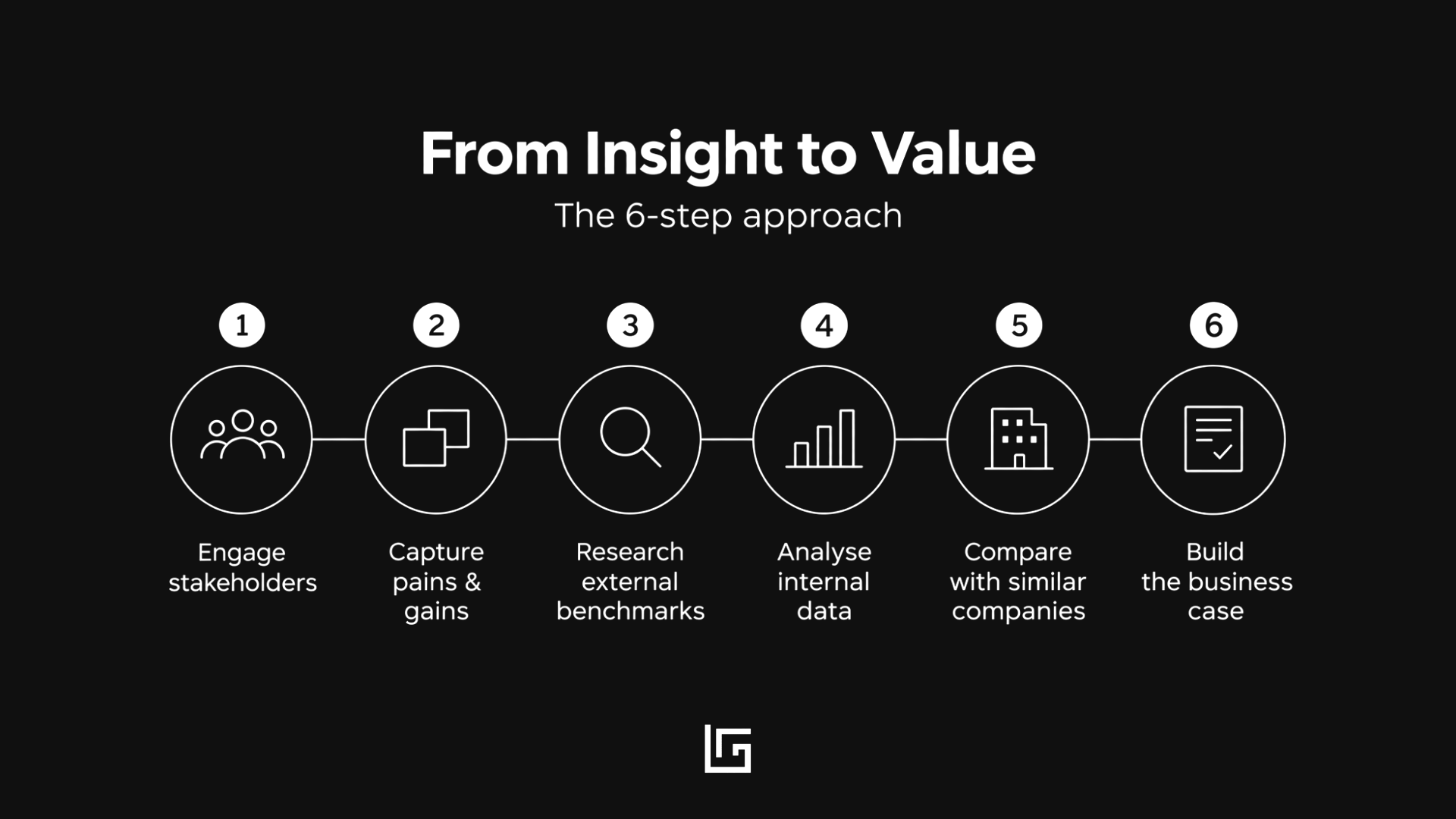
A digital transformation business case should not start with technology. It should start with value.
Yet, in many organisations, we do exactly the opposite.
We identify a new system, define its features, estimate the implementation costs and then try to explain why the investment makes sense.
But what if we started with a different question?
What is the value we are trying to create, and how can we prove it?
In my work as a consultant, helping organisations navigate digital transformation, this is one of the most important questions we need to answer. And often, one of the most difficult.
Because identifying a problem is relatively easy. Putting a number behind it is something else.
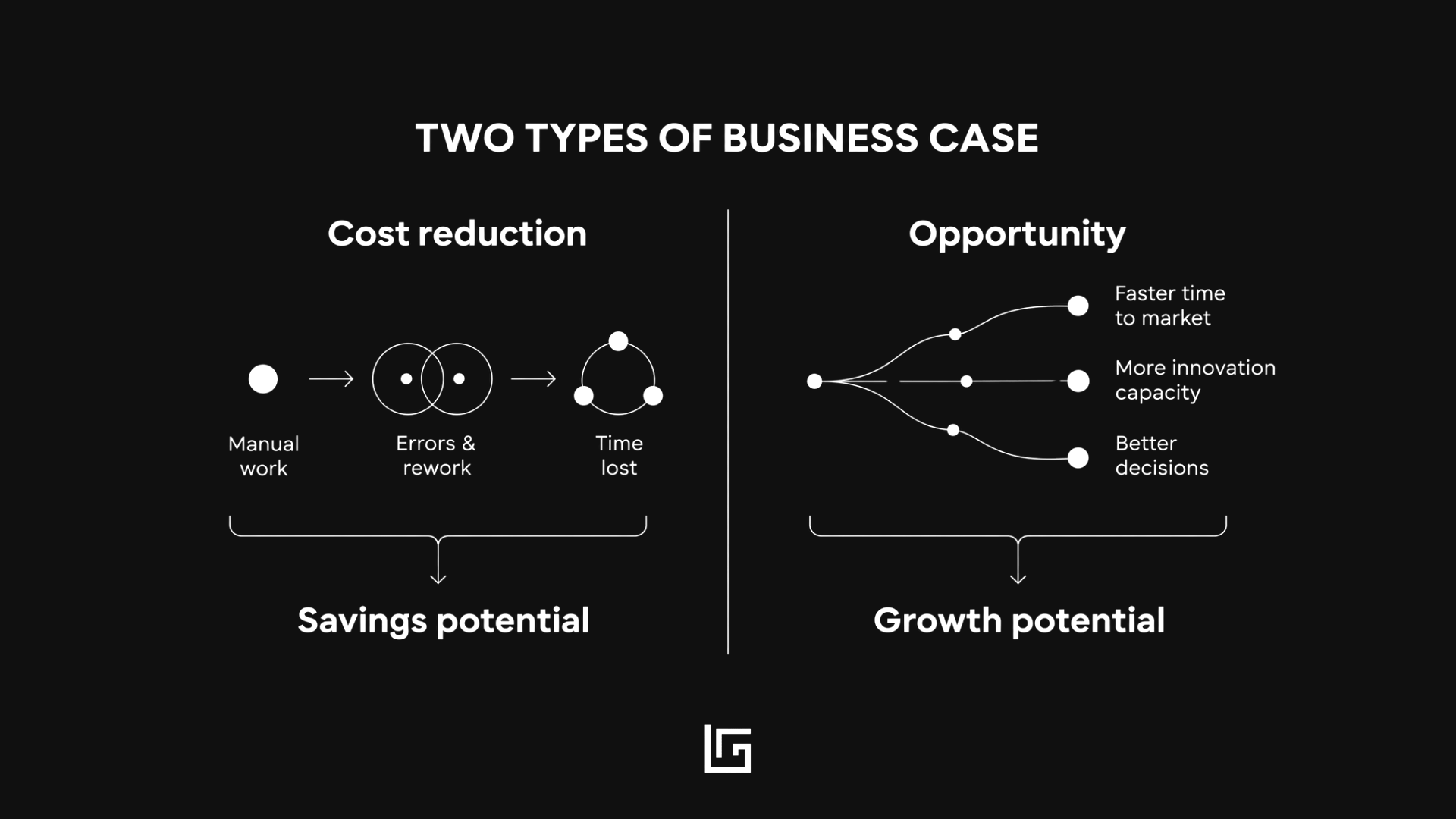
Before calculating value, understand the two types of business cases
When building a business case for digital transformation, I like to distinguish between two different perspectives.
The first is the cost reduction business case
This is about understanding what our current problems are costing us and how much we could save by solving them.
Think about engineers spending hours searching for information, teams manually transferring data between systems, or expensive rework caused by outdated documentation.
These activities have a cost.
If we can reduce the time, effort or errors associated with them, we can quantify the potential savings.
The second is the opportunity business case
This is about understanding what becomes possible when we transform the way we work.
What if we could bring products to market faster? What if engineers had more time for innovation? What if better access to data allowed us to develop new services or improve customer experiences?
These opportunities may not immediately reduce costs, but they can create significant business value.
And I believe this distinction is particularly important today, with AI and other emerging technologies.
We should not only ask how technology can help us do the same things cheaper. We should also ask what it allows us to do differently.
A good business case considers both perspectives without counting the same benefit twice.
Step 1. Start with the pains and gains you already know
If you have been following my previous articles about workshops, stakeholder engagement and change readiness, you know how much importance I give to understanding people before defining solutions.
By this point in a transformation initiative, we should already have a good understanding of the organisation.
We have conducted interviews, facilitated workshops and collected pains and gains from different stakeholders.
We know where people struggle.
We also know what they would like to achieve.
Now comes the next challenge.
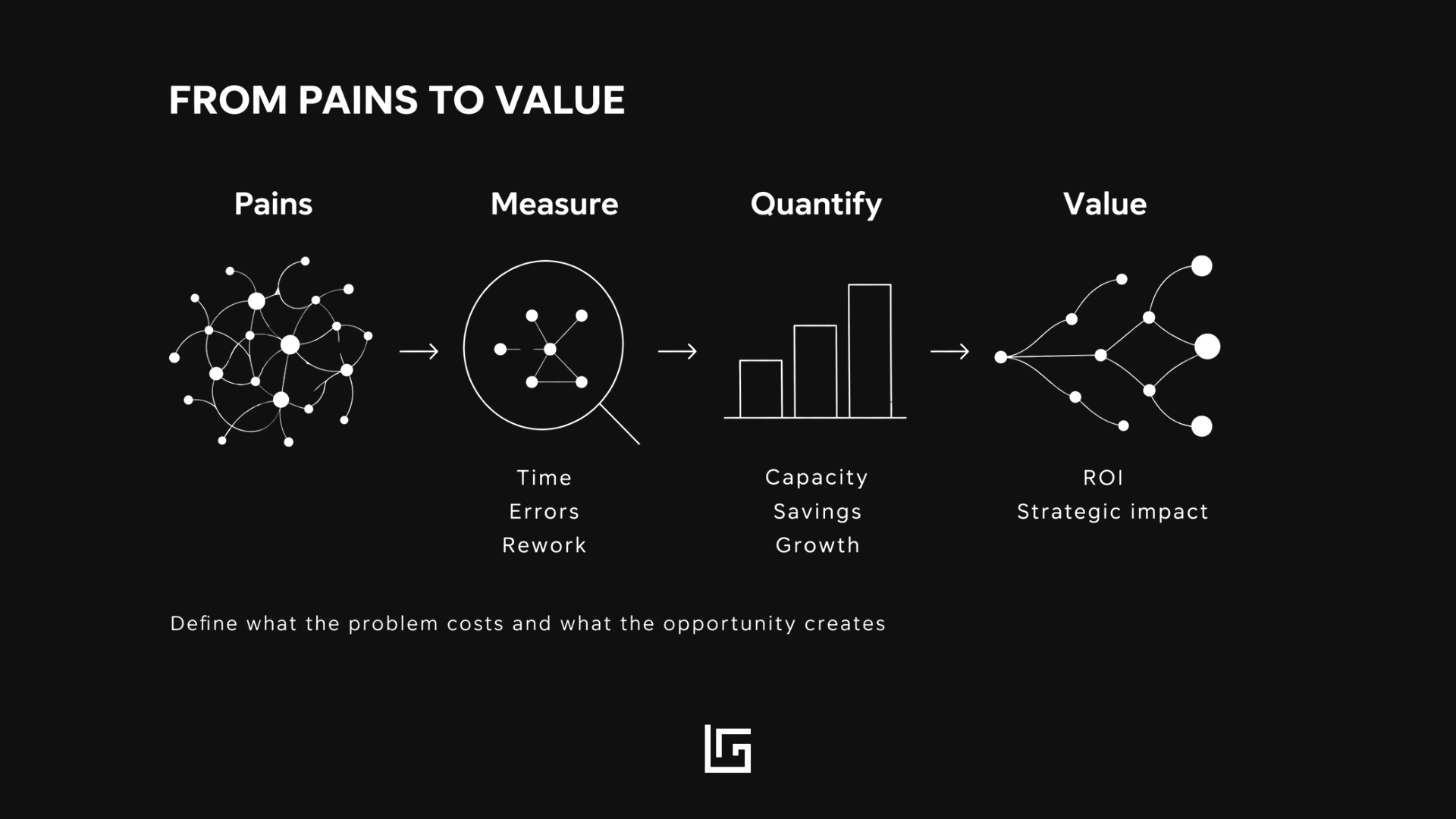
How do we translate these pains and gains into measurable business value?
I like to start by organising them into two categories:
- Pains: What is inefficient, expensive, frustrating or risky today?
- Gains: What could become faster, easier, more reliable or more valuable tomorrow?
For each one, we identify a potential improvement and a metric that could help us measure it.
For example, if engineers struggle to find the correct product documentation, we might measure the time spent searching.
If teams want to accelerate product development, we might look at engineering lead time.
We are moving from qualitative observations to quantitative hypotheses.
Step 2. Research external benchmarks to estimate potential improvements
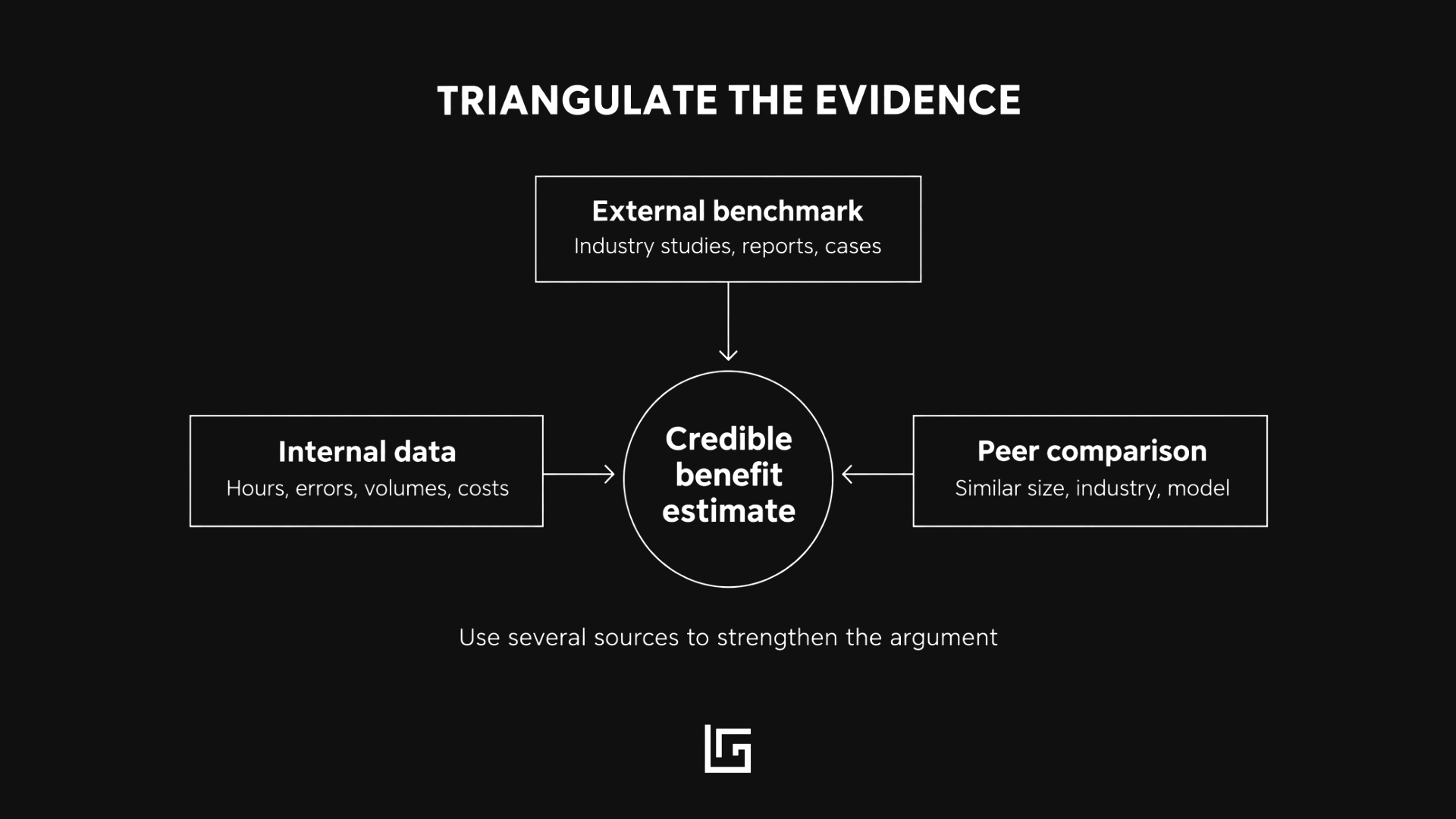
Once we know what we want to improve, we need evidence.
And this is where external benchmarking becomes particularly valuable.
The idea is simple.
Find out what similar improvements have achieved elsewhere, and use those numbers to estimate what might be possible in your organisation.
Suppose our workshops revealed that engineers spend too much time searching for information.
We can research studies, industry reports, technology implementation cases and academic publications to understand how much better information management could improve productivity.
We are looking for two types of numbers:
- The cost of the pain, such as hours lost, error rates or the financial impact of rework.
- The potential improvement, such as the percentage reduction in search time or engineering lead time.
The same applies to opportunity-driven business cases.
If the opportunity is faster product development, we can research improvements in time to market and connect them to potential revenue or strategic advantages.
The important thing is to compare the benchmarks with our own company size, activity volumes and operating model.
A percentage on its own means very little.
A 20% improvement in a process used by ten people is very different from the same improvement across 2,000 engineers.
And one thing I always try to remember: a benchmark is not a promise.
We need to understand where the number comes from, what was measured and whether the comparison is reasonable.
Step 3. Find internal data to understand your real starting point
External benchmarks tell us what might be possible.
Internal data tells us where we are today.
And without a reliable starting point, even the most impressive benchmark has limited value.
This is where I often find that the conversations become particularly interesting.
We start asking very practical questions.
How many hours do we currently spend manually correcting information? How often do we repeat work because data is missing? How many people are involved? What does a typical error cost us?
Sometimes the information is available in existing systems, operational reports or project documentation.
Other times, we need to speak with colleagues.
People in strategy, finance, R&D, engineering or operations may already have useful information that we simply did not know existed.
And sometimes nobody has measured the problem.
In those cases, we can work with estimates, short observations or small samples, clearly documenting our assumptions.
We do not need perfect data to start. But we need to be transparent about what we know and what we are estimating.
Step 4. Compare your assumptions with similar companies
There is another step that I find useful, although it is not always possible.
Benchmarking directly with companies facing similar challenges.
Ideally, we want organisations with comparable characteristics: industry, size, complexity, business model or operational challenges.
This can help us understand whether our assumptions are realistic.
For example, if we estimate that a transformation could significantly reduce engineering rework, speaking with another manufacturer that has implemented a similar solution might provide valuable context.
Not only about the benefits they achieved, but also about the effort required to get there.
Of course, no two companies are identical.
The objective is not to copy somebody else's numbers.
It is to challenge our assumptions and strengthen the credibility of our analysis.
Step 5. Turn the evidence into a financial business case
Now we have the ingredients.
We understand the pains and gains. We have external benchmarks. We have internal data. And we have assumptions that we can explain.
It is time to connect everything.
Let's take a simple example.
Imagine a company with 500 engineers.
Through our internal analysis, we estimate that each engineer spends three hours per week searching for information that should be easier to access.
That represents 1,500 hours every week.
If we assume 46 working weeks per year, that is 69,000 hours annually.
Now imagine that external research suggests a 20% reduction in search time might be achievable.
That would represent 13,800 hours of potential annual capacity released.
At an illustrative internal labour cost of €60 per hour, the equivalent capacity value would be €828,000 per year.
But this is not automatically €828,000 in cost savings.
This is a distinction I believe every business case should make.
If those engineers use the time to develop better products, we have created additional capacity. If the organisation can genuinely reduce external spending or avoid planned hiring, we may have a financial saving.
Both are valuable, but they are not the same.
We should also consider implementation costs, licences, training, organisational change, ongoing support and the time required before benefits materialise.
Then we can build different scenarios: conservative, expected and optimistic.
This allows us to calculate measures such as return on investment, payback period and net present value, while making the assumptions visible.
Step 6. Connect the numbers to the organisation's strategy
A business case is not simply an Excel file with attractive numbers.
It is an argument for why an organisation should invest its resources in a particular direction.
And that argument needs to connect to strategy.
If the company wants to improve profitability, cost reduction may be the strongest argument.
If the priority is growth, faster innovation or entering new markets, the opportunity business case may be more relevant.
If the organisation is struggling with quality, compliance or operational risk, those benefits also deserve attention, even when they are difficult to express financially.
This is why I believe business cases should be developed collaboratively.
Finance helps us challenge the numbers. Strategy helps us understand priorities. Engineering and operations help us validate assumptions. And the people doing the work help us understand whether the improvements are actually achievable.
The takeaway: Value is not what technology promises. It is what the organisation achieves.
After years of working on digital transformation initiatives, one thing has become increasingly clear to me.
The hardest part is not calculating the return on investment. It is understanding what value really means for the organisation.
A good business case connects three things: the problems people experience, the improvements we can realistically achieve and the strategic outcomes the organisation cares about.
And it does something else.
It gives us a way to measure success after implementation.
Because the business case should not disappear once the investment is approved.
It should become the starting point for tracking whether the transformation is delivering what we expected.
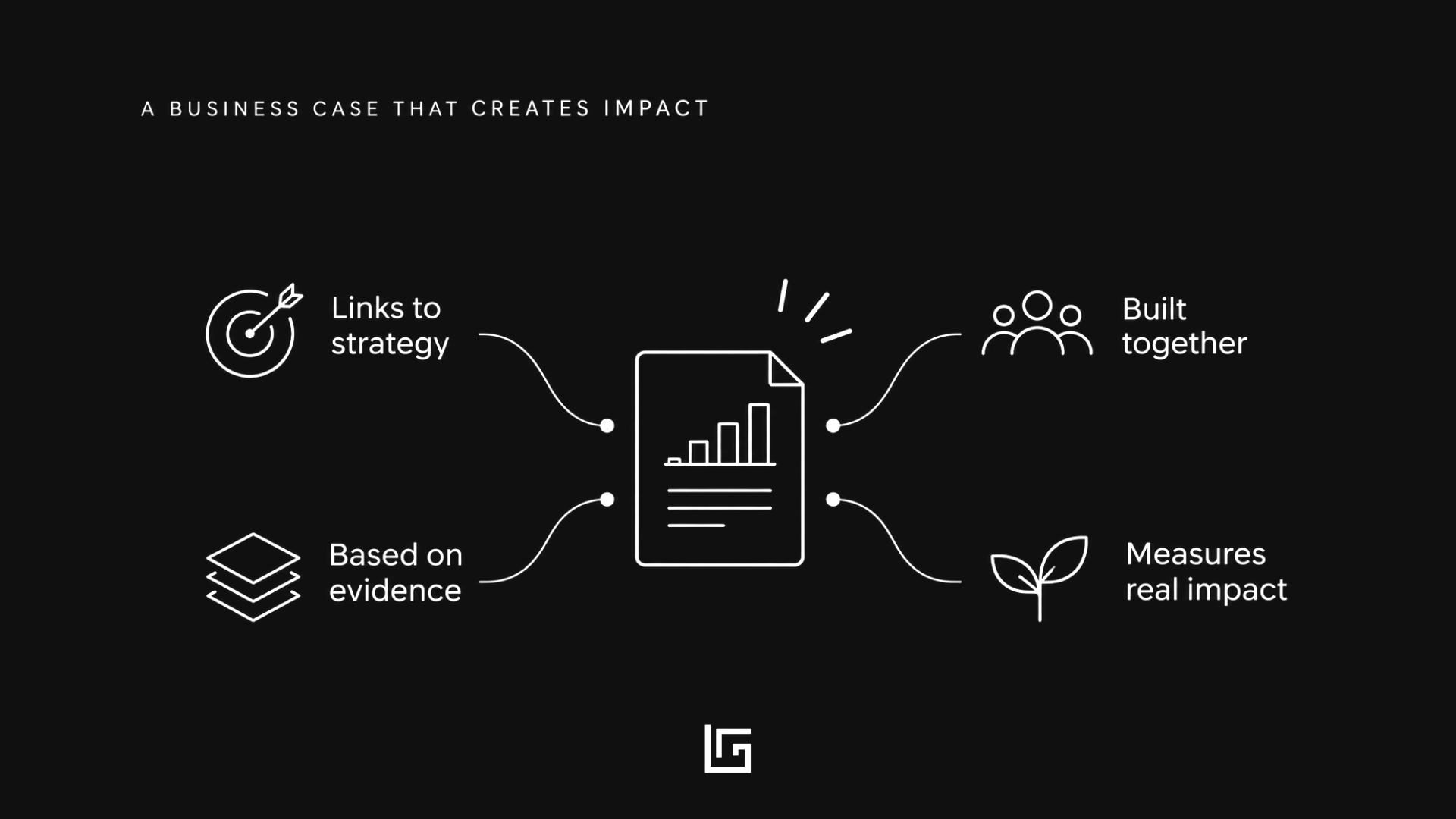
So before building your next digital transformation business case, ask yourself three questions:
- What problem or opportunity are we really trying to address?
- What evidence supports the value we expect to create?
- How will we know that we have achieved it?
Because defining value is not about making the numbers look good. It is about making sure we are investing in something that truly matters.
Free tool · Digital transformation
What is your digital transformation worth?
Build the first draft of your business case in four steps: the pains you want to solve, the opportunities you see, your own numbers checked against published benchmarks, and your result as a PDF.
- 1. Pains
- 2. Opportunities
- 3. Your data
- 4. Result
Join the newsletter
Practical insights on AI, leadership and innovation — every week.